← All women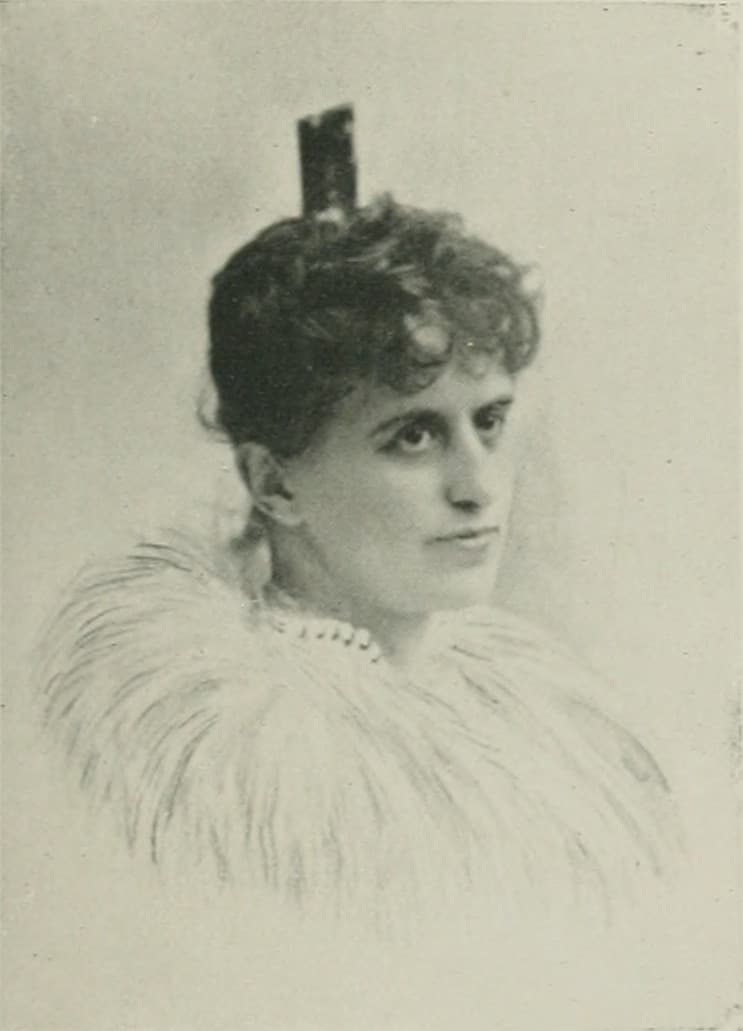
American · Science
Helen Blanchard
October 25, 1840 – January 12, 1922
Early Life and Background
Helen Augusta Blanchard was born on 25 October 1840 in Portland, Maine, into a wealthy and socially prominent New England family.[1][8][15] Her parents, Nathaniel Blanchard and Phebe Buxton Blanchard, were well established in the region, and Helen was one of five children.[8] She grew up amid the economic activity of Portland and nearby Cape Elizabeth, areas tied closely to shipping, trade, and the emerging textile and garment industries.
Biographical accounts emphasize that Blanchard showed an early interest in mechanical devices and problem‑solving.[5][14] In a period when girls rarely received technical schooling, she appears to have educated herself by careful observation and practical experimentation. Later writers described her as a "born mechanic," noting that her aptitude for machinery became crucial after her family’s fortunes changed.[11][14]
In the late 1860s and early 1870s, the Blanchard family suffered serious financial troubles when her father’s business failed.[4][8] When Nathaniel died around 1871, defaulting on debts, the once‑wealthy family lost their homestead and much of their property.[4][8] As the youngest child, Helen was an adult but faced a sudden need for income. Without a husband or dowry and with few legal rights or employment options open to women, she turned decisively to invention as a means of support.
Career Beginnings and Development
Blanchard’s inventing career began in earnest in the early 1870s. By 1873, she had developed her first major innovation: an over‑seam for the long stitch, which improved how the raw edges of fabric were finished.[15] That same year she filed her first significant sewing‑machine patent, covering a mechanism that produced a zig‑zag stitch for buttonholes and seam edges.[1][11] These improvements addressed practical problems in garment manufacture, where straight stitches left edges prone to fraying and wear.
Her early work quickly translated into patents. On 28 July 1874, Blanchard received U.S. Patent No. 153,216 for an "improvement in sewing‑machines," a device that enabled a zig‑zag stitch for buttonholes and edge finishing.[1] This patent is widely cited as a foundation for later zig‑zag sewing‑machine technology.[1][5] On 4 January 1876, she secured U.S. Patent No. 172,933 for a dedicated "button‑hole sewing‑machine," further refining automated buttonhole construction.[1]
Blanchard continued to expand her portfolio. On 18 July 1876, she received U.S. Patent No. 180,469 for an "overseaming‑machine," designed to over‑seam long stitches and bind fabric edges securely.[1][15] Later that year, on 10 October 1876, she was granted U.S. Patent No. 183,192 for another improved sewing machine.[1] These patents demonstrated her ability to identify weaknesses in existing technology and devise mechanical solutions that integrated well into factory workflows.
Over the next decades, Blanchard methodically built a body of inventions aimed at making sewing more efficient, durable, and adaptable to different products. Her machines were especially valued in hosiery and knitwear factories, where edge finishing was vital.[14][15] She also designed numerous needles and attachments that facilitated specialized stitches and processes.
Major Inventions and Technical Contributions
Blanchard’s most significant work centered on sewing‑machine technology. Between 1873 and 1915, she obtained 28 U.S. patents, at least 22 of them for sewing or sewing‑related devices.[1][11] Her innovations can be grouped into several key areas.
Zig‑zag and Overseaming Machines. Blanchard’s zig‑zag stitch mechanism allowed sewing machines to bind raw fabric edges and buttonholes with a side‑to‑side motion that encapsulated the edge, producing a stronger seam than straight stitching.[1][11] Her 1873 zig‑zag machine, later preserved by the Smithsonian’s National Museum of American History, is often cited as a landmark in the mechanization of durable garment seams.[10][11] The overseaming machine patented in 1876 extended this principle to long seams, particularly useful for knitwear and hosiery.[1][14][15]
Specialized Industrial Machines. Blanchard developed a series of specialized machines tailored to specific manufacturing needs:
- In 1880, she patented a sewing and trimming seam machine, allowing the simultaneous sewing and trimming of knitted fabrics.[15] This work is linked to U.S. Patent No. 223,515, granted on 20 January 1880, which was widely used by large manufactories.[1][14][15]
- On 23 March 1880, she obtained U.S. Patent No. 226,387 for a hat‑sewing machine that applied her zig‑zag stitch to hat manufacture, improving the attachment of sweatbands and decorative elements.[1][15]
- On 17 January 1882, she was granted U.S. Patent No. 252,648 for a "crocheting and sewing machine," which combined crocheting and sewing functions and achieved "signal success" in large factories.[1][14][15]
Needles and Attachments. Blanchard also invented split needles, self‑threading or "self‑taking" needles, and devices for securing cords to fabric edges, among other attachments.[7][11][14] These creations improved ease of use and reliability in industrial sewing environments, complementing her larger machine designs.
Beyond Sewing: Surgical Needles and Pencil Sharpeners. Although best known for sewing technology, Blanchard’s mechanical insight extended to other domains. On 13 February 1894, she secured U.S. Patent No. 515,155 for a "surgical needle," applying her understanding of needle design to medical suturing.[1][6] Later, on 16 March 1915, she obtained U.S. Patent No. 1,130,108 for a crank‑operated pencil‑sharpening machine, one of her final patents.[1][7] These inventions illustrate the breadth of her interests and her ability to translate mechanical principles across fields.
Entrepreneurship and Business Ventures
Blanchard did not confine her work to patenting alone. She moved into manufacturing and entrepreneurship, an unusual step for a woman at the time.
In 1876, building on the success of her overseaming and zig‑zag machines, she organized the Blanchard Overseam Machine Company in Philadelphia.[14][16] Sources describe the company as founded that year, with a key date of 21 November 1876 associated with its establishment.[14][16] The firm specialized in producing her overseaming machines and related devices, meeting with notable commercial success.[14][16]
Through this company and her patent licensing, Blanchard accumulated considerable wealth. By 1891, she was described as extremely rich from her endeavors, owning a factory, grand estates, and lucrative patent rights.[13][14] She was able to buy back the Blanchard family homestead in Portland and, around 1901, moved back there.[11] Her business achievements were remarkable in a period when married women’s property rights were restricted and female industrial leadership was rare.
Contemporary and later writers have emphasized that Blanchard combined inventive talent with strong business sense.[11][16] Her capacity to manage patents, manufacturing, and licensing made her an early example of a woman who exercised significant economic power through technology.
Awards, Honors, and Later Recognition
During her lifetime, Blanchard’s machines and patents were widely used, but she did not achieve the same public fame as some male inventors. Her recognition grew substantially after her death.
Biographical works such as Herringshaw’s National Library of American Biography and Woman of the Century included entries praising her inventions as among the most notable mechanical devices of the age.[14][15] These texts recorded her as a prolific inventor whose machines were adopted by "immense manufactories."[14][15]
In the late 20th and early 21st centuries, historians of women’s technology and activism began to revive interest in her story. She has been frequently referred to as "Lady Edison", a nickname highlighting her productivity and ingenuity.[8][11]
A major institutional honor came in 2006, when Blanchard was posthumously inducted into the National Inventors Hall of Fame for her zig‑zag sewing machine and her 28 patents.[3][5][10][11] The Hall of Fame notes that her work enabled the industrial growth of sewing machines and advanced the fashion and textile industries.[5] Her 1873 zig‑zag machine is held by the Smithsonian’s National Museum of American History, further cementing her place in the history of technology.[10][11]
Personal Life
Blanchard’s personal life was shaped by her family’s financial reversal and by her decision to remain unmarried. Sources consistently state that she never married and did not raise a family of her own.[10][11] This status likely gave her an unusual degree of freedom to pursue technical work, though it also meant she faced economic risks without the social protection marriage often provided women in her era.
She maintained close ties to her extended family. Later accounts suggest that near the end of her life she lived with or frequently visited her niece, Louise Merrill, in Providence, Rhode Island.[6] Her ability to buy back the family homestead in Portland in 1901 indicates an ongoing commitment to restoring her family’s position and property.[11]
Blanchard is also noted for her philanthropy. Having profited from her commercial ventures, she made donations and supported causes in Portland, although detailed records of specific charitable activities are sparse.[11][14] Her financial independence allowed her to contribute to her community in ways unusual for women of her generation.
Later Life and Health
Blanchard continued to patent inventions into her seventies. Her last known patent, the crank pencil sharpener, was granted in 1915 when she was in her mid‑70s.[1] The following year, 1916, she suffered a stroke while in Portland, at approximately age 76.[3][8][11] The stroke effectively ended her period of active inventing, though her existing machines remained widely used.
After the stroke, she appears to have lived a more retired life, relying on the wealth accumulated from her patents and business ventures. Nevertheless, her reputation as a successful inventor endured in biographical compilations and local memory, especially in Maine, where she became known as "Maine’s Lady Edison."[8]
Death
On 12 January 1922, Helen Augusta Blanchard died in Providence, Rhode Island, reportedly while visiting her niece.[3][4][8] She was 81 years old. Her death occurred several years after her stroke and after a long period during which her inventions continued to influence industrial sewing.
Following her death, Blanchard was buried in the Blanchard family plot at Evergreen Cemetery in Portland, Maine.[1][2][3] This return to Portland in death symbolically closed a life that had begun and largely played out in that city and its industrial milieu.
Legacy and Historical Impact
Helen Blanchard’s legacy rests on her extensive contributions to the mechanization of sewing and her role as one of the most prolific American women inventors of the 19th century. She secured 28 U.S. patents between 1873 and 1915, the majority addressing challenges in industrial garment and textile production.[1][11]
Her zig‑zag stitch and overseaming machines transformed how seams and edges were finished, making mass‑produced garments more durable and reducing the need for labor‑intensive handwork.[1][11][14] These innovations were crucial to the growth of ready‑made clothing, hosiery, and knitwear industries in the late 19th and early 20th centuries, helping to standardize quality at scale.
From the perspective of women’s history, Blanchard demonstrated that a woman could succeed not only as an inventor but also as an industrial entrepreneur. She founded and ran a machine company, managed patents and licensing, and amassed substantial wealth.[13][14][16] Her ability to translate technical insight into economic power challenged gender norms that confined most women to domestic roles.
Blanchard’s work also expanded understandings of what counts as significant technological innovation. Her focus on sewing and textiles—fields traditionally associated with women’s domestic labor—highlighted the industrial importance of "women’s work" and its mechanization. Historians and institutions such as the National Inventors Hall of Fame and the Smithsonian have increasingly recognized that advances in clothing manufacture are foundational to modern consumer economies and labor systems.[5][10]
In recent years, she has become a subject of podcasts, local history features, and digital exhibits, including the "Stuff You Missed in History Class" podcast and educational resources on women’s activism and young women who made a difference.[4][11][21] These narratives present Blanchard as a role model for girls interested in engineering and invention, underscoring the long but often overlooked history of women in technical fields.
Although precise rankings are difficult, Blanchard is widely regarded as one of the most successful female inventors of her era, notably for the number and commercial impact of her patents.[1][11][16] Her life illustrates how technical skill, persistence, and strategic use of the patent system could enable a woman to navigate and, in some respects, transcend the constraints of 19th‑century gender norms.
Today, Helen Augusta Blanchard is remembered as "Lady Edison" of Maine, a mechanical innovator whose zig‑zag stitch and overseaming machines quietly sewed the future of industrial clothing production.[8][10][11] Her story continues to inform scholarship on women, technology, and entrepreneurship, and her preserved machines serve as tangible reminders of the creative contributions women have made to the fabric of modern life.
Dated achievements
13 indexed.
- Oct251840Science
Birth of Helen Augusta Blanchard
Helen Augusta Blanchard was born in Portland, Maine, later becoming one of the most prolific American women inventors of the 19th century.
View details National Inventors Hall of Fame: Helen Blanchard - Jul281874Science
Granted patent for zig-zag/buttonhole sewing-machine stitch
Helen Blanchard was granted U.S. Patent No. 153,216 for an 'improvement in sewing-machines,' her famous zig-zag buttonhole stitch mechanism.