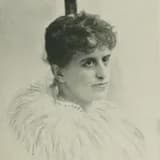
Helen Blanchard received U.S. Patent No. 180,469 for an 'overseaming-machine,' the technology behind her later Overseam Machine Company.
On July 18, 1876, Helen A. Blanchard was granted U.S. Patent No. 180,469 for an 'overseaming-machine'—a device designed to over-seam long stitches, preventing fraying along fabric edges and producing a durable, finished seam.
This invention traced back to Blanchard's very first mechanical concept from 1873: an over-seam for the long stitch. By 1876, she had refined this early idea into a fully patentable and commercially viable machine. The over-seaming technology addressed a critical need in garment and textile manufacturing, where raw fabric edges were prone to unraveling.
This particular patent proved to be one of the most commercially significant of Blanchard's career. It directly enabled the establishment, just four months later, of the Blanchard Overseam Machine Company in Philadelphia. The overseaming machine became a staple of industrial garment production, and its success allowed Blanchard to transition from inventor to manufacturer and business owner—a rare feat for a woman in the 1870s, when married and unmarried women alike faced severe legal and social restrictions on property ownership and business leadership.
The overseaming machine's legacy persisted for decades in industrial sewing, influencing the design of later overlock and serger machines still used in the garment industry today.