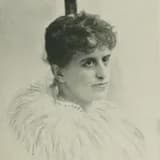
Helen Blanchard was granted U.S. Patent No. 153,216 for an 'improvement in sewing-machines,' her famous zig-zag buttonhole stitch mechanism.
On July 28, 1874, Helen A. Blanchard was granted U.S. Patent No. 153,216 for an 'improvement in sewing-machines,' formalizing what would become her most famous invention: the zig-zag stitch mechanism used for finishing buttonholes and seam edges.
This patent built upon work she had begun filing as early as 1873 and represented a major technical advance in industrial sewing. Prior to her invention, buttonholes and edge-finishing were labor-intensive processes requiring significant hand-finishing even on machine-sewn garments. Blanchard's zig-zag mechanism allowed sewing machines to produce a stitch that prevented fraying and gave a finished, professional appearance to seams and buttonholes automatically.
The historical significance of this patent cannot be overstated: it launched Blanchard's career as a serial inventor in a field—mechanical engineering and textile machinery—almost entirely dominated by men. At a time when women had virtually no legal or economic independence, Blanchard's ability to secure, license, and eventually manufacture her own patented technology was itself a significant social achievement. This particular stitch mechanism became foundational to her later, more specialized machines, and directly led to the founding of her own manufacturing company just two years later.