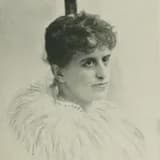
Helen Blanchard was inducted into the National Inventors Hall of Fame, recognized for her zig-zag sewing machine and 28 U.S. patents.
In a ceremony held in May 2006 (formally dated May 3, 2006 in Hall of Fame records), Helen Augusta Blanchard was posthumously inducted into the National Inventors Hall of Fame, more than eight decades after her death in 1922.
This induction formally recognized Blanchard's extraordinary contributions to industrial sewing technology, specifically her invention of the zig-zag sewing machine stitch and her portfolio of at least 28 U.S. patents spanning sewing machines, a surgical needle, and other mechanical devices developed between 1873 and 1915. The Hall of Fame's recognition placed her among the ranks of history's most significant inventors, a distinction rarely afforded to women inventors of her era during their own lifetimes.
This achievement is marked as a genuine barrier-breaking first: Blanchard's induction explicitly celebrated her pioneering status as a woman who succeeded in a field—mechanical engineering and industrial manufacturing—that was almost entirely closed to women during the period in which she was active. Her posthumous recognition helped correct a long-standing historical oversight, bringing renewed public attention to her legacy through museum exhibits, educational resources, and popular history media including podcasts and documentary features.
The induction coincided with broader efforts, including by the Smithsonian Institution, to preserve and display artifacts related to Blanchard's inventions, ensuring that her contributions to American industrial history would be remembered and studied by future generations of engineers, historians, and inventors.