← All women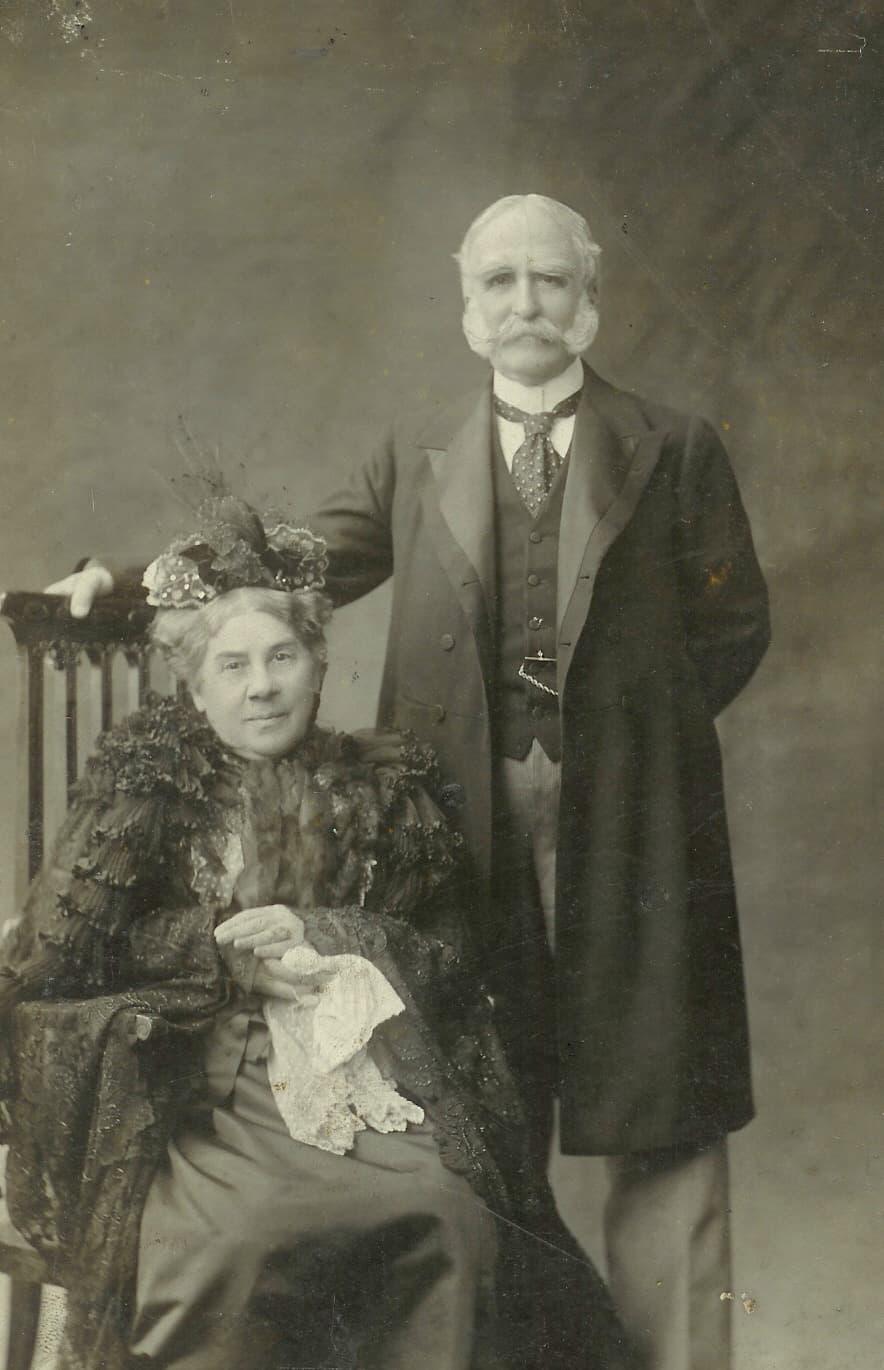
American · Science
Harriet Tracy
December 6, 1834 – May 30, 1918
Early life and background
Harriet Ruth Brisbane Tracy was born on 6 December 1834, in Charleston, South Carolina.[1][3] Her parents were Dr. William Brisbane (1809–1860), a physician and planter, and Julia Hall Lowndes (1811–1847), members of a prominent white Southern family.[1][3] She grew up in a milieu of relative privilege in a major Atlantic port city where commerce, slavery, politics, and new technologies intersected. Charleston’s elite social world exposed her to education and printed culture at a level that many women of her generation could not access, even though formal scientific or engineering training for women remained rare.
Harriet’s extended family included the noted abolitionist Rev. William Henry Brisbane (1806–1878), identified in later accounts as her first cousin once removed.[3] William Henry Brisbane freed enslaved people he had inherited and became an outspoken critic of slavery after relocating to the North. His moral and intellectual radicalism suggests the broader climate of debate within branches of the Brisbane and Lowndes families during Harriet’s youth. While direct evidence of his influence on her is limited, historians have noted that she emerged from a family environment in which strong opinions, religious commitments, and reformist ideas coexisted.[3]
Little documentation survives on Harriet’s formal schooling, but biographical sketches emphasize that she showed a "decided inventive genius" from early youth.[5] As the daughter of a doctor and a member of Charleston’s upper strata, she likely received more than basic literacy, including exposure to mathematics and scientific ideas through books and periodicals available in her household. Her later facility in describing mechanical systems in patent applications suggests that she acquired skills in technical drawing, spatial reasoning, and precise written explanation, whether self‑taught or informally encouraged by family members.[1][4]
The death of her mother in 1847, when Harriet was still in her early teens, and the shifting fortunes of the antebellum South formed part of the backdrop to her formative years.[3] These experiences, together with her family’s moveable wealth and connections, would later enable her to relocate to the North and then to Europe, where she carried on her work as an inventor.
Marriage, relocation, and family life
In 1860, Harriet Brisbane married Cadwallader Colden Tracy (1830–1921), a New Yorker who had been a member of the pioneering amateur baseball team, the New York Knickerbockers, in 1854.[1][3] The marriage linked her to a Northern family and came on the eve of the American Civil War, at a time when tensions between her native South Carolina and the Union were reaching a crisis. Following their marriage, she moved to New Brighton on Staten Island, New York, where the couple established their household.[1]
Harriet and Cadwallader Tracy had four daughters, whose names appear in genealogical records but who remain less fully documented in public historical sources.[1][5] Balancing domestic responsibilities with creative work was a defining feature of Harriet’s life. Many of her early inventions pertained to household or childcare needs, such as crib attachments and furniture, reflecting both her direct experience managing a household and a practical understanding of the constraints under which women worked.[2][4]
In 1890, the Tracy family relocated to Paris, France, and subsequently to London, England.[1] The move placed Harriet in two of Europe’s major urban centers at a time when multi‑story buildings, department stores, and apartment houses were becoming more common, making her elevator safety work especially relevant. Despite her residence abroad, she continued to patent inventions in the United States and to be identified in patent records and press accounts as an American inventor.[1][2]
Beginnings of an inventive career
Harriet Tracy began her documented inventive career in the aftermath of the Civil War. On 21 July 1868, she received her first known U.S. patent, no. 80,769, for an "Improvement in cribs," an attachment that allowed a child’s crib to be integrated with a bedstead and folded out of the way when not in use.[2][4] The design provided a compact, secure sleeping space for infants that could be converted into a regular bed, addressing constraints of space, safety, and convenience in increasingly crowded urban dwellings.
This 1868 patent inaugurated a long series of inventions. Over the period from 1868 to 1915, Tracy is credited with receiving at least twenty‑seven patents.[1][2][4] These patents spanned several categories:
- Crib and bed attachments, including folding and convertible designs intended to maximize space and improve infant care.[2][4]
- Sewing machines, with a particular emphasis on bobbin mechanisms and stitch formation.[1][4]
- Elevator safety systems, including door‑operating mechanisms and her signature gravity safety elevator.[1][2]
- Folding beds and related household furniture.
Historians note that women comprised only a very small fraction—commonly estimated at around one percent—of registered inventors in the nineteenth‑century United States.[2][4] Within that context, Tracy stands out not only for holding multiple patents but also for sustaining patenting activity over nearly five decades. Her early focus on domestic technology was characteristic of women inventors of her era, yet she would later push into areas of heavy engineering not typically associated with women.
Major inventions: sewing machines and the high-capacity bobbin
Although Harriet Tracy is best known for her elevator innovations, her largest group of patents concerned sewing machines. According to analyses of U.S. patent records, seventeen of her twenty‑seven patents dealt with sewing machinery and related components.[1][4] Sewing was a central economic activity for women in both domestic and industrial settings, and improvements in sewing technology had the potential to alter the pace and conditions of women’s work.
On 25 March 1890, she received U.S. patent no. 423,335 for a sewing machine improvement that refined the operation of lock‑stitch mechanisms.[1][4] The technical details varied among her patents, but collectively they sought to make machines smoother, more reliable, and more economical. A major innovation came with her work on bobbins. On 9 September 1890, she secured U.S. patent no. 436,766 for a bobbin and mechanism capable of holding up to 1,000 yards of thread.[4]
This high‑capacity bobbin addressed one of the persistent inefficiencies in both home and factory sewing: the need to stop frequently to rewind or replace a bobbin. Tracy’s design increased thread capacity while maintaining stable thread tension and stitch quality, which allowed longer continuous runs of stitching.[4] In garment factories, this meant fewer interruptions and higher throughput. In households, it reduced frustration and made sewing more accessible to less experienced operators.
The impact of these innovations was underscored at the World’s Columbian Exposition in Chicago in 1893. Tracy displayed her lock‑stitch and chain‑stitch sewing machines in the fair’s Liberal Arts Building, where observers reportedly remarked on how the 1,000‑yard bobbin design saved time by reducing the number of bobbin changes.[4] By presenting her machines alongside those of leading manufacturers, she challenged conventional assumptions that women were end users, but not designers, of sewing technology.
Elevator safety innovations
Harriet Tracy’s most historically significant work involved elevator safety, a field that intersected directly with the rapid vertical expansion of cities in the late nineteenth century. As buildings grew taller, accidents involving open shafts and improperly secured doors became a major public concern. Tracy’s patents sought to embed safety directly into elevator mechanisms, minimizing reliance on human vigilance.
On 27 January 1891, she obtained U.S. patent no. 446,653 for an “Elevator-Shaft Door-Operating Mechanism.”[1][2] The invention coordinated the opening and closing of shaft doors with the position of the elevator car itself, so that doors would open automatically only when the car was at the correct floor and close when it departed.[1][2] This mechanism reduced the risk that a door might be left open, exposing a vertical drop.
Tracy’s signature contribution came with U.S. patent no. 468,039, granted on 2 February 1892, for the “Tracy Gravity Safety Elevator.”[1][2] This system featured an automatic platform or shutter designed to move into place over the shaft opening when the car was not present. Utilizing gravity and mechanical linkages, it ensured that gaps would be covered without relying solely on attendants or users.[2] The design responded to the widely recognized problem of falls into open shafts, an issue that newspapers and safety advocates of the time frequently highlighted.
Collectively, these patents indicate that Tracy understood both the mechanical challenges and the human factors involved in elevator accidents. Her solutions were not merely theoretical: they were intended for real‑world implementation in busy buildings where people of varying ages and abilities would be moving about. Her shift from domestic inventions to large‑scale safety systems reflected a willingness to tackle problems at the heart of industrial urban life.
The World’s Columbian Exposition, 1893
The World’s Columbian Exposition in Chicago in 1893 offered Harriet Tracy an unparalleled platform to demonstrate her inventions. World’s fairs of the nineteenth century were showcases for national industrial prowess, and the Chicago exposition devoted extensive space to machinery, transportation, and new technologies. It also included a Woman’s Building, organized to highlight women’s achievements in art, industry, and reform.
On the exposition’s opening day, 1 May 1893, Tracy’s Tracy Gravity Safety Elevator went into daily service in the Woman’s Building.[1][2][6] The installation implemented key features from her 1892 patent, including the automatic closure of the shaft opening when the car was absent.[1][2] For months, visitors used the elevator as a practical means of moving between floors, making it one of the earliest high‑profile cases in which a woman‑designed safety elevator operated continuously in a major public venue. The choice to install her system in the Woman’s Building carried symbolic weight, aligning her technical work with broader feminist claims about women’s capabilities.
At the same fair, Tracy displayed her sewing machines, including the high‑capacity bobbin models, in the Liberal Arts Building.[4] Reports emphasized that the improved bobbin could hold up to 1,000 yards of thread and was praised for reducing interruptions and saving time.[4] This dual presence—safety elevators in one building, advanced sewing machines in another—illustrated the breadth of her contributions, from heavy infrastructure to tools of everyday labor.
By the close of the exposition on 30 October 1893, genealogical accounts drawing on contemporary records indicate that Tracy had received several silver and bronze medals and a diploma from the World’s Columbian Commission for her passenger‑elevator models.[5] While the exact ceremony dates are not clearly documented, these awards recognized her elevator designs among the fair’s notable mechanical exhibits. In an environment dominated by male engineers and large firms, such honors for a woman inventor were highly unusual and underscored the significance contemporaries attached to her work.
Productive years and patent record
Between 1889 and 1893, Harriet Tracy experienced an especially productive period, during which at least eleven patents for mechanical inventions were granted to her by the U.S. Patent Office.[5] These included multiple sewing‑machine improvements and several of her elevator safety designs. The concentration of patents in this four‑year span suggests that she was deeply engaged in experimentation, design, and the legal work of securing intellectual property at a time when she was also relocating from the United States to Europe.
Overall, from 1868 to 1915, she acquired at least twenty‑seven patents.[1][2][4] Analyses of her patent record indicate that:
- Six patents related to elevators, including safety mechanisms and shaft‑door controls.[1][2][4]
- Seventeen patents involved sewing machines, bobbin systems, and related components.[1][4]
- The remaining patents addressed crib attachments, folding beds, and other household or furniture innovations.[2][4]
While many nineteenth‑century women obtained one or two patents, often for a single domestic device, Tracy’s sustained patenting over nearly five decades set her apart. Historians of technology and gender have used her case to illustrate how some women navigated legal and commercial structures that were not designed with them in mind. She dealt with patent attorneys, examiners, and industrial decision‑makers who were overwhelmingly male, yet she succeeded in obtaining formal recognition for her ideas multiple times.
Writing and intellectual pursuits
In addition to her mechanical work, Harriet Tracy was described in her obituary as "gifted as a writer of verse and prose" and as a frequent contributor to magazines and periodicals.[1][3] Although specific titles and texts have not been comprehensively cataloged in modern scholarship, this characterization suggests that she engaged actively with the literary culture of her day.
Writing offered many nineteenth‑century women a socially accepted avenue for public expression. For Tracy, it may also have intersected with her technical work, since explaining inventions in patent specifications demands clarity, precision, and a command of language. Her dual identity as inventor and writer underscores the breadth of her intellectual life and challenges stereotypes that portray women inventors as isolated from broader cultural pursuits.
Later life in Europe
After moving to Paris and then London around 1890, Harriet Tracy continued to be identified as an American inventor even as she lived abroad.[1][2] The European context, particularly in London, placed her at the heart of a different but equally dynamic industrial environment, where issues of building safety, transport, and domestic technology were prominent. While the surviving documentation of her later years is sparse, the extension of her patenting activity into the early twentieth century indicates that she remained engaged with invention beyond the zenith of her fame in the 1890s.[1][2]
Living in Europe may have facilitated contacts with international manufacturers or fair organizers, although direct evidence of commercial partnerships has not been extensively documented in publicly accessible sources. Genealogical materials and family papers preserved in archival collections, such as the Tracy family papers at Yale, suggest that her descendants maintained records of her inventions and honors, helping to preserve her legacy for later historians.[16][5]
Death
Harriet Ruth Brisbane Tracy died on 30 May 1918 in Isleworth, Greater London, England, at the age of eighty‑three.[1][3][5] Her death occurred during the final year of the First World War, in a world transformed by technologies—such as elevators and mechanized garment production—to which she had contributed during the preceding half‑century.
By the time of her death, the basic principle of automatic safety features in elevators had been widely accepted, and sewing machines had become ubiquitous household and industrial tools in Europe and North America. Although her name did not achieve the lasting popular recognition of some male contemporaries, her work formed part of the technological infrastructure of everyday life.
Legacy and historical impact
Modern scholarship on women in science and technology recognizes Harriet Tracy as one of the more prolific American women inventors of the late nineteenth and early twentieth centuries.[1][2][4] With at least twenty‑seven patents across nearly fifty years, she exemplifies how a determined woman could work within—and subtly reshape—the constraints of a system that rarely anticipated female patentees.
Her inventions addressed both the private and public spheres. In the home, her crib attachments, folding beds, and sewing‑machine innovations responded to women’s lived experiences of space, time, and labor. In the public realm, her elevator safety mechanisms engaged with issues of urban infrastructure and workplace safety typically considered the domain of male engineers. The installation of her gravity safety elevator in the Woman’s Building at the 1893 World’s Columbian Exposition symbolized the integration of women’s technical work into the story of modernity.[1][2][6]
Historians have also emphasized the significance of her record in illustrating the broader pattern of women’s participation in nineteenth‑century invention. Although women were a small minority among patentees, they nonetheless made contributions in fields ranging from household technology to transportation and industrial machinery. Tracy’s career complicates any simple division between "domestic" and "industrial" spheres, as she moved fluidly between them over the course of her life.
In the early twenty‑first century, institutions such as the Lemelson Center for the Study of Invention and Innovation and the Hagley Museum and Library have highlighted her work as part of efforts to recover overlooked women inventors.[2][4] Online encyclopedia entries in multiple languages, including English and Indonesian, reflect a growing international interest in her story.[1][3][6] Her patents continue to serve as primary sources for researchers tracing the genealogy of elevator safety and sewing‑machine technology.
More broadly, Harriet Ruth Brisbane Tracy’s life offers a case study in how women’s ingenuity shaped everyday technologies and public safety long before formal pathways into engineering and industrial design were open to them. Her persistence in patenting, her presence at a world’s fair, and her recognition by contemporaries with medals and a diploma collectively mark her as a significant figure in the global history of women in technology.
Dated achievements
10 indexed.
- Dec061834Science
Birth of Harriet Ruth Brisbane Tracy
Harriet Ruth Brisbane Tracy was born in Charleston, South Carolina, later becoming a prolific American inventor with at least 27 patents.
View details Harriet Tracy - Wikipedia - Jul211868Science
First known patent granted: improved crib attachment
Tracy was granted U.S. patent no. 80,769 for an 'Improvement in cribs,' an attachment allowing a crib to fold into a bedstead.