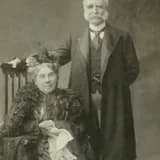
Tracy received U.S. patent no. 423,335 for a sewing machine improvement, part of her prolific 1890-1893 patenting period.
On March 25, 1890, Harriet Tracy received U.S. Patent No. 423,335 for an improvement to the sewing machine, marking the beginning of an intensely productive period of mechanical invention that would span the early 1890s. Sewing machines were among the most widely used and commercially significant mechanical devices of the era, and improvements to their function had substantial market potential.
Tracy's entry into sewing machine design demonstrated her range as an inventor, moving from the domestic simplicity of her earlier crib patent into more complex mechanical engineering territory typically dominated by male inventors and manufacturers such as Singer and Wheeler & Wilson. Her ability to identify functional deficiencies in existing sewing machine designs and propose patentable solutions speaks to a sophisticated, hands-on understanding of textile machinery.
This patent was the first of several sewing-machine-related patents Tracy would secure between 1890 and 1893, a body of work that would later be showcased publicly at the World's Columbian Exposition in Chicago. Her sustained focus on refining sewing machine mechanisms reflects both her ingenuity and a shrewd awareness of where a woman inventor might find commercial opportunity in an industrializing America.