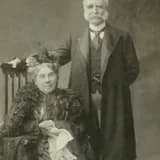
Tracy was granted U.S. patent no. 80,769 for an 'Improvement in cribs,' an attachment allowing a crib to fold into a bedstead.
On July 21, 1868, Harriet Tracy was granted U.S. Patent No. 80,769, her first known patented invention, titled an "Improvement in cribs." The device was an attachment for bedsteads that allowed a crib to be neatly folded away or integrated into the larger bed frame when not in active use, saving space in the small, often crowded households of the era.
This modest but practical invention marked the beginning of what would become an extraordinarily long and productive inventing career, stretching from 1868 to at least 1915. At a time when women accounted for roughly one percent of American patent holders, Tracy's decision to pursue and secure a federal patent was itself a significant act, requiring technical drafting skills, legal navigation of the Patent Office bureaucracy, and financial resources that were far less accessible to women than to men.
The crib patent reflects the practical, domestic-adjacent inventions that many woman patentees of the period pursued, often because household improvements were seen as an acceptable arena for female ingenuity. Yet Tracy would soon expand well beyond this domestic sphere into industrial machinery, foreshadowing the diversity of her later work in sewing machines and elevator safety systems.