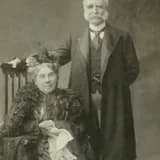
Tracy was granted U.S. patent no. 468,039 for her signature invention, the Tracy Gravity Safety Elevator, designed to prevent shaft falls.
On February 2, 1892, Harriet Tracy received U.S. Patent No. 468,039 for the Tracy Gravity Safety Elevator, arguably her most significant and enduring invention. The system employed an automatic platform mechanism that closed off the shaft opening whenever the elevator car was not present at a floor, directly addressing the deadly hazard of open shafts that had plagued elevator technology since its inception.
The invention built directly upon her 1891 patent for an elevator-shaft door-operating mechanism, representing the culmination of several years of sustained engineering work in an industry then dominated by firms such as Otis Elevator Company. That a woman inventor working largely independently could develop a credible, patentable safety system rivaling the work of established elevator manufacturers was a remarkable achievement in an era when women were rarely taken seriously as engineers or industrial innovators.
The Tracy Gravity Safety Elevator would go on to be publicly demonstrated in daily operational use at the 1893 World's Columbian Exposition in Chicago, cementing Tracy's reputation as a serious inventor of industrial safety technology. Her elevator patent stands as one of the clearest examples of a nineteenth-century American woman making a substantive technical contribution to urban infrastructure safety, at a time when skyscraper construction was accelerating rapidly across major American cities.