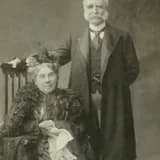
Harriet Tracy died in Isleworth, Greater London, England, at age 83, after a prolific career as an American woman inventor.
Harriet Ruth Brisbane Tracy died on May 30, 1918, in Isleworth, Greater London, England, at the age of 83. Her death marked the end of a remarkable inventive career that had spanned nearly five decades, from her first patent in 1868 through her final patents in the 1910s, encompassing at least 27 U.S. patents across fields as varied as household furniture, sewing machines, and elevator safety systems.
That Tracy died in England rather than the United States reflects the later chapter of her life, during which she appears to have relocated across the Atlantic, though details of this period remain less thoroughly documented than her prolific American patenting years. Her passing came amid the final months of the First World War, a period of profound global upheaval that likely overshadowed public notice of her death in contemporary press.
Tracy's legacy endures primarily through the historical record of her patents and her notable exhibition at the 1893 World's Columbian Exposition, where her Gravity Safety Elevator and sewing machines drew attention as products of serious engineering achievement by a woman inventor. In the decades since, historians and institutions such as the Lemelson-MIT Program and the Hagley Museum and Library have worked to recover and highlight her contributions, positioning her among the small but significant cohort of nineteenth-century American women who secured patents and left a lasting mark on industrial innovation.