← All women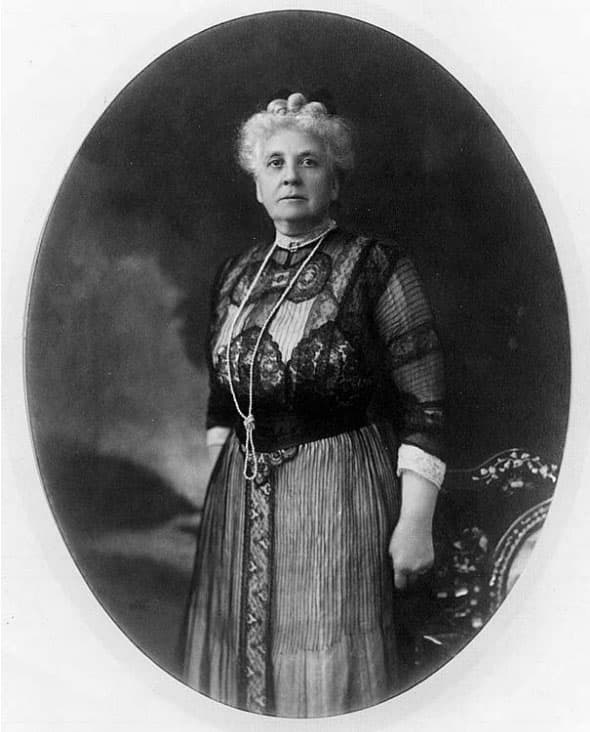
American · Activism · Politics · Literature
Fanny Garrison Villard
December 16, 1844 – July 5, 1928
Early Life and Background
Helen Frances “Fanny” Garrison Villard was born on December 16, 1844, in Boston, Massachusetts, the fourth of seven children and only daughter of the abolitionist leader William Lloyd Garrison and Helen Eliza (Benson) Garrison.[1][3] Her father was one of the most prominent voices in the U.S. antislavery movement, editor of the Liberator, and an advocate of immediate emancipation, racial equality, and non‑resistance.[1][3][18] Growing up in the Garrison household meant witnessing firsthand both intense moral commitment and public hostility: Fanny’s early years were shaped by memories of her father being threatened by mobs for his anti‑slavery stance.[2][12]
Fanny was educated at the Winthrop School in Boston, receiving a solid academic foundation unusual for many girls of her generation.[3] She also studied music and became proficient enough to work as a piano teacher in her youth.[2][3][7] The combination of formal schooling and artistic training prepared her to participate in Boston’s intellectual circles and to support herself independently before marriage.
Equally important were the ideological influences she absorbed at home. William Lloyd Garrison’s embrace of non‑resistance—a doctrine rejecting all forms of violence and coercion—left a lasting impression on Fanny.[3][8] She later wrote that his example taught her to evaluate political questions through a moral lens, particularly issues of war and peace. Her mother’s support work within the abolitionist movement also modeled the importance of women’s organizational labor behind public campaigns.
These formative experiences made Fanny part of an intergenerational reform lineage. As a child of the abolitionist era who would later live into the aftermath of World War I, she would carry forward and reinterpret her parents’ radical ideas in new contexts, becoming a bridge figure between nineteenth‑century anti‑slavery activism and twentieth‑century movements for women’s rights, racial justice, and pacifism.[1][2][3]
Marriage, Family, and Career Beginnings
On January 3, 1866, Fanny Garrison married Henry Villard, a German‑born journalist who had worked as a Civil War correspondent and later became a major railroad executive and financier.[3][14] The marriage linked the Garrison reform tradition with the rising world of corporate capitalism and national infrastructure building. Henry eventually controlled significant railroad interests, including involvement with the Northern Pacific.[12]
Before her marriage, Fanny taught piano, an occupation that reflected both her musical education and the limited professional avenues open to middle‑class women in the mid‑nineteenth century.[2][3][7] After marrying Henry, she relocated into the social and economic milieu of New York and railroad society, where she combined domestic responsibilities with emerging philanthropic and reform interests.
The couple had four children: Helen Villard, Oswald Garrison Villard, Harold Garrison Villard, and Henry Hilgard Villard.[3][9] Their son Oswald Garrison Villard became a prominent journalist, editor of The Nation, and a leading figure in the NAACP, extending the family’s engagement with civil rights and liberal causes.[1][2][7] Through her children, Fanny’s influence radiated outward into the intellectual and political life of the Progressive Era.
During the decades of Henry Villard’s business ascendancy, Fanny’s activism was relatively quiet but developing. She was exposed to elite philanthropic networks and publishing circles, experiences that later proved critical when she began to mobilize resources for suffrage and peace campaigns. At the same time, her Garrison heritage ensured that she remained attuned to the moral dimensions of economic and political power.
Henry Villard died in 1900, leaving Fanny a widow in her mid‑fifties.[3] Rather than retreating from public life, she increasingly devoted herself to organized philanthropy and reform. Sources emphasize that her most visible activism occurred after her husband’s death, when she used both inherited wealth and social connections to pursue ambitious agendas in suffrage, civil rights, and pacifism.[2][3]
Philanthropy, Suffrage Work, and Early Public Roles
By the early twentieth century, Fanny Garrison Villard had become a New York City philanthropist noted for her engagement in charitable and reform causes.[2][10] She supported organizations such as the Diet Kitchen Association, which provided food and aid to the urban poor, reflecting her belief that social justice required practical assistance as well as political change.[2]
Fanny’s commitment to women’s suffrage emerged clearly in the first decade of the twentieth century. A local historical account from Dobbs Ferry credits her with co‑founding the suffrage movement in the Hudson River towns around 1906 and serving as president of the Hudson Valley Suffrage Organization.[10] She joined the American Woman Suffrage Association, becoming an active supporter of women’s political rights.[7]
In New York State, Fanny helped lead legislative committees and participated in public campaigning for suffrage.[10] She spoke at street meetings—reportedly addressing crowds on street corners in her sixties, a striking reversal of the gender norms that had once confined women’s voices to private spaces.[10] Her work aligned her with leaders such as Anna Howard Shaw and Carrie Chapman Catt, placing her within the mainstream suffrage movement while preserving her own radical orientation.[8]
Fanny’s activism also extended to education. Contemporary accounts and later biographical entries note that she participated in the founding of Barnard and Radcliffe Colleges, contributing to efforts to secure higher education opportunities for women in both New York and Massachusetts.[3] While the specific dates of her involvement are not clearly documented, her support for women’s colleges reflected a broader strategy: expanding women’s access to education as a prerequisite for full citizenship.
In 1908, Fanny worked with her son Oswald and Rabbi Stephen S. Wise on the founding of the Men’s League for Woman Suffrage, one of the earliest male‑led organizations dedicated to supporting women’s enfranchisement.[3] This initiative emphasized that men must be allies in dismantling legal and political barriers to women’s rights and underscored Fanny’s talent for building coalitions across gender and religious lines.
Co‑founding the NAACP and Civil‑Rights Advocacy
Fanny Garrison Villard’s most widely recognized civil‑rights achievement came with the founding of the National Association for the Advancement of Colored People (NAACP) on February 12, 1909.[1][9] The organization grew out of the "National Negro Committee," convened in response to race riots, lynching, and the erosion of Black civil and political rights in the post‑Reconstruction era.
As part of a group of white reformers and Black leaders, including W. E. B. Du Bois and her son Oswald, Fanny helped transform the initial conference into a permanent membership organization dedicated to fighting racial discrimination through legal challenges, public protest, and political lobbying.[1][2][9] Her participation reflected a continuity with her father’s abolitionist work; she saw the defense of African American rights as an unfinished part of the moral struggle against slavery.
The NAACP’s founding was historically significant as the creation of what would become the leading civil‑rights organization in the United States, involved in later landmark cases and campaigns against lynching, segregation, and disfranchisement. Fanny’s role illustrates the involvement of white women reformers who, though often less visible than male leaders, supplied crucial fundraising, organizational expertise, and networks.[2]
Within the NAACP and related interracial work, Fanny used her position in New York philanthropic circles to support staff, raise funds, and advocate for broad public support. A Dobbs Ferry historical retrospective describes her as an "adviser and fundraiser for interracial and humanitarian causes," underscoring her behind‑the‑scenes importance in sustaining such organizations.[10]
Pacifism and Peace Organizing
Parallel to her suffrage and civil‑rights work, Fanny Garrison Villard emerged as a leading pacifist, applying her father’s doctrine of non‑resistance to the tumultuous politics of World War I and its aftermath.[1][2][3] Her peace activism gained public visibility in August 1914, when she helped lead a women’s Peace Parade down Fifth Avenue in New York City, marching with social reformer Lillian Wald and others to protest the looming conflict in Europe.[7][10]
Fanny’s pacifism was absolute. Influenced by William Lloyd Garrison and later by Tolstoyan thought, she rejected not only war itself but also the systems of militarism, conscription, and armament that made war possible.[3][8] She argued that genuine security could be built only on justice, democracy, and international cooperation.
On January 10, 1915, Fanny joined forces with Jane Addams and other activists to found the Woman’s Peace Party in Washington, D.C.[3][15] The party sought to unite women across class and ideological lines in opposition to war, advocating arbitration, disarmament, and the inclusion of women in foreign‑policy decision‑making. It later became the U.S. section of the Women’s International League for Peace and Freedom (WILPF), cementing its international character.[9][10]
After World War I, Fanny’s commitment to uncompromising pacifism led her to establish a still more radical organization. In 1919, she founded the Women’s Peace Society, dedicated to absolute non‑resistance and opposition to all forms of militarism, including military training and war taxes.[3][6][9] Based in New York, the society provided a home for women activists who rejected pragmatic compromises and insisted on moral consistency in peace advocacy.
Fanny also participated in international peace efforts. Sources note that she was a delegate to peace meetings abroad and was associated with the Women’s International League for Peace and Freedom, helping to link U.S. feminist pacifism with European and global movements.[4][10] Her work thus spanned local street‑corner speeches, national organizational leadership, and international conferences, all rooted in a steadfast refusal to accept violence as a legitimate instrument of policy.
Major Written Work: "William Lloyd Garrison and Non‑Resistance"
In 1924, Fanny Garrison Villard published "William Lloyd Garrison and Non‑Resistance", a biographical and philosophical study of her father’s life and ideas.[3][8] The work combined personal recollection, family documents, and historical analysis to trace how William Lloyd Garrison’s abolitionism evolved into a broader ethical system rejecting violence in all forms.
Fanny used the book to defend non‑resistance against critics who viewed it as naïve or socially disruptive. She argued that Garrison’s views were not a withdrawal from politics but a radical redefinition of it, grounded in the belief that coercion and war undermine true justice. The work emphasized that abolition, suffrage, and peace were connected by a common moral thread: opposition to domination and dehumanization.[8]
Historians have valued the book for its insider perspective on Garrison and the abolitionist movement. It preserves firsthand testimony about family life, motivations, and intra‑movement debates that might otherwise have been lost. At the same time, it reveals Fanny as an intellectual actor in her own right, capable of articulating a sophisticated theory of non‑violence rooted in both experience and reflection.[2][3]
The publication also served as a bridge between nineteenth‑century radical thought and twentieth‑century pacifist discourse. By bringing Garrison’s ideas into conversation with contemporary concerns about war and militarism, Fanny contributed to the intellectual groundwork on which later non‑violent activists—religious pacifists, conscientious objectors, and civil‑rights leaders—could build.
Awards, Honors, and Public Recognition
Fanny Garrison Villard did not seek formal honors in the way some contemporaries did, and there is limited documentation of specific awards. However, contemporaneous and later sources testify to the public recognition she received.
A 1928 New York Times obituary described her as a "pioneer suffragist" and emphasized her leadership in peace causes, charities, and society, highlighting her stature in national public life.[12] A local historical summary from Dobbs Ferry similarly characterized her as a "NYC philanthropist, adviser and fundraiser for interracial and humanitarian causes" and credited her with co‑founding the suffrage movement in the river towns and leading legislative committees.[10]
Her roles in founding the NAACP, the Woman’s Peace Party, and the Women’s Peace Society are themselves a form of honor: each organization’s later prominence and longevity testify to the significance of the work she helped initiate.[1][3][6][9] Within suffrage and peace circles, she was regarded as a respected elder, drawing on the moral authority of the Garrison name while demonstrating her own courage and persistence.
Personal Life and Relationships
Fanny’s personal life was deeply intertwined with her reform commitments. Her marriage to Henry Villard placed her at the intersection of high finance, journalism, and politics; her social status as "Mrs. Henry Villard" opened doors into New York society even as she used that position to challenge mainstream assumptions about women’s proper roles.[12]
Her relationships with her children, especially Oswald Garrison Villard, were both familial and political. Mother and son collaborated on suffrage campaigns and NAACP work, sharing a commitment to liberal reform and civil rights.[1][2][7] This family collaboration extended the Garrison tradition of multigenerational activism, demonstrating how radical ideas could be transmitted through both blood ties and organizational mentorship.
Fanny maintained friendships and working relationships with leading reformers of her day, including Jane Addams, Lillian Wald, and figures in the suffrage movement such as Anna Howard Shaw and Carrie Chapman Catt.[3][7][8][10] These connections placed her within dense networks of Progressive Era activism and allowed her to coordinate campaigns across issues and regions.
In later years, Fanny resided at Thorwood Park in Dobbs Ferry, New York, where she became a prominent local figure. Her home functioned as both private residence and informal hub for philanthropic planning, reflecting her integration of personal and public life.[10][12]
Later Life and Death
In the final decades of her life, Fanny Garrison Villard remained active in peace and suffrage work even as the political landscape shifted. After the Nineteenth Amendment granted women the vote in 1920, she continued to argue that women should use their new political power to promote social justice, oppose war, and support educational opportunities.[2]
She sustained her involvement with the Women’s Peace Society and allied organizations, insisting on the relevance of non‑resistance in the era of rising militarism and nationalism. Her 1924 book on William Lloyd Garrison and non‑resistance represented a conscious effort to ensure that the intellectual foundations of her activism would outlive her.[3][8]
On July 5, 1928, Fanny died of heart disease at her home in Thorwood Park, Dobbs Ferry, New York, at the age of eighty‑three.[1][2][3][12] She was buried in Sleepy Hollow Cemetery beside her husband, symbolically uniting the Garrison abolitionist legacy with the Villard family’s corporate and journalistic contributions.[12]
The next day, July 6, 1928, the New York Times published an obituary that captured contemporary assessments of her life. It emphasized her pioneering role in suffrage, her leadership in peace and charity work, and her advocacy of colleges for women, portraying her as both a product and a shaper of the major reform currents of her time.[12]
Legacy and Historical Impact
Fanny Garrison Villard’s legacy lies in her role as a bridge between movements and eras. Born into the abolitionist struggle, she translated its moral principles into twentieth‑century campaigns for women’s rights, racial equality, and peace.[1][2][3]
In the history of women’s suffrage, she stands out as an organizer who connected local and state efforts with national and male‑ally initiatives, helping to build broad coalitions that contributed to the eventual success of the movement. Her street‑corner speeches and legislative work in New York exemplify the grassroots labor that underpinned constitutional change.[7][10]
In civil‑rights history, her involvement in the founding of the NAACP underscores the often‑overlooked role of white women reformers in early twentieth‑century interracial organizing. While Black leaders rightly occupy the center of NAACP narratives, Fanny’s participation highlights how abolitionist families continued to support Black civil‑rights efforts into the Jim Crow era.[1][2]
In the realm of peace activism, Fanny’s contribution is especially notable. Through the Woman’s Peace Party and the Women’s Peace Society, she helped articulate and institutionalize a feminist pacifism that challenged both militarism and gender exclusion from foreign‑policy debates.[3][6][9] Her unwavering commitment to non‑resistance influenced later pacifist thought and offered a moral alternative to realist approaches to international relations.
Her writing, particularly "William Lloyd Garrison and Non‑Resistance," ensured that the intellectual lineage of non‑violence remained accessible to future scholars and activists. By documenting her father’s ideas and connecting them to contemporary issues, she provided a historical foundation on which later non‑violent movements—religious, political, and social—could build.[3][8]
Fanny Garrison Villard thus occupies a distinctive place in women’s history: not primarily as a charismatic public leader, but as a steadfast organizer, thinker, and connector whose work spanned multiple causes and generations. Her life illustrates how women in elite social positions could use those positions to challenge entrenched power structures, and how family legacies of radicalism could be carried into new struggles over time.
Dated achievements
9 indexed.
- Dec161844Activism
Birth of Fanny Garrison Villard
Birth of Helen Frances “Fanny” Garrison in Boston, Massachusetts, daughter of abolitionist William Lloyd Garrison.
View details Encyclopedia.com – Villard, Fanny Garrison (1844–1928) - Jan031866Activism
Marriage to Henry Villard
Marriage of Fanny Garrison to journalist and future railroad executive Henry Villard in Boston.