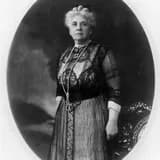
Publishes "William Lloyd Garrison and Non-Resistance," interpreting her father’s abolitionist pacifism.
In 1924, recorded as January 1, 1924 to mark a year‑only date, Fanny Garrison Villard published "William Lloyd Garrison and Non‑Resistance", a biographical and philosophical work examining her father’s abolitionism and theory of non‑resistance.
Drawing on family papers and personal memories, Fanny traced how William Lloyd Garrison moved from militant anti‑slavery agitation to a broader ethic that rejected all forms of violence, including war and punitive justice. She used the book to clarify and defend non‑resistance against critics who dismissed it as impractical or utopian, arguing that it offered a consistent moral framework for confronting injustice.
Historically, the publication is significant on several levels. It preserved firsthand testimony about one of the nineteenth century’s most influential reformers, enriching the historiography of abolition. At the same time, it functioned as a manifesto for twentieth‑century pacifism, connecting antebellum radical thought to contemporary debates over militarism, prisons, and state power.
For Fanny personally, the book represented both filial tribute and intellectual achievement, asserting her voice as a theorist of non‑violence rather than merely a practitioner. The work influenced later scholars and activists who sought historical precedents for absolute pacifism, situating the Garrison‑Villard tradition within a longer lineage of non‑violent resistance that would eventually inform movements around the world.