← All women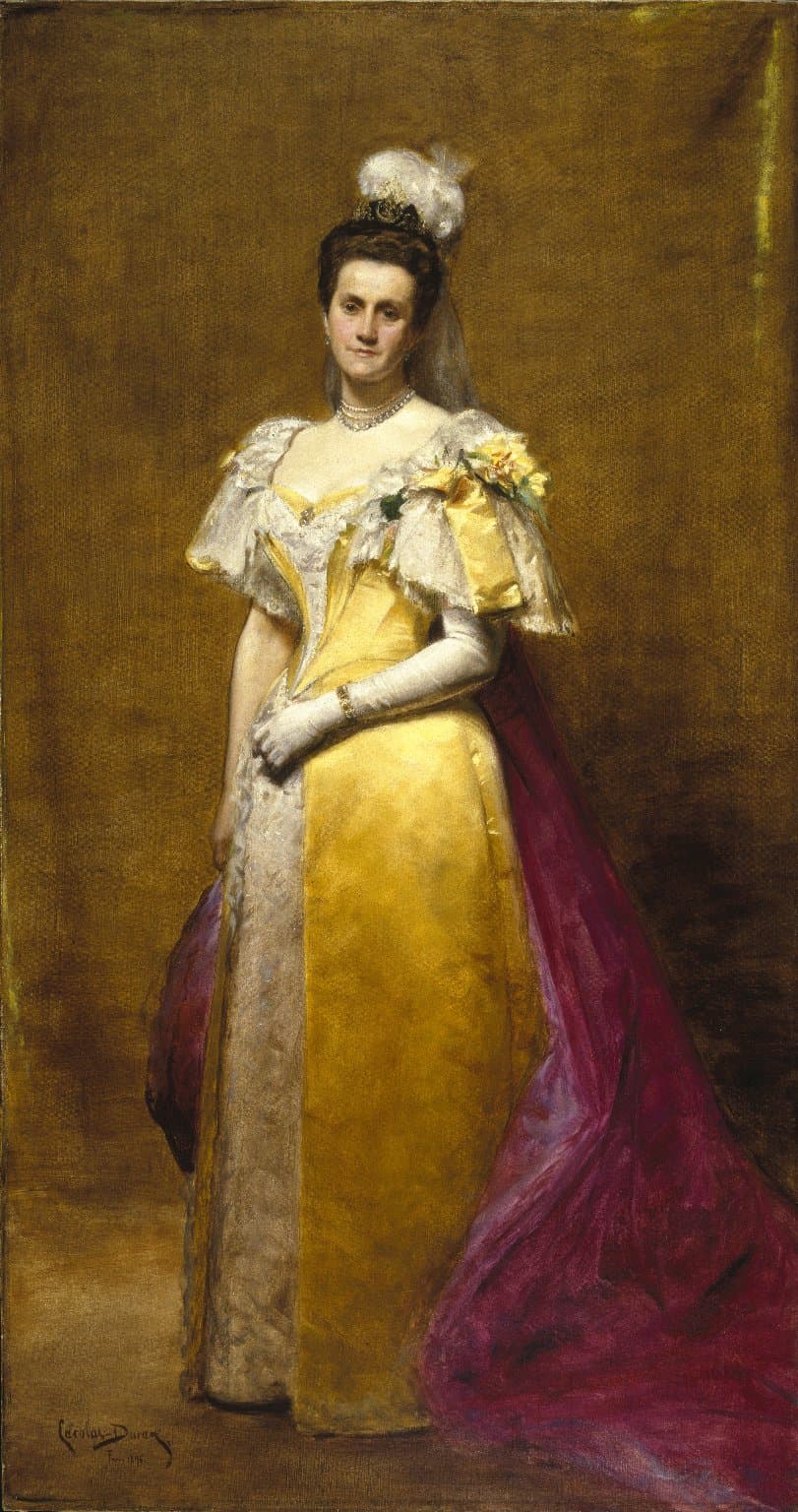
American · Science · Activism · Law
Emily Warren Roebling
September 23, 1843 – February 28, 1903
Early Life and Background
Emily Warren Roebling (September 23, 1843 – February 28, 1903) was an American civil engineering pioneer and legal advocate best known for her decisive role in the completion of the Brooklyn Bridge.[1] She was born Emily Warren in Cold Spring, New York, a Hudson River village north of New York City.[1]
Emily was one of the younger children of Silas Warren, a farmer and veteran of the War of 1812, and Phoebe Lickley WarrenGouverneur Kemble Warren, became a distinguished Union general and engineer during the American Civil War, credited with saving the Union line at Gettysburg.[1][10] His career in engineering and military leadership exposed Emily to technical and strategic thinking from an early age.
Although detailed records of her childhood schooling are scarce, sources agree that she received a solid education for a girl of her time and developed strong intellectual curiosity.[10][14] Mid‑19th‑century New York offered limited formal opportunities for women in higher mathematics or engineering, but Emily’s later capacity to master advanced topics suggests that she read widely and was encouraged to think beyond conventional domestic roles.
Marriage and Early Exposure to Engineering
Emily met Washington A. Roebling, an engineer who had served under her brother Gouverneur during the Civil War, in the early 1860s.[1][14] Their shared social circles and Washington’s respect for her brother’s judgment likely helped shape their relationship. Emily and Washington married in January 1865
Shortly after the wedding, Emily accompanied Washington to Europe. There, Washington studied contemporary suspension bridges and the use of pressurized caissons—submerged, watertight structures used to build foundations.[2][14] Unlike most 19th‑century wives, Emily took an active interest in his work, visiting construction sites and learning about materials, structural forms, and emerging engineering techniques. This informal education abroad provided her first sustained exposure to the technical world that would later become her sphere of activity. In 1869, John A. Roebling, Washington’s father and the original designer of the Brooklyn Bridge project, died following an injury.[1] Washington became chief engineer of the planned bridge linking Manhattan and Brooklyn across the East River. Emily’s understanding of his work and methods, developed during their European travels and conversations, positioned her as a close collaborator—even though her role was still informal and shaped by marital expectations. Construction of the Brooklyn Bridge began in the 1870s and quickly became one of the most ambitious engineering projects of the era.[1][5] The bridge’s design involved massive stone towers, steel‑wire cables, and deep foundations sunk in caissons under high air pressure. In 1872, Washington Roebling developed severe caisson disease (decompression sickness, colloquially "the bends") after extended exposure to the compressed air environment in the East River caissons.[5][14] The illness left him largely bedridden and unable to regularly visit the construction site. His physical incapacity threatened the continuity of the project, whose complexity demanded experienced leadership. Emily responded by undertaking what contemporaries described as an intensive crash course in engineering. She studied higher mathematics, including calculus and strength‑of‑materials calculations, as well as stress analysis, cable construction, and the specifics of the Brooklyn Bridge’s design.[5][10][14] She reviewed plans and specifications, absorbed engineering reports, and learned to read technical drawings. At the same time, Emily became Washington’s primary liaison to the site. She conveyed his instructions to resident engineers and foremen, brought back detailed reports, and monitored the progress and quality of work.[1][5] Over time, as she gained deeper technical understanding, she began not only transmitting information but also offering informed judgments and resolving practical questions on the spot. By the mid‑1870s, observers recognized that Emily functioned as the project’s de facto field engineer and project manager, even though Washington retained the official title of chief engineer.[1][5][10] She oversaw construction sequences, checked cable wire quality, monitored tower work, and coordinated communication among contractors, city officials, and the bridge’s management board. Emily’s responsibilities during the bridge’s construction extended far beyond messenger duties. She became an indispensable technical and organizational leader. Historians and professional societies have described her as "perhaps the first woman field engineer" and certainly one of the earliest women to hold such responsibility on a major infrastructure project.[8][14] Her work involved: In 1875, the New York State Legislature took over the Brooklyn Bridge project as concerns about costs and governance intensified.[19] Throughout this transition, Emily remained a key figure in communications and logistics, transmitting Washington’s directives and translating legislative demands back into engineering terms.[14][19] The late 1870s brought additional challenges. After the Tay Bridge disaster in Scotland in 1879, where a railway bridge collapsed in a storm, public anxiety about bridge safety increased.[19] Emily and Washington had to confront heightened scrutiny, affirm the soundness of their design, and respond to skeptics who questioned the viability of long‑span suspension bridges. Emily’s technical literacy and poise were critical in these discussions. By 1880, the Brooklyn Bridge was substantially advanced, though not yet open. Emily made an early crossing of the unfinished bridge in the spring of that year, helping to demonstrate confidence in the structure during test phases.[19] Later accounts describe her carriage crossings and inspections of the work as symbolic gestures that linked her personal courage with the bridge’s perceived safety. Emily’s recognized expertise by this time is evident in another 1880 event: she escorted French engineer Ferdinand de Lesseps during his visit to New York.[19] De Lesseps, famous for the Suez Canal, represented the international engineering elite. Emily’s role signaled that she was regarded by contemporaries as fully conversant in the technical and organizational aspects of major infrastructure projects. As debates over the bridge’s management intensified, some officials sought to remove Washington from his position, arguing that his illness compromised his effectiveness.[14] In response, Emily stepped into a new public arena. In 1882, she became the first woman ever to address the American Society of Civil Engineers (ASCE), appearing before the professional body to defend Washington’s role and the integrity of the bridge’s design.[14] Though the exact date of her address is not specified, it is recognized as a landmark moment in the history of women in engineering societies. Her presentation drew upon years of hands‑on experience and intensive study. Emily argued that Washington remained mentally capable and that his leadership, exercised through her liaison work, was essential to the project’s success.[14] She demonstrated detailed knowledge of technical aspects that few outside the core engineering team possessed. In an era when women were excluded from most scientific and technical institutions, her appearance and authority before ASCE challenged prevailing assumptions about gender and professional competence. While she was not admitted as a member, the event indicated that a woman could be an authoritative voice in civil engineering deliberations. After fourteen years of construction, the Brooklyn Bridge was completed in 1883.[1][5] At the time, it was the longest suspension bridge in the world and the first to use steel for its main cables, which were 16 inches in diameter.[14] The bridge quickly became a symbol of modern engineering and urban progress, often referred to as the "eighth wonder of the world."[14] On May 23, 1883, the bridge was formally dedicated in New York City.[2][14] Dignitaries, engineers, and thousands of spectators attended the ceremony. Congressman Abram Hewitt, a key figure in the project’s political history, singled out Emily in his speech, praising her "self‑sacrificing devotion" and stating that the bridge was "an everlasting monument" to her capacity for higher education from which women had long been disbarred.[5] Her name appeared on a dedication plaque alongside those of John and Washington Roebling, recognizing her as one of the builders. The following day, May 24, 1883, the bridge opened to public traffic. Emily Warren Roebling became the first person to cross the completed bridge, riding in a carriage and famously carrying a live rooster as a symbol of victory.[2][4][5][16] President Chester A. Arthur and other officials participated in the opening celebrations, but Emily’s crossing was widely noted as emblematic of her personal triumph and the success of the project. At the time of its opening, the bridge embodied cutting‑edge engineering and urban vision. Emily’s role in bringing it to completion—overseeing daily construction, studying complex technical subjects, and navigating intense political pressures—made her one of the most significant women in 19th‑century engineering. After the bridge’s completion, Emily and Washington moved to Trenton, New Jersey in 1884
She studied law and eventually earned a law degree, reported as being from New York University (NYU), becoming among the earliest women with formal legal training in New York State.[10][15] The exact year of her degree is not clearly documented, but sources emphasize that she used this qualification to support women’s opportunities in professional life. Emily wrote an essay titled "A Wife’s Disabilities", in which she criticized discriminatory legal practices that limited married women’s property rights and autonomy.[2][10] The essay argued for reforms to reduce the legal disadvantages that women faced within marriage, reflecting her growing engagement with women’s rights and legal activism. She also became involved with several civic and women’s organizations, including: Through these activities, Emily shifted from engineering leadership to broader advocacy for women’s education and legal equality, illustrating the interconnectedness of technical and civic spheres in her life. During her lifetime, Emily received limited formal honors relative to the magnitude of her contributions, a reflection of the gendered norms of the period. However, several key forms of recognition stand out. Her inclusion on the Brooklyn Bridge dedication plaque and explicit praise by Congressman Abram Hewitt were unusual acknowledgments for a woman at a major engineering ceremony in 1883.[5][14] Contemporary commentary in newspapers and speeches recognized her "indispensable" part in the bridge’s completion.[5] In the decades following her death, her role was partially obscured as canonical histories focused on John and Washington Roebling.[13][14] Nevertheless, engineers, local historians, and later scholars continued to highlight her contributions. The American Society of Civil Engineers (ASCE) and other professional organizations have since identified her as a notable figure in civil engineering history, emphasizing that her leadership was critical to the project’s success.[8] In the late 20th and early 21st centuries, efforts to recover women’s histories brought renewed attention to Emily. Books, articles, and educational programs began presenting her as the "woman who saved the Brooklyn Bridge" and as a pioneering "first female field engineer."[2][10][14] On March 8, 2018, The New York Times published an "Overlooked" obituary for Emily Warren Roebling, explicitly acknowledging that her death had not been marked with a traditional obituary in 1903.[16] The article emphasized her management of the bridge’s completion and her first crossing of the span, and used her story to illustrate systemic bias in historical remembrance. Museums and cultural institutions, such as the New‑York Historical Society, the Brooklyn Public Library, and educational projects like New York City’s Hidden Voices curriculum, now feature her prominently in programming on women’s history, engineering, and urban development.[4][5][10] These honors, though posthumous, have helped integrate her narrative into broader public understanding of the bridge and women in STEM. Emily and Washington Roebling’s marriage was characterized by intellectual partnership and mutual respect. Washington relied heavily on Emily’s judgment during his illness, and sources suggest that he viewed her as a true collaborator rather than a mere assistant.[1][14] The couple had one son, John A. Roebling II, born in 1867, who later became a businessman and philanthropist.[1] Emily balanced her responsibilities as a mother with the demanding schedule of overseeing a massive infrastructure project, an aspect of her life often overshadowed by her engineering achievements but integral to understanding her daily experience. In Trenton, Emily maintained a household that hosted visitors and engaged with civic life while continuing her intellectual pursuits.[10] Her law studies and organizational work indicate that she did not confine herself to domestic roles, but instead used her family position to support broader social causes. Emily Warren Roebling’s legacy operates on multiple levels: engineering history, women’s rights, and historical memory. In engineering, she stands as a pioneering figure who, without formal credentials, mastered the complex design and construction processes of one of the 19th century’s most advanced bridges. Her self‑education in mathematics, materials, and structural analysis, combined with her organizational skill, demonstrates that women were capable of high‑level technical work even when institutional doors were closed.[1][5][8] Her role as de facto field engineer and project manager for the Brooklyn Bridge challenged contemporary norms that kept women away from construction sites and professional engineering societies.[4][10] By presenting before ASCE and visibly supervising work, she provided an early model of women’s participation in civil engineering leadership, influencing later generations of women entering STEM fields. In the realm of women’s rights, her law degree and writings such as "A Wife’s Disabilities" connected technical achievement with legal advocacy. She used the authority gained from her engineering work to argue for reforms in marital property law and women’s legal status, indicating that professional experience could strengthen claims for broader social change.[2][10] Her story also illustrates how women’s contributions can be marginalized in historical narratives. For much of the 20th century, standard accounts of the Brooklyn Bridge exalted John and Washington Roebling while treating Emily as a footnote or omitting her altogether.[13][14] Recent scholarship, media coverage, and institutional recognition have worked to correct this imbalance, using her life as a case study in the recovery of "hidden" women in history. Today, Emily is widely cited in discussions of women in engineering and construction as a pioneering figure who "saved" the Brooklyn Bridge and helped redefine what women could do in technical fields.[2][8][10] Her example continues to inspire initiatives encouraging girls and women to pursue STEM careers. In her later years, Emily remained active in civic and intellectual circles. Living in Trenton, she worked through organizations dedicated to women’s education, national memory, and legal reform.[10][15] Her health eventually declined, and she was diagnosed with stomach cancer. Emily Warren Roebling died on February 28, 1903, in Trenton, New Jersey.[1][10] She was 59 years old. Despite her central role in completing the Brooklyn Bridge, her death did not receive the level of public commemoration afforded to many male engineers of similar stature, reflecting broader patterns of gender bias in historical remembrance. Over a century later, however, her contributions have been increasingly recognized and celebrated. The bridge she helped build remains one of the most iconic structures in the United States, and her story has become integral to how historians, engineers, and educators interpret its creation. Emily Warren Roebling’s life—from a farmer’s daughter in Cold Spring to a pioneering engineer and legal advocate—embodies the ways in which women in the 19th century navigated and quietly reshaped boundaries in science, law, and public life.Washington Roebling’s Illness and Emily’s Crash Course in Engineering
Role as De Facto Field Engineer and Project Manager
Testing and Early Crossings
First Woman to Address the American Society of Civil Engineers
Completion and Dedication of the Brooklyn Bridge
Life After the Brooklyn Bridge
Awards, Honors, and Later Recognition
Personal Life and Family
Legacy and Historical Impact
Later Life and Death
Dated achievements
8 indexed.
- Sep231843Science
Birth of Emily Warren Roebling
Emily Warren was born in Cold Spring, New York, later renowned for her pivotal engineering role in building the Brooklyn Bridge.
View details Emily Warren Roebling - Wikipedia - Jan011865Science
Marriage to Washington Roebling and European engineering study tour
Emily Warren married engineer Washington Roebling in January 1865, then traveled with him through Europe studying suspension bridges and caisson technology.