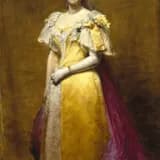
In 1882, Emily Warren Roebling became the first woman ever to address the American Society of Civil Engineers, defending her husband's continued leadership of the Brooklyn Bridge project.
In 1882, facing mounting pressure from officials and rival engineers who sought to remove her incapacitated husband, Washington Roebling, from his position as Chief Engineer of the Brooklyn Bridge, Emily Warren Roebling took the extraordinary step of directly addressing the American Society of Civil Engineers — becoming the first woman in the organization's history to do so.
Washington Roebling had suffered from decompression sickness (caisson disease) years earlier, leaving him largely bedridden and unable to appear at the bridge site or in public meetings. Emily had effectively served as his eyes, ears, and voice for a decade, learning stress analysis, cable construction, and material strength calculations well enough to supervise engineers and answer technical questions directly. When critics moved to have Washington replaced, Emily used her hard-won expertise to defend his competence and continued oversight before the professional body most qualified to judge such matters.
Her intervention was a watershed moment: not only did it help preserve her husband's position and ensure continuity in the bridge's completion, but it also marked the first time a professional engineering society in the United States had heard a woman speak with technical authority on an engineering matter. It stands as one of the earliest documented instances of a woman engaging as an equal within a formal American engineering institution, foreshadowing the slow opening of the profession to women in the following century.