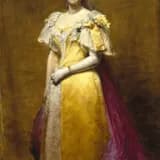
At the Brooklyn Bridge's formal dedication on May 23, 1883, Emily Warren Roebling was honored on the dedication plaque for her decade of supervisory engineering work.
On May 23, 1883, the Brooklyn Bridge — then the longest suspension bridge in the world — was formally dedicated in a grand public ceremony attended by President Chester A. Arthur, New York Governor Grover Cleveland, and thousands of spectators.
The dedication was the culmination of fourteen years of construction fraught with tragedy, technical uncertainty, and controversy. Chief Engineer John A. Roebling had died from tetanus early in the project after a ferry accident, and his son, Washington Roebling, was incapacitated by decompression sickness (caisson disease) after years of overseeing the underwater caisson work. In their absence, Emily Warren Roebling had spent roughly a decade acting as the crucial link between her bedridden husband and the engineers, workers, and officials at the site, teaching herself advanced mathematics, stress analysis, and cable construction to manage the project.
In recognition of her indispensable role, Emily Warren Roebling was honored at the dedication ceremony and later commemorated on a plaque affixed to the bridge itself, which credits her alongside her husband and father-in-law as one of the builders. This recognition, unusual for the era, publicly validated a role that had until then gone largely unofficial and unpaid — cementing her legacy as an engineer in all but formal title, and a rare example of a 19th-century woman receiving public engineering credit on a monument of such scale and importance.