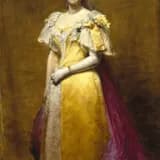
Emily Warren married engineer Washington Roebling in January 1865, then traveled with him through Europe studying suspension bridges and caisson technology.
In January 1865, Emily Warren married civil engineer Washington A. Roebling, son of the famed bridge designer John A. Roebling. The couple's union joined Emily's sharp intellect with a family already deeply embedded in the emerging science of suspension bridge engineering.
Shortly after their wedding, the newlyweds embarked on an extended trip through Europe, ostensibly for Washington's ongoing military and engineering education, during which they studied suspension bridges and the emerging technology of pneumatic caissons — the pressurized underwater chambers used to lay foundations for large bridges. Emily absorbed this technical knowledge alongside her husband, though at the time neither could have anticipated how critical this education would become.
This period represents the origin of Emily's engineering literacy. Unlike most women of her era, who had no exposure to technical or scientific fields, Emily was immersed from the very start of her marriage in the theory and practice of bridge-building. This foundation would prove indispensable seven years later, when her husband's incapacitation from decompression sickness thrust her into a de facto leadership role overseeing construction of the Brooklyn Bridge — then the most ambitious civil engineering project in the world.