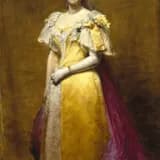
On May 24, 1883, Emily Warren Roebling became the first person to cross the newly opened Brooklyn Bridge, riding in a carriage and carrying a live rooster as a symbol of victory.
On May 24, 1883, the day after its formal dedication, the Brooklyn Bridge opened to public use as the longest suspension bridge in the world and the first major bridge built using steel-wire cables. In a symbolic gesture recognizing her decade-long role in the bridge's completion, Emily Warren Roebling was granted the honor of being the very first person to cross the finished structure.
She rode across in a horse-drawn carriage, famously carrying a live rooster in her lap as a traditional emblem of victory and triumph. The moment carried deep personal and symbolic weight: Emily had spent nearly eleven years serving as the de facto chief engineer after her husband Washington Roebling was incapacitated by caisson disease, teaching herself the mathematics of cable stress, catenary curves, and construction materials in order to relay technical instructions on-site and defend the project against skeptics and political adversaries.
Her crossing was more than ceremonial — it was a public acknowledgment, however understated by the standards of the time, that a woman had shepherded one of the era's most audacious feats of engineering to completion. In an age when women were barred from engineering schools and professional societies, Emily's first crossing of the Brooklyn Bridge remains one of the most enduring and celebrated symbols of a woman claiming her rightful, hard-earned place in a field that had denied her formal recognition. The moment is still commemorated today as one of the signature achievements of women's history in STEM.