← All women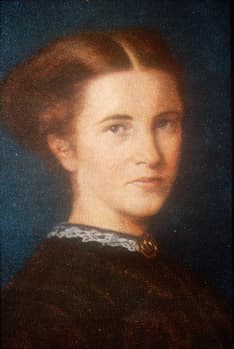
British · Medicine · Activism · Politics
Elizabeth Garrett Anderson
June 9, 1836 – December 17, 1917
Early Life and Family Background
Elizabeth Garrett Anderson (born Elizabeth Garrett) entered the world on 9 June 1836, in Aldeburgh, Suffolk, England, as one of the middle children in a large family headed by merchant Newson Garrett and his wife Louisa Dunnell Garrett.[15][4] Some accounts describe her birthplace as Whitechapel in East London, reflecting the family’s commercial connections there, but biographical reference works emphasise her Suffolk origins, where the family’s prosperity and social standing were firmly rooted.[15][9]
Garrett grew up in a household that combined rising middle‑class affluence with expectations that daughters would lead conventional domestic lives. Her father, however, was comparatively progressive in educational matters, encouraging his children’s intellectual development and eventually supporting Elizabeth’s unorthodox ambition to pursue medicine.[10][15] In 1841, the family moved from London to Aldeburgh, where Newson Garrett invested in local industry and commerce, giving his children a more stable and prosperous environment than the poorer East London district where they had lived earlier.[2][10]
Elizabeth’s schooling reflected typical Victorian gender norms but also the beginnings of change. She was educated at home and later attended Miss Browning’s School for Girls in London from 1849 to 1851, receiving a solid though not advanced curriculum focused on languages, literature, and accomplishments considered suitable for girls.[15] These studies did not include the rigorous science education required for medicine, but they provided a foundation of discipline and literacy that she would build on through self‑directed study.
Two relationships were especially formative. In her late teens she met Emily Davies, a leading advocate of women’s higher education, who became a lifelong friend and ally.[14] Davies encouraged Elizabeth to imagine a professional career beyond traditional domestic roles. Later, through the Society for Promoting the Employment of Women, Garrett met Elizabeth Blackwell, the first woman to receive a medical doctorate in the United States, whose example demonstrated that women could indeed qualify and practice as physicians.[11][14] These encounters crystallised Elizabeth’s ambition to enter medicine despite formidable institutional barriers.
Decision to Study Medicine and Early Obstacles
By the early 1860s, Garrett had resolved to become a doctor, an unprecedented goal for a woman in Britain. At that time, British medical schools, universities, and examining bodies operated under explicit or implicit rules excluding women from formal training and qualifications.[4][14] When she sought admission to established institutions—among them the medical schools of Edinburgh, St Andrews, and London—she was refused on grounds of sex, revealing both the legal and cultural obstacles she would have to circumvent.[14]
Denied the usual route through medical school, Garrett devised an alternative pathway. Beginning around 1860, she undertook private study with accredited physicians and gained clinical experience in London hospitals, notably Middlesex Hospital, where she was admitted for a time as a nursing probationer and allowed limited access to lectures and clinical teaching.[4][14] Her presence provoked resistance from some male students and staff, and her opportunities were curtailed; nevertheless, she persisted in pursuing the knowledge needed to sit the licensing examinations.
To strengthen her scientific grounding, she studied subjects such as anatomy, physiology, and materia medica through private tuition and by attending lectures wherever she could gain admission. Her strategy was to meet all formal requirements for the professional examinations while sidestepping barriers erected by institutions that would not enrol women. [10][14] This approach reflected a broader pattern in early women’s professional history: using legal loopholes and the absence of explicit prohibitions to gain entry to fields from which women were informally excluded.
Qualification as Britain’s First Woman Physician
Garrett’s breakthrough came in 1865, when she passed the examinations of the Society of Apothecaries and obtained its licence to practice.[4][12] The Society’s charter did not explicitly bar women from sitting the exams; by fulfilling all technical requirements, she forced the body to admit her. Once she received the licence, her name was entered on the Medical Register, giving her legal status as a qualified practitioner.
This achievement made her the first woman to qualify in Britain as a physician and surgeon, a milestone widely acknowledged in historical and biographical sources.[2][1][15] Alarmed by the precedent and eager to prevent further female candidates, the Society of Apothecaries promptly altered its regulations to restrict entry to approved medical school graduates, effectively closing the route she had used to women and reinforcing institutional barriers.
Garrett’s qualification had significance beyond her personal success. It demonstrated that the exclusion of women from medicine was not a matter of inherent incapacity but of institutional policy, and that determined individuals could exploit ambiguities in regulations to break new ground. Her presence on the Medical Register provided a powerful symbol and practical precedent for other women seeking medical careers, even as authorities tried to seal off the path she had taken.
Founding St Mary’s Dispensary and the New Hospital for Women
Even before her formal qualification, Garrett began focusing on women patients and on creating institutions where women could receive care from female practitioners. In 1866, the year she was licensed and listed on the Medical Register, she opened St Mary’s Dispensary for Women and Children in Marylebone, London.[4][6][15] The dispensary offered free or low‑cost medical treatment to poor women and children and was staffed in a way that allowed Garrett to practice medicine without constant hostility from male colleagues.
St Mary’s Dispensary grew over the following years and eventually evolved into the New Hospital for Women, which opened in 1872 as the first British hospital staffed entirely by women.[2][6][15] The hospital was designed to offer medical care to women from all social backgrounds while providing a crucial site of practice for women doctors.
Garrett served as senior physician at the New Hospital for many years, combining clinical work with administration and teaching. The institution not only addressed practical needs for women’s healthcare in Victorian London but also embodied the principle that women could staff and manage complex medical organisations. Its later renaming in 1918 as the Elizabeth Garrett Anderson Hospital honoured her foundational role and symbolised the integration of women into the medical profession.[4]
Advancing Medical Education for Women: Paris and London
Recognising that the long‑term future of women in medicine depended on access to university degrees, Garrett sought formal academic credentials abroad. British universities at the time refused medical degrees to women, so she turned to France. In 1870, she received the MD degree from the University of Paris (Sorbonne), becoming the first woman to obtain this qualification and effectively the first woman doctor of medicine in France.[4][15][14]
Her Paris degree strengthened her professional standing and provided a model for other women who might seek academic recognition outside Britain’s restrictive institutions. It also undercut arguments that women lacked the intellectual capacity for rigorous medical study, showcasing her ability to meet the standards of a leading European university.
Back in Britain, Garrett devoted increasing energy to creating a dedicated medical school for women. In 1874, she joined forces with Sophia Jex‑Blake, the Blackwell sisters (Elizabeth and Emily), and other supporters to found the London School of Medicine for Women, the first medical school in Britain established specifically to train women as doctors.[2][6][14][15] The school offered structured courses in anatomy, physiology, pathology, and clinical subjects, enabling women to prepare for qualifying examinations and, later, university degrees.
Garrett served as a lecturer and sat on the school’s governing body. Her teaching and administrative work helped shape curricula and professional standards, ensuring that women’s medical education matched the rigour expected of male students. Once London University began admitting women to medical degrees in the 1880s, the school became a primary feeder institution, integrating women into mainstream academic medicine.[2]
British Medical Association and Professional Leadership
Garrett’s pioneering status was further recognised when she became the first woman member of the British Medical Association (BMA) in the 1870s.[2][14][6] Though sources differ on the exact year—some citing 1873, others referring to the early 1890s—the consensus is that she was the initial female member and, for roughly two decades, the only woman in the organisation.[2][11][15] Her membership allowed her to participate in professional discussions and helped normalise the presence of women in medical societies.
In 1883, Garrett’s leadership in medical education culminated in her appointment as dean of the London School of Medicine for Women, making her the first female dean of a British medical school.[2][6][15] As dean, she oversaw the school’s academic and administrative affairs, advocated for high standards of training, and navigated negotiations with examining bodies and universities to secure recognition for women graduates.
She remained closely involved with the school until her retirement from its council and deanship in 1902.[2][15] During these years, the institution became firmly established as a leading centre for women’s medical education, and Garrett’s role as dean symbolised the increasing authority of women within professional structures once closed to them.
Suffrage and Public Activism
Alongside her medical career, Garrett was an active participant in campaigns for women’s rights, particularly suffrage and access to education. In 1866, she helped found the Women’s Suffrage Committee, which organised petitions and public advocacy for women’s voting rights.[15][2] Her dual identity as a practising physician and suffrage campaigner lent credibility to claims that women were capable of responsible citizenship and public decision‑making.
Garrett also joined the Society for Promoting the Employment of Women in 1859, using this platform to press for expanded professional opportunities for women beyond domestic service and limited clerical work.[14] Her own experience navigating medical education and qualification served as a practical example of how institutional barriers could be challenged.
Her collaboration with figures such as Emily Davies connected her to broader movements to open universities to women, including the establishment of Girton College at Cambridge, although Garrett herself focused primarily on medicine and municipal politics rather than academic careers.[10][14]
School Board Service and Municipal Leadership
Garrett’s belief in women’s capacity for public service led her into local governance. Following the creation of elected school boards under the Education Act of 1870, she stood for office and was elected to the London School Board, becoming one of the first two women to serve on this new body and, according to several accounts, the first woman in Britain elected to a school board.[2][15][16] On the board, she advocated educational policies that considered girls’ needs and supported the expansion of schooling for working‑class children.
Her most widely noted political achievement came later, in 1908, when she was elected mayor of Aldeburgh, the coastal town so closely associated with her family. This made her the first female mayor in Britain and the first woman mayor in England.[2][4][1][15] As mayor and magistrate, she presided over local governance, symbolising women’s growing participation in civic leadership.
Garrett’s municipal role came at a time when women were still largely disenfranchised nationally, underscoring the partial and uneven nature of progress. Nonetheless, her election demonstrated that communities could trust women with formal authority and that decades of professional achievement could translate into political recognition.
Personal Life and Family
Despite her demanding professional and public commitments, Garrett maintained an active family life. On 9 February 1871, she married James Skelton Anderson, a successful shipowner and businessman.[15] The marriage provided financial stability and social standing that helped support her medical and political work.
The couple had three children: Louisa Garrett Anderson, Margaret Skelton Anderson, and Alan Garrett Anderson.[15] Louisa followed in her mother’s footsteps, becoming a doctor and a prominent suffragist, notably serving with the Women’s Hospital Corps during the First World War. Alan became involved in business and public service. Through her children, Garrett’s influence extended to a second generation engaged in professional and civic life.
Balancing motherhood with a groundbreaking medical career posed challenges in the rigid gendered expectations of Victorian society. Garrett managed this by relying on household support and by integrating her public work with family responsibilities, demonstrating that women could combine professional ambition with domestic life, even in an era that often insisted on choosing between them.
Later Life and Retirement
In the closing decades of her life, Garrett gradually stepped back from active medical practice and administration while retaining her interest in public affairs. By 1902, she had retired from the London School of Medicine for Women, having served as dean and council member and helped secure the school’s place in British medical education.[2][15]
Her election as mayor of Aldeburgh in 1908 marked a new phase of civic engagement, but in subsequent years she focused increasingly on local concerns and family, as younger women, including her daughter Louisa, took up leadership roles in the suffrage movement and wartime medical service.[2][4]
Garrett lived to witness significant steps toward the goals she had long supported. During the First World War (1914–1918), women’s contributions to medicine, nursing, and industry strengthened arguments for political rights. In 1918, shortly after her death, the Representation of the People Act granted the parliamentary vote to many women over thirty, reflecting a broader recognition of women’s citizenship that Garrett had advocated in her earlier campaigns.[4]
She died on 17 December 1917 in Aldeburgh, aged 81, closing a life that had spanned from early Victorian Britain to the midst of world war.[4][15] Her passing prompted tributes from colleagues and supporters who regarded her as a central figure in the long struggle to open medicine and public office to women.
Awards, Honours, and Institutional Recognition
During her lifetime, Garrett’s honours were primarily institutional rather than formal state decorations. Her membership in the British Medical Association as its first female member represented a form of professional recognition from a previously male‑only body.[2][6] Her appointment as dean of the London School of Medicine for Women similarly signalled respect for her leadership and expertise within academic medicine.[2][15]
Posthumously, her legacy has been commemorated through institutional naming and historical markers. In 1918, the New Hospital for Women was renamed the Elizabeth Garrett Anderson Hospital in her honour, acknowledging her foundational role in its creation and development.[4] Buildings, schools, and hospital units have subsequently been named after her, and plaques, including an English Heritage blue plaque at her former Marylebone residence, mark sites associated with her work.[12]
Modern museums and educational institutions frequently highlight Garrett in exhibitions and teaching materials about women in medicine and suffrage. For example, London museums and university projects portray her as a trailblazing doctor who changed the landscape of British healthcare and professional education for women.[9][14]
Legacy and Historical Impact
Elizabeth Garrett Anderson’s legacy rests on three interlinked achievements: her personal breakthrough as the first woman to qualify as a doctor in Britain; her institutional work establishing women‑staffed hospitals and medical schools; and her public advocacy for women’s rights in education, employment, and civic life.
By qualifying through the Society of Apothecaries and entering the Medical Register, she forced the profession to confront the question of women’s exclusion and demonstrated that formal rules could be challenged and changed.[2][4] Her success encouraged other women, notably Sophia Jex‑Blake and subsequent generations of medical students, to press for access to university courses and qualifications.
The New Hospital for Women and the London School of Medicine for Women served as crucial infrastructures for women’s participation in medicine. They provided patients with women doctors, offered students pathways to qualification, and helped normalise the presence of women in clinical and academic settings. These institutions eventually integrated into broader healthcare and university structures, with their legacy visible in modern medical schools that train women and men on equal terms.[2][4][6]
Garrett’s role in suffrage campaigns and municipal politics linked professional equality with political rights. Her election as mayor of Aldeburgh symbolised a shift in public perceptions of women’s capacity for leadership and set a precedent for later women mayors and councillors.[2][4][1]
Historians of medicine and gender often describe Garrett as part of a small cohort of Victorian women whose campaigning and example “utterly transformed the lives of British women,” highlighting her combination of strategic legal navigation, institution‑building, and public service.[10][15] Her life illustrates how individual determination, when coupled with supportive networks and favourable legal opportunities, can reshape entrenched professional structures.
Today, Garrett is widely remembered as a pioneering doctor, feminist campaigner, and local politician. Her name continues to appear in scholarly works, popular histories, and educational resources about women’s history, serving as an enduring reminder of the barriers that once excluded women from medicine and the efforts required to overcome them.[2][4][9][15]
Assessment
In assessing Elizabeth Garrett Anderson’s place in history, scholars emphasise both her exceptional personal trajectory and her broader impact on institutional change. She did not merely gain entry to a male‑dominated profession; she helped reshape the structures of medical education and practice so that other women could follow. Her life thus exemplifies the transition from isolated pioneers to sustainable pathways for women in professional fields.
Her story also reveals the complex interplay between class, gender, and opportunity in Victorian Britain. Garrett’s middle‑class background and her father’s support provided crucial resources, yet her achievements required persistent confrontation with entrenched sexism and professional resistance. That she succeeded in becoming a doctor, dean, suffragist, and mayor underscores both the possibilities and limitations faced by women of her time.
Dated achievements
10 indexed.
- Jun091836Science
Birth in Aldeburgh, Suffolk
Elizabeth Garrett was born in Aldeburgh, Suffolk, England, the middle child of Newson and Louisa Garrett.
View details Elizabeth Garrett Anderson - Wikipedia - Sep281865Science
First woman in Britain to qualify as a physician and surgeon
Garrett passed the Society of Apothecaries' exam, becoming the first woman to qualify as a physician and surgeon in Britain and entering the Medical Register.