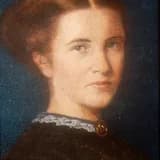
Garrett was elected to the British Medical Association, becoming its first female member and remaining the only one for roughly twenty years.
On 30 July 1873, Elizabeth Garrett Anderson was elected a member of the British Medical Association (BMA), the principal professional body for physicians in Britain, becoming the organization's first female member.
Her admission was notable enough that, much like the Society of Apothecaries' response to her 1865 qualification, the BMA subsequently altered its membership rules to prevent further women from joining for nearly two decades. Garrett Anderson thus remained the sole woman within the Association's ranks for approximately twenty years, a striking illustration of how deeply entrenched gender exclusion was within Britain's medical establishment even after individual women had proven their competence.
Membership in the BMA provided her with professional legitimacy, networking opportunities, and a platform from which to advocate for the interests of women physicians and patients. Her long, lone tenure as the only female member also underscored the slow pace of institutional change despite her personal breakthrough.
This moment stands as a significant milestone in the professionalization of women in medicine, illustrating both the possibility of individual achievement and the systemic resistance that persisted at the institutional level well into the late nineteenth century.