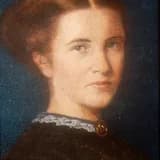
Garrett co-founded the London School of Medicine for Women, Britain's first medical school to formally train women as doctors.
On 12 October 1874, the London School of Medicine for Women formally opened its doors, co-founded by Elizabeth Garrett Anderson together with Sophia Jex-Blake and other pioneering women, marking the establishment of Britain's first medical school dedicated to training women as doctors.
Before this institution existed, women seeking medical education in Britain faced systemic exclusion from established medical schools, forcing pioneers like Garrett Anderson to pursue circuitous, often international routes to qualification (as she had done via the Society of Apothecaries and the University of Paris). The founding of this school addressed that gap directly, providing a formal, sustained pathway for women to receive rigorous medical training within Britain itself.
Garrett Anderson served as a lecturer at the school from its founding and played a central role in shaping its curriculum and reputation, later becoming its dean in 1883. The school faced ongoing struggles for recognition, particularly regarding access to clinical training and hospital placements for its students, battles in which Garrett Anderson's stature and connections proved invaluable.
The institution eventually became part of the Royal Free Hospital School of Medicine, and its legacy persists in the continued integration of women into medical education throughout Britain and beyond. It stands as one of Garrett Anderson's most enduring institutional legacies.