← All women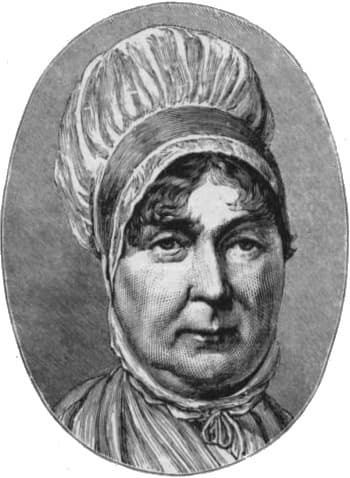
British, English · Activism · Law · Medicine
Elizabeth Fry
May 21, 1780 – October 12, 1845
Early Life and Background
Elizabeth Fry (née Elizabeth Gurney) was born on 21 May 1780 at Earlham Hall, near Norwich, Norfolk, England.[1][2][18] She was the fourth daughter in a large and prosperous Quaker family. Her father, John Gurney, was a wool merchant and banker, part of the influential Gurney banking dynasty.[7][18] Her mother, Catherine Bell Gurney, came from a family with intellectual and mercantile connections and encouraged her children’s reading and moral reflection.[18]
Although Fry did not receive a formal school education, she grew up in a household deeply shaped by Quaker beliefs in equality, simplicity and the "inner light" in every person.[5][13][18] The Gurneys were part of the Society of Friends, a Christian community that gave women a more visible spiritual role than many other denominations of the period. Women could speak in meetings, travel in the ministry, and exercise moral authority, which subtly prepared Elizabeth for later public leadership.[5][13]
As a girl, Elizabeth was known to be serious and introspective. The death of her mother in 1792, when Elizabeth was twelve, was a formative experience; she took increased responsibility for her younger siblings and began to feel the weight of spiritual questions.[18] In her late teens she was influenced by the powerful Quaker preacher William Savery, whose visit to Norwich in 1798 is often cited as a turning point in her religious life.[7][18] After hearing him speak, she began to adopt plainer dress, devoted more time to Bible reading, and engaged more seriously in visiting the poor in her neighbourhood.[7][19]
Marriage, Family and Spiritual Vocation
In August 1800, Elizabeth Gurney married Joseph Fry, a Quaker and London merchant associated with a tea-dealing and banking family.[1][7][18] The couple settled first in London and later at Plashet House in Essex, maintaining a comfortable middle-class lifestyle that nonetheless reflected Quaker plainness.[1][7] Over the course of their marriage, Elizabeth gave birth to eleven children, juggling intense domestic responsibilities with her evolving public ministry.[10][15]
Despite the demands of motherhood, Fry’s religious commitment deepened. In 1811, she was recognized as a recorded minister in the Society of Friends, formally acknowledging her spiritual gift in preaching and pastoral care.[10][18] This status allowed her to travel more widely among Quaker meetings and to exercise greater authority in religious contexts. Her ministry was characterised by earnest Bible exposition and concern for the poor, reflecting both personal conviction and broader evangelical currents of the period.[13][19]
Economic difficulties intermittently affected the Fry family. Joseph’s business ventures were not always successful, and at times they faced financial strain.[1][7] These challenges did not halt Elizabeth’s philanthropic work but did reinforce her awareness of insecurity and dependency, themes that shaped her sympathy for prisoners and the destitute. Her combination of domestic experience, religious authority and social connections positioned her uniquely to bridge private charity and public reform.
Beginnings of Prison Reform Work
Fry’s path into prison reform began with local acts of charity but rapidly widened. According to several accounts, she first visited Newgate Prison in London around 1813, where she observed appalling conditions among female prisoners and their children.[7][1][6] Women awaiting trial or transportation were crammed into dark, filthy wards, without adequate bedding, clothing or supervision; children lived among them, exposed to disease and moral degradation.[4][11]
Shocked by what she saw, Fry began regular visits to the women’s section of Newgate. She read the Bible aloud, prayed with prisoners, distributed clothing and bedding, and sought to introduce a degree of order and mutual respect.[7][6] Her approach combined religious exhortation with practical measures: she believed that spiritual transformation and improved material conditions were intertwined, and that kindness and discipline could coexist.[13][15]
As her involvement deepened, Fry realised that solitary goodwill was insufficient in the face of systemic neglect. The prison regime did little to classify prisoners by offense or sentence, and women were supervised by male warders, leaving them vulnerable to abuse.[4][12] Fry began to articulate a set of principles for humane incarceration: separation of prisoners by sex and crime, provision of work and education, and regular religious and moral instruction.[7][14] These ideas would underpin her later organized efforts and legislative influence.
Association for the Improvement of the Female Prisoners in Newgate
The great public work of Fry’s life formally began with the creation of the Association for the Improvement of the Female Prisoners in Newgate in April 1817
The Association established a school within Newgate for the prisoners’ children, providing basic literacy and religious instruction.[7][6] It also created work programs, especially knitting and sewing, so that women could occupy their time productively and earn small sums for food and clothing.[7][6] The committee set out simple rules—encouraging cleanliness, sobriety, and respectful behaviour—and enforced them through collective moral pressure rather than physical coercion. These initiatives quickly drew public attention. Visitors, including politicians and philanthropists, were struck by the contrast between the chaotic, violent conditions previously reported in Newgate and the relative order achieved under Fry’s system.[4][12] Her work demonstrated that even hardened prisoners could respond to fair treatment and structured routines. Newspapers and pamphlets began to report on the “remarkable transformation” in the prison, establishing Fry’s reputation as a pioneer of humane discipline.[6][19] The Association’s success provoked both admiration and controversy. Some critics worried that women were overstepping traditional domestic boundaries by intervening in public institutions; others feared that leniency would encourage crime.[12][18] Fry responded by insisting that her reforms were not about indulgence but about effective moral control: she argued that constructive work and religious teaching were more likely to prevent reoffending than cruelty and neglect.[7][13] The model developed at Newgate soon inspired broader organisation. By the end of 1817, Fry’s circle had helped foster the British Ladies’ Society for Promoting the Reformation of Female Prisoners, one of the earliest national women’s organisations dedicated to prison reform.[6][21] This society coordinated female prison visitors across Britain, encouraging local committees to adopt similar principles of segregation, education and work. The Ladies’ Society collected reports from prisons, exchanged best practices, and sought to influence magistrates and jailers through moral suasion rather than direct political power.[6][21] Its national scope signalled a significant development in women’s activism: for the first time, middle-class women were acting collectively to shape institutional policy, drawing legitimacy from philanthropy and religion. Through correspondence and travel, Fry extended her influence to prisons in Scotland, northern England and Ireland. A visit to Ireland in 1827 turned her attention to other detention houses, including workhouses and lunatic asylums, which she likewise sought to reform.[7][2] Her campaigns increasingly addressed the wider landscapes of poverty and social control, linking prison conditions to failures in education, employment and welfare. In 1818, Elizabeth Fry’s authority as a prison reformer was recognised in an unprecedented way when she was invited to give evidence before a House of Commons committee investigating prison conditions.[1][6][8][11] She thereby became, by widely accepted accounts, the first woman to present evidence directly to the British Parliament in such a capacity.[6][8][11] Drawing on detailed observations from Newgate and other prisons, Fry testified about overcrowding, the lack of classification, and the dangers posed by mixed-sex confinement.[7][6] She advocated for systematic segregation by sex and offense, the appointment of female warders for female prisoners, and the introduction of structured work and education as central elements of the prison regime.[1][2] Her calm, practical manner and the moral clarity of her recommendations impressed many MPs, helping to legitimate women’s philanthropic expertise in a traditionally male domain. Her evidence fed into a growing wave of concern about British prisons. Reformers such as John Howard had earlier exposed abuses, but Fry’s focus on women and her demonstration of successful alternatives at Newgate gave new momentum to change.[4][12] The intellectual climate of the early nineteenth century, with its debates over crime, punishment and utilitarianism, was increasingly receptive to arguments that prisons should deter crime while preserving human dignity. These efforts culminated in the Gaols Act 1823, which received Royal Assent on 22 June 1823.[1][4] The Act embodied several of Fry’s principles: it required the separation of male and female prisoners and mandated female warders for women, among other provisions.[1][4][8] Although implementation varied and many prisons remained harsh, the legislation marked a significant step toward state recognition of humane standards in incarceration. Beyond land-based prisons, Fry turned her attention to the treatment of convicts being transported to penal colonies, particularly to Australia. She visited prison ships, inspected conditions, and organised the distribution of clothing, Bibles and other necessities for women and children on board.[13][8] She encouraged the establishment of discipline and moral instruction during the voyage, seeing it as an opportunity for rehabilitation rather than purely punitive exile. Fry also expanded her work internationally. In the late 1820s and 1830s she travelled to Scotland, Ireland, France and other parts of continental Europe, visiting prisons, hospitals and asylums.[2][7][16] Her observations were shared with local authorities and reformers, and she helped to inspire similar women’s committees and philanthropic initiatives abroad. In 1838, for example, she visited France and met leading prison officials, bringing her experience at Newgate to bear on European debates about punishment and reform.[7][2] Her international engagements underscored the universality of issues she saw in British institutions: overcrowding, neglect, and the failure to recognise the humanity of prisoners were common across borders.[16] By linking religious conviction with practical proposals, Fry contributed to a transnational conversation about humane penal policy that would continue throughout the nineteenth century. Elizabeth Fry’s concern for the vulnerable extended well beyond prisons. She became active in efforts to improve the hospital system and the treatment of the insane in Britain.[2][7] Her visits to hospitals and lunatic asylums revealed poor conditions, lack of trained attendants, and limited moral or spiritual care. In response, Fry supported initiatives to provide better staffing and oversight. Most significantly, in 1840 she founded the Institute of Nursing Sisters in London, one of Britain’s earliest nurse training schools.[16][6] The Institute aimed to recruit women of moral character, train them in practical nursing skills, and place them in hospitals and charitable institutions. Later commentators have credited this organisation with laying foundations for modern British nursing, anticipating reforms often primarily associated with Florence Nightingale.[6][16] Her work among the insane also reflected her core belief in the inner light and dignity of every person. She advocated for more humane treatment, less physical restraint, and greater attention to spiritual and emotional needs.[2][7] While she did not develop a systematic theory of mental illness, her practical interventions helped to soften some of the harsher aspects of nineteenth-century asylum regimes. Throughout her public work, Fry remained deeply rooted in her Quaker faith and family life. She maintained regular attendance at meetings, travelled in the ministry, and participated in internal Quaker debates over discipline and doctrine.[5][13] Her religious motivation is evident in her frequent references to obedience to God as the driving force behind her reforms. Balancing eleven children with extensive travel and organisational duties required considerable energy and resilience. Contemporary accounts highlight her calm manner, firm but gentle authority, and ability to inspire confidence among both prisoners and elites.[7][19] She was also known for her practical skills in organising committees, keeping records, and managing charitable funds. Fry’s relationship with Queen Victoria is sometimes noted in popular accounts. The young queen reportedly met Fry and supported some of her charitable work financially, reflecting the respect she commanded even at the highest levels of society.[15][11] While such patronage was symbolically important, Fry’s day-to-day achievements relied more on networks of Quaker families, middle-class women and sympathetic officials. Formal honours for women reformers were rare in Fry’s time, but she received substantial public and informal recognition. Contemporary writers, including religious and secular commentators, praised her as a model of Christian philanthropy and practical benevolence.[9][12] She was widely referred to as the "Angel of Prisons", a title that captured both admiration and the quasi-sacred aura attributed to her work.[1][8][13] Her influence can be traced in official documents. The Gaols Act 1823, while not dedicated to her personally, incorporated several of her recommendations, effectively serving as legislative acknowledgement of her ideas.[1][4][8] Reports of prison inspectors and charitable organisations in subsequent decades often cited her Newgate experiments as a benchmark for humane practice. Long after her death, Fry’s legacy continued to be honoured. In the early 2000s, her portrait was placed on the Bank of England £5 note, making her a widely circulated symbol of prison reform and, according to some accounts, the first non-royal woman to appear on a Bank of England banknote.[8][21] The note remained in circulation until its withdrawal in the mid‑2010s, ensuring that millions encountered her image and name in everyday transactions. Elizabeth Fry’s historical significance rests on several intertwined achievements. First, she helped to redefine the purpose of imprisonment. By demonstrating that structured work, education and religious instruction could transform prison environments, she challenged assumptions that criminals were irredeemable and that cruelty was a necessary deterrent.[7][6][12] Her emphasis on rehabilitation rather than purely punitive confinement anticipated later penal philosophies. Second, Fry broke new ground for women’s public activism. Her leadership in the Association for the Improvement of the Female Prisoners in Newgate and the British Ladies’ Society showed that women could organise, manage and influence major institutions without formal political rights.[6][18] Her 1818 testimony before a House of Commons committee established a precedent for women appearing as expert witnesses in parliamentary processes, gradually widening the space for female participation in public policy.[6][11] Third, she contributed to the early development of professional nursing and the improvement of hospital care. The Institute of Nursing Sisters and her advocacy for better treatment of the sick and insane laid groundwork for later reforms in healthcare, positioning compassionate, trained female nurses as essential actors in the medical system.[2][6][16] Fry’s impact extended beyond institutional changes. She became a powerful symbol in religious and social discourse, embodying ideals of Christian charity, moral courage and the integration of faith with social responsibility.[13][19] Her life story has been widely used in educational materials, biographies and sermons, inspiring subsequent generations of social reformers, particularly women. In the 1840s, Fry’s health began to decline. The physical and emotional demands of decades of travel, public speaking and organisational work took their toll, and by 1843 she could no longer undertake extensive journeys.[7] Nevertheless, she remained in contact with prison officials and reformers through letters and visits closer to home, continuing to monitor and encourage improvements.[7][6] Elizabeth Fry died on 12 October 1845 at Ramsgate, Kent, following a stroke.[1][2][6][7][18] She was 65 years old. While one museum source records her death as 13 October, multiple modern reference works— including Britannica, EBSCO and major encyclopedias—concur on 12 October, and this date is widely adopted in scholarly accounts.[2][4][6][18] After her death, her family and supporters preserved her memory through biographies, memorials and continued philanthropic work. Quaker communities, women’s organisations and prison chaplains kept her example alive, and over time historians came to recognise her as one of the most important figures in nineteenth-century social reform.[1][14][18] Her gravesite and related memorials have become points of interest for those studying the history of prisons, nursing and women’s activism. Today, Elizabeth Fry is remembered as a pioneering prison reformer, social reformer, philanthropist and Quaker minister, whose life demonstrates how religious conviction, organisational skill and moral imagination can reshape entrenched systems of injustice.[1][2][8] Her work continues to be cited in debates about humane treatment of prisoners, the role of civil society in reforming institutions, and the long history of women’s contributions to public life.Expansion to the British Ladies’ Society
Testimony Before Parliament and Legislative Influence
Work on Prison Ships and International Reform
Beyond Prisons: Hospitals, Nursing and the Insane
Personal Life, Faith and Character
Awards, Honours and Recognition
Legacy and Historical Impact
Later Life and Death
Dated achievements
8 indexed.
- May211780Activism
Birth of Elizabeth Gurney (later Elizabeth Fry) in Norwich
Elizabeth Gurney, future prison reformer Elizabeth Fry, was born at Earlham Hall, Norwich, into a prominent Quaker banking family.
View details Elizabeth Fry - Wikipedia - Jan011813Activism
Begins visiting women prisoners at Newgate Prison
Fry began regular visits to female prisoners at Newgate, confronting horrific overcrowding and squalor, launching her prison-reform career.