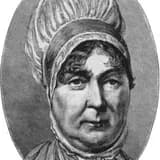
Fry testified before a House of Commons committee on prison conditions, becoming the first woman known to give evidence directly to Parliament.
In 1818, Elizabeth Fry appeared before a committee of the House of Commons to give evidence on the state of British prisons, particularly the conditions faced by women held at Newgate. This appearance is widely regarded as the first time a woman presented evidence directly to a British parliamentary committee, a remarkable breach of the era's rigid gender norms that excluded women from formal political processes entirely.
Fry's testimony was grounded in years of firsthand observation and practical reform work, lending her account exceptional credibility and authority at a time when women's voices were routinely dismissed in matters of public policy. Her detailed descriptions of overcrowding, lack of segregation between men and women and between convicted and unconvicted prisoners, absence of meaningful work or education, and general degradation of prison life provided parliamentarians with an unusually rigorous, evidence-based case for reform.
This appearance was a watershed moment not only for prison reform but for women's participation in public and political life more broadly. It demonstrated that a woman, entirely outside the formal channels of political power, could shape legislative debate through moral authority, practical expertise, and force of testimony. Her evidence fed directly into the legislative process that would culminate in the Gaols Act of 1823, and it established a precedent, however exceptional at the time, for women to be heard on matters of public importance.