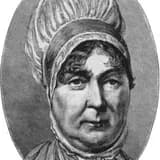
Fry founded the Institute of Nursing Sisters in London in 1840, one of Britain's earliest formal nurse training schools.
In 1840, Elizabeth Fry founded the Institute of Nursing Sisters in London, an organization dedicated to training women as professional nurses for care of the sick in their homes. This institution is recognized as one of the earliest formal nurse-training establishments in Britain, predating the more famous reforms of Florence Nightingale by more than a decade.
The Institute provided structured training in practical nursing skills, hygiene, and patient care, formalizing what had previously been an unregulated and often low-status occupation. Fry's approach reflected her broader philosophy that vulnerable populations, in this case both the sick and the women who might otherwise have limited respectable employment options, could be uplifted through education, structure, and purposeful work.
Some medical historians and later commentators, including Florence Nightingale herself, acknowledged the influence of Fry's nursing institute on the development of organized, professional nursing in Britain. Nightingale is known to have visited institutions influenced by Fry's model before establishing her own famous nursing reforms during and after the Crimean War. The Institute of Nursing Sisters thus represents an important, if sometimes underappreciated, link in the chain of British healthcare reform, extending Fry's legacy beyond prison walls into the emerging profession of nursing and demonstrating the breadth of her social reform vision in the final years of her life.