← All women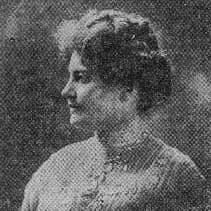
American · Politics · Law
Carolyn B. Shelton
October 3, 1876 – July 26, 1936
Early Life and Background
Carolyn Bertha Shelton (née Skiff) was born Carolyn (Carrie) Bertha Skiff on October 3, 1876, in Union, a small town in eastern Oregon’s Union County.[4] She was the daughter of Willis S. Skiff and Mary C. Skiff, described in later accounts as prominent members of the local business community.[4][2] Although some reference works give only “October 1876” as her birth date, Oregon-focused historical research and public-history projects have documented the more precise date of October 3.[1][4]
Shelton’s childhood was marked by profound loss and instability. According to museum curators and journalists who have reconstructed her life, her father died under mysterious circumstances when she was quite young, and her mother died soon afterward.[3][5] She and her siblings were then “shuffled around” among relatives and acquaintances in eastern Oregon, with little security or continuity.[3][5] Growing up effectively orphaned in a rural setting during the late nineteenth century, she faced both economic hardship and the constraints imposed on girls’ education and prospects at the time.
Despite this difficult start, Carolyn demonstrated intellectual ability and determination. In an era when formal schooling for girls often ended early, she pursued training as a stenographer and developed advanced clerical skills.[3][5] Stenography—using symbols to capture speech in real time—was a demanding technical field, requiring speed, accuracy, and concentration. Her mastery of these skills positioned her for white‑collar work at a time when professional opportunities for women were extremely limited, especially in law and government. These competencies later proved crucial to her rise within the office of one of Oregon’s leading politicians.
Career Beginnings and Development
By the mid‑1890s, Carolyn Skiff had moved from eastern Oregon to the more urban and politically central environment of Portland.[5] There she met George Earle Chamberlain, a lawyer who had served as district attorney and would soon become Oregon’s governor and later a U.S. senator.[1][5] Chamberlain recognized her talent for stenography and office management and began employing her in his law office.
In 1895, Chamberlain took a notable step that formally brought her into the legal‑administrative sphere: he appointed her the first woman notary in the state of Oregon.[4] As a notary public, she could administer oaths, witness signatures, and authenticate documents used in court and commerce—functions usually reserved for men. This appointment required Chamberlain to move beyond prevailing gender expectations in the legal profession and gave Carolyn a position of recognized authority within Oregon’s legal infrastructure. Although surviving sources do not record the exact day of the appointment, the year is well attested and highlighted by the Willamette Heritage Center’s exhibit on her life.[4]
Over the next decade, she solidified her reputation as a highly competent and trustworthy office professional. When Chamberlain was elected governor of Oregon and took office in 1903, he brought her into the governor’s office as a central member of his staff.[1][5] In 1909, she became the first woman to serve as private secretary to a governor in Oregon, a role that involved managing correspondence, scheduling, record‑keeping, and many of the logistical and informational tasks that underpinned the governor’s work.[4]
The position of private secretary, while socially coded as clerical and supportive, in practice wielded significant influence. As Chamberlain’s gatekeeper and organizer, Shelton handled sensitive matters and maintained continuity in the executive office. Her effectiveness in this position would later explain why she was trusted to keep the government running during a crucial transition in 1909.
Major Accomplishments and Barrier‑Breaking Firsts
First Woman Notary in Oregon (1895)
Shelton’s 1895 appointment as Oregon’s first woman notary public was an early and under‑recognized milestone in women’s participation in legal and administrative work.[4] Notaries served as essential intermediaries between ordinary citizens and the formal legal system, verifying identities, witnessing contracts, and certifying documents for court proceedings. Entrusting such authority to a woman was unusual in the 1890s and signaled a willingness to challenge gendered assumptions about legal competence.
This role both reflected and reinforced her reputation for precision and integrity. It also provided her with practical experience in the processes of governance and law that would prove invaluable in her later work in the governor’s office. While modest compared with her later gubernatorial first, this step helped normalize women’s presence in administrative authority roles in Oregon and set a local precedent for women entering public‑facing legal work.
First Woman Acting Governor of a U.S. State (February 27 – March 1, 1909)
Shelton’s most famous achievement came during a brief but historically important interregnum in early 1909. George E. Chamberlain had been elected to the U.S. Senate and needed to travel east to take his seat.[1][5] He resigned as governor and departed Oregon by train, but his successor, governor‑elect Frank W. Benson, was not yet present in Salem to assume office. This created a short gap in the state’s executive leadership.
As Chamberlain’s private secretary and the person managing the governor’s office, Carolyn B. Shelton was left in charge of the executive office beginning at approximately 9:15 a.m. on Saturday, February 27, 1909.[1] For about three days—until Benson’s arrival and swearing‑in around 10:00 a.m. on Monday, March 1, 1909—Shelton carried out the routine duties of the governor, including signing administrative papers and handling correspondence.[1] Though she did not make major policy decisions, her role was not merely symbolic; she was, in practice and in contemporaneous understanding, the acting governor.
This episode made her the first woman to serve as acting governor of a U.S. state, and many accounts describe her as the nation’s first female governor.[1][10][4][7] The distinction is important: she was not elected to the office but stepped into it because of succession needs and the trust placed in her professional ability. Nonetheless, her occupancy of the governor’s chair was constitutionally grounded and publicly recognized.
The Daily Capital Journal, a Salem newspaper, underscored the novelty of the moment with the headline, “Oregon Has Today a Woman Governor,” and the subheading, “Mrs. C. B. Shelton First Woman to Govern Any State.”[2] This framing emphasized that, for that weekend, Oregon was governed by a woman, and that this was unprecedented in U.S. history. The story quickly spread beyond the state, turning her into what later exhibits describe as an international celebrity and an emblem for the women’s suffrage movement.[3][5]
Her tenure occurred three years before Oregon women won the right to vote in 1912 and more than a decade before the federal Nineteenth Amendment (1920). The fact that a woman could hold gubernatorial authority—however briefly—while women could not yet participate equally in elections highlighted the contradictions of the gendered political order. Shelton’s calm execution of the role challenged persistent stereotypes about women’s incapacity for high office and provided suffragists and reformers with a concrete example of female political competence.
First Woman Private Secretary to an Oregon Governor (1909)
In addition to her acting governorship, Shelton’s position as the first woman private secretary to a governor in Oregon in 1909 further expanded women’s roles in state government.[4] The private secretary’s responsibilities extended beyond dictation and filing; she coordinated meetings, managed information flow, and often served as the first point of contact for citizens and officials seeking the governor’s attention.
In this capacity, Shelton gained an intimate understanding of the political process and of the practical governance of the state. Her gender made this work more visible to contemporaries precisely because women were so rarely seen in such positions, and her success contributed to slowly shifting norms about women in governmental offices.
Later Career in Washington and Marriage to George E. Chamberlain
After Chamberlain left the governorship for the U.S. Senate, Shelton continued to serve as his private secretary in Washington, D.C.[1] The exact dates of her move to the capital are not detailed in available sources, but she is consistently described as his long‑serving secretary both in Oregon and in the Senate.[1][10] In Washington, she worked at the center of national legislative activity, managing correspondence, documents, and schedules for a senior senator from Oregon.
In 1926, following the death of Chamberlain’s first wife, Carolyn B. Shelton and George E. Chamberlain married.[1] Their marriage joined two individuals who had both, in different ways, served as governor of Oregon—Chamberlain by election and Shelton by temporary succession. Commentators have noted that this union created what appears to be the first and only pair of former U.S. state governors to marry each other, since Shelton had served as acting governor in 1909.[1][4] While she is rarely counted in official lists of elected governors, public-history projects and women’s history compilations treat her as a genuine gubernatorial first.
Chamberlain died in 1928, two years after their marriage.[1] Shelton, now widowed, remained associated with Washington, D.C., where she had built a professional life over many years. She largely disappears from the historical record after his death, reflecting the broader tendency for women’s post‑career and private lives to be under‑documented compared with their public firsts.
Awards, Honors, and Recognition
There is no record of Carolyn B. Shelton receiving formal awards such as medals or honorary degrees during her lifetime. This absence is consistent with the historical tendency to overlook the contributions of women in clerical and support roles, even when those roles briefly expanded into formal authority.
Her recognition has come primarily in the form of historical commemoration and scholarly and public‑history attention long after her death. The Willamette Heritage Center in Salem developed a substantial exhibit titled “Caralyn B. Shelton: The Nation’s First Female Governor”, exploring her life, the tragedies she endured as a child, her professional journey, and her weekend in the governor’s chair.[4][5] Oregon media outlets, including Oregon Public Broadcasting, have produced features such as “The governor who couldn't vote: Why history forgot Oregon's 1st female governor,” highlighting her story and its significance.[10][7]
She is included in compilations such as Wikipedia’s “List of American women’s firsts”, where she is recognized as the first woman to serve as acting governor of a U.S. state.[13] Local historical organizations and journalists have reclaimed her narrative as part of broader efforts to surface the lives of women whose work and leadership were once marginal to mainstream historical accounts.
Personal Life
Reliable sources provide only limited information about Shelton’s personal life beyond her early family situation and her marriage to George E. Chamberlain. Her childhood as an orphan moving among households in eastern Oregon indicates a youth shaped by instability and necessity.[3][5] These circumstances likely influenced her drive to acquire employable skills and to secure stable positions in offices where her diligence would be valued.
Her decades‑long professional relationship with Chamberlain gradually evolved into a personal partnership, culminating in their marriage in 1926.[1] This union came late in both of their lives, after she had already made her mark as acting governor and he had completed most of his public career. The sources available do not mention children, and no additional close relationships are documented, which may reflect either the absence of such information in the historical record or the tendency of contemporary accounts to focus primarily on her unusual political role.
Given the constraints of her era, it is likely that her identity was publicly framed largely in relation to Chamberlain—as his secretary and, later, his wife. Yet modern interpretations emphasize her autonomy and accomplishments, particularly her capacity to manage and briefly lead the executive apparatus of the state.
Later Life and Death
After Chamberlain’s death in 1928, Shelton appears to have remained in Washington, D.C., where she had become rooted through her work in the Senate.[1] Specific details about her activities in these years are scarce; she did not return to elective politics or seek public office, and the historical record is largely silent on whether she continued in clerical work or retired from professional life.
On July 26, 1936, Carolyn B. Shelton died in Washington, D.C.[1] Her death marked the end of a life that had carried her from an itinerant, orphaned childhood in rural Oregon to the center of state and national politics. The date of her death is consistently reported in reference sources and serves as a clear endpoint for her biography.
At the time of her passing, the United States had already seen significant changes in women’s political status. Women nationwide had gained the vote with the Nineteenth Amendment in 1920, and a small but growing number of women were holding elected office. Nonetheless, women governors remained exceptionally rare, and the path she had briefly walked in 1909 had not yet become a well‑trodden one.
Legacy and Historical Impact
Carolyn B. Shelton’s legacy lies less in legislative achievements than in the symbolic and structural significance of her presence in government. Her life illustrates how women working in supporting roles could be indispensable to male officeholders and, under unusual circumstances, step into formal authority themselves.
Her weekend as acting governor of Oregon demonstrated that a woman could perform the duties of the state’s highest executive office competently, long before women were broadly accepted in such roles.[1][4] The public recognition of her governorship by contemporary newspapers, particularly the Daily Capital Journal, framed this episode as a genuine first in American political history.[2] Modern historians and public‑history practitioners have built on this framing to highlight her as a precursor to later women governors who would reach the office through election.
Her story also underscores the importance of reevaluating the historical significance of administrative and clerical work. As a stenographer, notary public, and private secretary, she was part of the infrastructure that made governance possible. By becoming the first woman notary in Oregon and the first woman private secretary to an Oregon governor, she opened professional pathways for women within the legal‑political apparatus, helping to normalize women’s presence in those spaces.[4]
In the context of women’s history, Shelton’s life offers several key insights:
- Intersection of gender and power: Her authority as acting governor arose from professional trust and practical necessity rather than formal electoral legitimacy, highlighting non‑electoral routes by which women could exert political influence.
- Temporal disjunction: She held gubernatorial power in 1909, three years before Oregon women gained suffrage, illustrating the uneven and sometimes paradoxical timeline of women’s political empowerment.[4][10]
- Historical visibility: For much of the twentieth century, her story remained obscure, demonstrating how women’s contributions can be forgotten when they do not fit dominant narratives of formal officeholding or electoral victory.[10][7]
Recent scholarly and public attention has begun to rectify this neglect. Exhibits, articles, and media segments produced in Oregon and beyond now present her as an important figure in the history of women and governance, and she is included in lists of American women’s firsts as the first woman to serve as acting governor of a U.S. state.[1][13]
In sum, Carolyn B. Shelton’s legacy is that of a pioneering yet understated figure whose professional competence enabled a historic breach in the male monopoly on gubernatorial authority. Her life story enriches our understanding of the complex ways women navigated, supported, and occasionally led political institutions in the United States before formal equality was achieved.
Dated achievements
7 indexed.
- Oct031876Politics
Birth of Carolyn Bertha Skiff (Carolyn B. Shelton)
Birth of Carolyn Bertha Skiff (later Carolyn B. Shelton), future first woman acting governor of a U.S. state, in Union, Oregon.
View details Caralyn B. Shelton: The Nation's First Female Governor - Jan011895Law
First woman notary in Oregon
Appointed the first woman notary in Oregon by George E. Chamberlain, breaking gender barriers in the state’s legal‑administrative work.