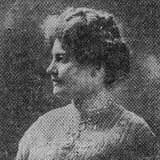
Assumes office as acting governor of Oregon, becoming the first woman acting governor of a U.S. state and widely hailed as the nation’s first female governor.
On Saturday, February 27, 1909, at around 9:15 a.m., Carolyn B. Shelton formally assumed the role of acting governor of Oregon during a delicate transition of power. Governor George E. Chamberlain had resigned to take up his seat in the U.S. Senate and departed by train for the East Coast, while governor‑elect Frank W. Benson had not yet arrived to be sworn in.
As Chamberlain’s long‑serving private secretary, Shelton oversaw the governor’s office and, under Oregon’s succession practice, was left in charge of the executive office for the three‑day interregnum. From February 27 to March 1, she carried out routine gubernatorial duties—signing administrative documents, handling correspondence, and keeping the machinery of state government running. Her service was brief but constitutionally real: she was recognized as the state’s chief executive for those days.
This moment made Shelton the first woman to serve as acting governor of a U.S. state and, in contemporary accounts, the nation’s first female governor. Importantly, her role was not the result of election but of succession and administrative necessity, three years before Oregon women won the right to vote.
Her weekend in office garnered national and international attention, turning her into a symbol for the women’s suffrage movement and an early demonstration that a woman could competently execute the duties of the highest state office. In an era when women were widely deemed unfit for political leadership, Shelton’s calm professionalism during these days challenged entrenched gender norms and became a landmark in American women’s political history.