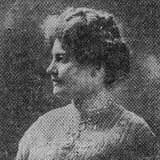
Carolyn B. Shelton’s three‑day tenure as acting governor ends when Frank W. Benson assumes office as governor of Oregon.
On Monday, March 1, 1909, at approximately 10:00 a.m., Frank W. Benson was sworn in as governor of Oregon, formally ending Carolyn B. Shelton’s brief tenure as acting governor. For roughly three days—from February 27 until Benson’s assumption of office—Shelton had overseen the executive branch.
During this interregnum, Shelton’s duties were largely routine: she signed administrative documents, managed correspondence, and maintained continuity in the governor’s office. Yet the constitutional nature of her role—recognized contemporaneously and by later historians—meant that a woman had, for the first time, occupied the position of a U.S. state’s chief executive, even if only temporarily.
The conclusion of her service on March 1 did not diminish its symbolic power. Rather, the bounded timeframe made the episode easier for newspapers and later commentators to highlight as a discrete, historic "weekend" of female governance in Oregon. Her stepping aside for Benson reinforced that her authority arose from institutional necessity and professional trust, not electoral mandate, at a time when women still lacked the vote in the state.
In retrospect, the end of her acting governorship marks the transition from an extraordinary moment back to the male‑dominated norm. It also anchors timelines that celebrate Oregon as the first state to have a woman governor and situates Shelton’s contribution within the larger story of women’s incremental advances toward full political participation and officeholding in the United States.
March 1, 1909, therefore stands as both the close of her direct executive power and the beginning of her legacy as a pioneering figure in American women’s political history.