← All women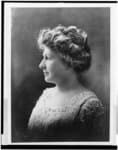
American · Science
Annie Jump Cannon
December 11, 1863 – April 13, 1941
Early life and education
Annie Jump Cannon was born on December 11, 1863, in Dover, Delaware, the eldest daughter of Wilson Lee Cannon, a shipbuilder and Delaware state senator, and Mary Elizabeth Jump Cannon. She grew up in a family that supported curiosity and learning, and biographical accounts describe her mother as an especially important early influence who introduced her to the constellations and encouraged her interest in science. Cannon’s childhood took place in the United States during and after the Civil War, when educational and professional opportunities for girls were limited and when women were rarely expected to pursue scientific careers.
As a child, Cannon became interested in astronomy through informal observation of the night sky. Later biographies describe her and her mother using a small homemade observatory and charting stars together. This early exposure mattered because it connected intellectual curiosity to disciplined observation, a combination that would define her professional life. She attended the Wilmington Conference Academy before entering Wellesley College, one of the higher-education institutions that was helping expand women’s access to advanced study in the late nineteenth century.
At Wellesley, Cannon studied physics and astronomy under Sarah Frances Whiting, a prominent physics professor and an important mentor. Cannon excelled academically and graduated as valedictorian of the Class of 1884. She later earned a master’s degree from Wellesley in 1907. Her education gave her the technical foundation and intellectual confidence to pursue astronomy at a time when women were often steered away from scientific research.
Early career, illness, and return to science
After college, Cannon taught and spent time traveling, but her path toward professional astronomy was interrupted by illness. She contracted scarlet fever and became nearly deaf, a condition that remained with her for the rest of her life. The disability could have ended many careers in the late nineteenth century, particularly for women, whose employment options were already narrow. Instead, Cannon adapted and continued to build a scientific life. Her perseverance is a central part of her historical significance.
In 1894 she returned to Wellesley as a junior physics teacher and assisted Sarah Frances Whiting with experiments involving X-rays, then an exciting new area of science. Around this period she also enrolled as a special student at Radcliffe College, where she studied astronomy more intensively and came into contact with Edward C. Pickering, director of the Harvard College Observatory. Pickering had already established a system in which women “computers” helped analyze photographic plates and stellar spectra, and Cannon joined that environment as one of the observatory’s most important staff members.
By 1896, Cannon had begun work as an assistant at the Harvard College Observatory on the Draper Catalogue project. Women at Harvard often did demanding scientific labor without the status granted to men, but Cannon’s speed, accuracy, and judgment made her indispensable. Her work moved beyond routine computation and into the creation of a major scientific method: a practical way to classify stars by their spectra.
Scientific achievements and the Harvard spectral system
Cannon’s greatest contribution was the development and refinement of the Harvard spectral classification system. By organizing stars according to spectral characteristics, she helped establish a system that was simple enough to use across observatories yet scientifically robust enough to become standard. In 1901, she published her first Henry Draper catalog of stellar spectra. In 1910, the International Solar Union adopted her simplified classification scheme as the official standard for observatories worldwide. That adoption transformed Cannon’s work from an observatory method into an international scientific language.
Her classification sequence, commonly summarized as O, B, A, F, G, K, M, remains foundational in astronomy. It ranks stars by temperature and spectral features, allowing astronomers to compare stellar properties efficiently. Cannon’s method was not merely clerical; it was a conceptual contribution that made large-scale astronomical comparison possible. She classified hundreds of thousands of stellar spectra manually, and sources vary on the exact total, but all agree that her output was extraordinary. Her work also helped standardize the study of stellar evolution and the physical interpretation of stars.
Her precision and endurance were particularly notable because much of her labor involved repetitive examination of photographic plates under conditions that required concentration and exceptional eyesight. Even after she became nearly deaf, Cannon continued to excel in a field that depended on exact observation. Her success demonstrated that women could shape the most technical areas of modern science, even when they were excluded from many forms of institutional power.
Appointments, honors, and public recognition
In 1911, Cannon was appointed Curator of Astronomical Photographs at Harvard College Observatory, formalizing her importance to the institution. Her scientific reputation continued to grow internationally. In 1921, Groningen University awarded her a Doctor of Astronomy, and on May 20, 1921, Oxford granted her an honorary Doctor of Science, making her the first woman ever to receive an honorary degree from the university. These honors recognized not only her own work but also the broader legitimacy of women’s scientific achievement.
Her acclaim continued in 1931, when the National Academy of Sciences awarded her the Henry Draper Medal, the first time the medal had gone to a woman. That same decade she became the first woman elected an officer of the American Astronomical Society. She also established the Annie Jump Cannon Award for women astronomers, creating an enduring mechanism for recognizing women’s contributions in a field where their work had often gone under-acknowledged.
In 1938, Harvard gave her a regular appointment as William C. Bond Astronomer. By then she had already become one of the best-known astronomers in the United States, and contemporaries sometimes called her the “census taker of the sky.” Her professional recognition reflected a gradual but meaningful shift in how scientific institutions treated women’s authority, though Cannon herself had spent much of her career working within structures that limited women’s advancement.
Personal life, beliefs, and advocacy
Cannon never married and had no children. Her life was instead defined by scientific work, scholarship, and institutional service. Historical sources also identify her as a suffragist and a member of the National Woman’s Party, placing her within the broader movement for women’s political rights. While her most famous contributions were scientific, her life also reflected a wider commitment to women’s advancement in public life.
Her personal challenges shaped her career. The hearing loss she experienced after scarlet fever could have isolated her professionally, but it did not prevent her from becoming one of astronomy’s most influential figures. Instead, Cannon built a career in which careful visual analysis, persistence, and administrative discipline became tools of transformation. She worked in a scientific world that frequently relied on women’s expertise while denying them full recognition, and she navigated that world with unusual success.
Later life and death
Cannon continued working at Harvard for decades. In the 1930s, she maintained active involvement in astronomy and professional recognition even as she aged. By the end of her life she was widely honored, though her work remained closely associated with the painstaking labor of cataloging rather than with the more public image of astronomical theory. She died on April 13, 1941, in Cambridge, Massachusetts, at the age of seventy-seven.
Her death did not diminish the importance of her achievements. The classification system she helped develop remains central to astrophysics, and her name continues through the award she created for women astronomers. Cannon’s career showed that women could not only participate in science but reshape its methods and standards. Her life stands as a model of intellectual rigor, institutional persistence, and durable influence.
Legacy
Annie Jump Cannon’s legacy rests on both science and precedent. Scientifically, she helped create the modern system by which stars are classified, making possible more efficient and consistent astronomical research. Institutionally, she became one of the most visible women in early twentieth-century American science, earning major honors that had previously been closed to women. Her achievements helped open later pathways for women astronomers and reinforced the need for formal recognition of women’s contributions.
She is remembered as a master cataloger, a scientific pioneer, and a trailblazer whose work bridged the gap between observational labor and theoretical understanding. The Harvard spectral system, the honors she received, and the award she established all continue to carry her influence forward. In the history of women’s science, Cannon remains one of the clearest examples of how persistence, technical brilliance, and institutional change can intersect to reshape a field.
Dated achievements
13 indexed.
- Dec111863Science
Birth of Annie Jump Cannon
Annie Jump Cannon was born in Dover, Delaware, United States.
View details Annie Jump Cannon - Wikipedia - Jun261884Science
Graduates valedictorian from Wellesley College
Cannon graduated as valedictorian of Wellesley College's Class of 1884 on June 26, 1884.
View details