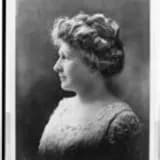
Annie Jump Cannon died in Cambridge, Massachusetts, on April 13, 1941, at age 77.
Annie Jump Cannon died on April 13, 1941, in Cambridge, Massachusetts, at the age of 77, roughly a year after her retirement from Harvard College Observatory.
Over her nearly 45-year career, she had personally classified the spectra of more than 350,000 stars — a scale of individual scientific output that remains unmatched in the history of astronomy. Her Harvard spectral classification system, adopted internationally in 1910, remains in active use by professional astronomers to this day, more than eight decades after her death.
Cannon's death marked the end of an era for Harvard College Observatory, which under directors Edward Pickering and later Harlow Shapley had employed a remarkable cohort of women "computers" whose collective labor transformed the field of observational astronomy. Cannon, more than any of her peers, had managed to translate her scientific brilliance into lasting institutional recognition, including honorary doctorates from Groningen and Oxford, the Henry Draper Medal, and a formal Harvard professorship.
Her legacy endures not only through the classification system she perfected but through the Annie Jump Cannon Award she established, which continues to honor women astronomers, and through numerous institutions, craters, and scholarships named in her honor. She is remembered as one of the most significant and prolific astronomers of the twentieth century and a pioneering figure for women in the sciences.