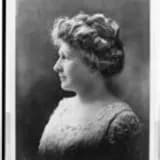
Cannon was hired as an assistant at Harvard College Observatory, joining the Draper Catalogue project.
By early 1896, Annie Jump Cannon had joined the Harvard College Observatory as an assistant to Director Edward C. Pickering, becoming one of the so-called "Harvard Computers" — a group of women employed to process and analyze astronomical data, often for far lower wages than their male counterparts.
Cannon was brought on to help with the ambitious Henry Draper Memorial project, an effort to catalog and classify the spectra of stars photographed on glass plates. Her prior training in physics at Wellesley and her natural talent for pattern recognition in spectral lines made her uniquely suited to this painstaking work.
This appointment marked the true beginning of Cannon's scientific career and her entry into what would become the most significant undertaking of stellar classification in astronomical history. Working alongside other notable women such as Williamina Fleming and Antonia Maury, Cannon would go on to refine and simplify the existing classification schemes into the system that bears Harvard's name today. Her start at the Observatory represents a pivotal moment not only in her personal career but in the broader history of women's contributions to observational astronomy, at a time when women were largely excluded from formal scientific positions and academic advancement.