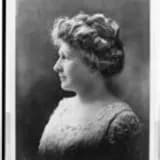
On April 23, 1931, the National Academy of Sciences awarded Cannon the Henry Draper Medal, its highest astronomy honor, as the first woman recipient.
On April 23, 1931, the National Academy of Sciences awarded Annie Jump Cannon the prestigious Henry Draper Medal, recognizing her lifetime of pioneering work in stellar spectroscopy. She became the first woman ever to receive this honor, which is widely regarded as the highest award in American astronomy.
The medal was named for Henry Draper, the astronomer whose widow Mary Anna Draper had funded the very stellar spectroscopy project — the Henry Draper Memorial — that had employed Cannon for decades and produced her monumental classification catalog. The symbolism of Cannon receiving an award bearing the name of the project's namesake was deeply fitting, marking the culmination of over three decades of meticulous scientific labor.
By 1931, Cannon had personally classified the spectra of several hundred thousand stars, publishing her results across the multi-volume Henry Draper Catalogue and its extensions. The National Academy's recognition affirmed that her contributions were considered equal in stature to those of the most celebrated male astronomers of her era, at a time when women were still largely excluded from full membership and recognition within elite scientific academies.
This award further cemented Cannon's legacy as a trailblazer for women in the physical sciences and added to a growing list of "firsts" that marked her remarkable career, paving the way for the recognition of subsequent generations of women astronomers.