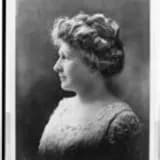
The International Solar Union formally adopted Cannon's Harvard System of stellar spectral classification worldwide on August 31, 1910.
On August 31, 1910, the International Solar Union (the predecessor to the modern International Astronomical Union) formally adopted Annie Jump Cannon's simplified spectral classification scheme — the Harvard System — as the official standard to be used by observatories around the world.
This was an extraordinary achievement for a woman working in a scientific field still largely dominated and gatekept by men, and one who held no formal doctoral degree at the time. Cannon's system organized stars into the sequence O, B, A, F, G, K, M based on surface temperature and spectral features, replacing the more cumbersome and inconsistent schemes that had come before it.
The international adoption of her system was a watershed moment: it meant that astronomers across different countries and observatories could now communicate about stellar types using a single, unified language. This standardization dramatically accelerated the pace of astronomical research worldwide and cemented Cannon's reputation as the world's foremost expert in stellar classification.
The Harvard System, essentially unchanged in its core structure, remains the standard used by professional astronomers today, more than a century later — a remarkable and enduring legacy for a woman who began her career as a poorly-paid "computer" processing photographic plates. It stands as one of the clearest genuine scientific "firsts" of her career and a symbol of how meticulous, patient observational work could reshape an entire discipline.