← All women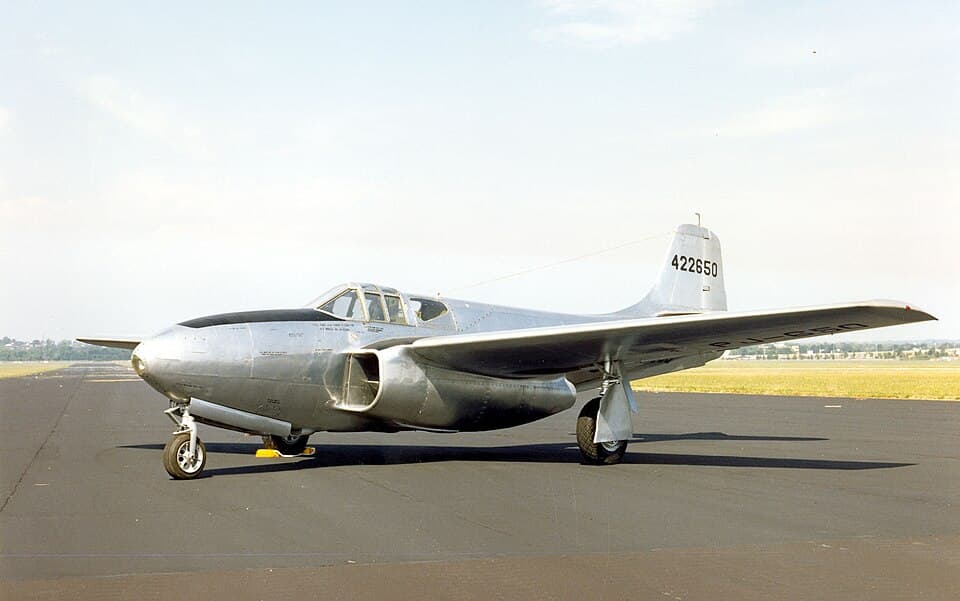
American · Aviation · Literature · Science
Ann Baumgartner
August 27, 1918 – March 20, 2008
Early Life and Background
Ann Gilpin Baumgartner Carl was born on August 27, 1918, at Fort Gordon, Georgia, in a United States Army hospital.[5][11] Her birth on a military post foreshadowed the deep connection she would later have with the armed forces as a pioneering test pilot. Her family background is described in later biographical sketches as supportive of education and professional ambition, although detailed information on her parents is limited in the public record.
Baumgartner spent parts of her childhood and youth in the northeastern United States. During her school years, she was profoundly influenced by an encounter with famed aviator Amelia Earhart, who visited her school and spoke to the students.[1][2] Hearing Earhart discuss aviation and exploration helped crystallize Baumgartner’s own interest in flying and demonstrated to her that women could aspire to serious roles in the air.
She attended Smith College in Northampton, Massachusetts, one of the leading women’s colleges in the United States.[6] At Smith she pursued studies in both science and the humanities, including pre‑medical coursework and English, developing the dual strengths—technical curiosity and strong writing ability—that would define her later life as a pilot and science journalist. Her time at college coincided with the late 1930s and the growing tensions that would soon lead to World War II.
After graduation, Baumgartner initially considered a medical career, but her interest in aviation continued to grow. Living in New Jersey during her early adult years, she was exposed to local flying activity, including the small airfields that served the region’s emerging general aviation community. This environment, combined with her childhood inspiration from Earhart, set the stage for her decision to learn to fly.
Learning to Fly and Pre‑WASP Aviation Experience
Baumgartner took her first flight in a J‑3 Piper Cub in 1940, an experience that proved transformative.[3][4] She later recalled that her reaction was immediate and decisive, stating, “This is what I was made for.”[3] That flight launched her on a path away from medicine toward professional aviation.
In 1941, she learned to fly at Somerset Hills Airport in Basking Ridge, New Jersey, training in a yellow Piper Cub under instructor Lew Penn
Once licensed, she quickly accumulated experience. When the United States entered World War II after Pearl Harbor, demand for pilots surged, and the Army Air Forces began exploring ways to use women in non‑combat flying roles. Baumgartner was among the early cohort of women ready to step forward with existing flight skills. Her pre‑WASP experience included flying as a civilian instructor and continuing to build hours in light aircraft.[7] This background made her a strong candidate for the emerging women’s pilot programs that would be consolidated under the Women Airforce Service Pilots (WASP) program. In January 1943, Baumgartner was accepted into the 43‑3 class of the Women Airforce Service Pilots (WASP) and began military‑sponsored training in Houston, Texas.[2][1] The WASP program, established under Jacqueline Cochran’s leadership, combined the earlier Women’s Flying Training Detachment and Women’s Auxiliary Ferrying Squadron into a unified corps of civilian women who would fly for the Army Air Forces. WASP training was intense and closely modeled on male pilot training, including navigation, instrument flying, and military procedures. Baumgartner progressed through the curriculum and is consistently described as part of the fifth class of WASP graduates.[2][6] She completed training in 1943 and earned her wings, becoming one of approximately 1,074 women pilots who would serve in the program.[2][5] Following graduation, Baumgartner was stationed at Camp Davis, North Carolina, where she was assigned to a tow‑target squadron.[2][6] Flying Curtiss A‑25 dive bombers, she towed fabric sleeves behind her aircraft for anti‑aircraft units to fire upon in training. This duty was hazardous: pilots flew straight and level courses while live ammunition was directed near their tow targets. WASP tow‑target missions played a crucial role in preparing ground gunners for combat. Her work at Camp Davis demonstrated both skill and courage, but Baumgartner sought even more challenging assignments. The Army Air Forces’ flight test activities at Wright Field in Ohio offered such opportunities, though they were not generally open to women. In March 1944, Baumgartner was permanently assigned to the Fighter Flight Test Branch at Wright Field in Dayton, Ohio.[7][2] She initially served as an assistant operations officer, coordinating the scheduling and logistics of test flights. Crucially, she also flew as a test pilot herself. This assignment made her the only WASP test pilot at Wright Field and the only woman serving as a military test pilot at that major research installation during the war.[7][3] At Wright Field, Baumgartner flew a remarkable range of aircraft. A partial list, preserved in the Women in Aviation International biography, includes trainers and transports such as the AT‑7, AT‑17, AT‑10, C‑45, and C‑47; attack and bomber aircraft including the A‑24, A‑25, B‑25, B‑26, B‑17, and B‑29; and fighters including the P‑38, P‑40, P‑47, and P‑51.[6] She also flew several foreign types such as the British Avro Lancaster, de Havilland Mosquito, and Spitfire, the German Junkers Ju‑88, and the Canadian C‑64 Norseman.[6] Her test work extended beyond simple performance checks. Baumgartner participated in early experiments in in‑flight refueling, a technique critical for extending the range of fighters and bombers.[4][7] She also tested new gunsights and flew the RP‑47E, described as the first fighter equipped with a pressurized cockpit.[4] Such flights involved evaluating how advanced systems functioned under operational conditions, making Baumgartner part of the technical process that shaped wartime and postwar aircraft design. While at Wright Field, Baumgartner became acquainted with Orville Wright, co‑inventor of the airplane, who was a frequent visitor to the base.[6][3] She later recalled that she served as his escort to aviation events for many years, reflecting a personal connection between one of the founders of powered flight and a pioneer of the jet age.[3] Baumgartner’s most famous achievement occurred on October 14, 1944, when she flew the Bell YP‑59A Airacomet, America’s first operational jet fighter prototype, during an evaluation mission at Wright Field.[2][5][6] Institutional accounts from the Smithsonian National Air and Space Museum, Women in Aviation International, and the World War II Memorial’s Friends organization all identify her on this date as the first American woman to fly a jet‑powered aircraft.[10][6][9] During the flight, Baumgartner assessed the aircraft’s handling, engine performance, and systems behavior. The YP‑59A’s turbojet propulsion differed fundamentally from the piston engines of her previous aircraft, requiring new piloting techniques and an understanding of different thrust and drag characteristics. The Commemorative Air Force’s detailed account emphasizes that this was an evaluation flight conducted in her official capacity as Assistant Operations Officer.[5] Virginia aviation historians describe Baumgartner as the world’s first woman to fly a turbojet‑powered aircraft, reflecting the absence of documented earlier jet flights by women elsewhere.[3] While some sources phrase her achievement as "first American woman" and others as "first woman" more generally, they all agree that no prior woman is known to have piloted a jet‑powered airplane. This flight placed Baumgartner at the forefront of aviation technology. Jets were still experimental in 1944, and the Airacomet program represented the United States’ entry into the jet age. By entrusting a WASP with this mission, the Army Air Forces implicitly recognized her skill and professionalism. Her record as the first woman to fly a jet remained unchallenged for approximately ten years, further highlighting the rarity of women’s access to such aircraft in the immediate postwar period.[3][7] Baumgartner’s jet flight quickly drew notice within the Air Forces. On December 7, 1944, General Henry "Hap" Arnold, Commanding General of the U.S. Army Air Forces, addressed the last graduating class of the WASP program.[2] In his speech, he specifically acknowledged Baumgartner’s accomplishment as the first woman to fly a U.S. jet fighter, referencing her October Airacomet flight.[2] This recognition, occurring just before the WASP program was disbanded, placed her achievement on the official record at the highest level of command. Despite Arnold’s commendation, the WASP program was disbanded in December 1944, and its members, including Baumgartner, were released from service without veteran status or full benefits.[6][1] For decades, the WASP’s contributions were under‑recognized, and many records remained obscure. Baumgartner returned to civilian life, carrying her experiences into new roles. In the decades after the war, however, various organizations began to honor her achievements. In 1999, she was recognized by the Wright Brothers First Flight Society for her contributions to aviation.[2] In 2000, she was inducted into the Virginia Aviation Hall of Fame, whose biography labels her the world’s first woman to fly a turbojet‑powered aircraft and notes her pioneering role as the only WASP military test pilot.[4] In 2001, Women in Aviation International inducted Baumgartner into its Pioneer Hall of Fame, honoring both her wartime flying and her postwar work in aviation and science writing.[2][6] In 2004, she received the National Aviation Association’s Stinson Award for Achievement, which recognizes women who have made significant contributions to aviation.[2] These honors collectively re‑situated Baumgartner as a central figure in the narrative of women’s roles in air and space. After the WASP program ended in December 1944, Baumgartner returned to flight instruction and writing.[6] She worked as a flight instructor, including for United Airlines, helping to train new pilots in the postwar expansion of commercial aviation.[1][6] Her hands‑on experience with a wide range of aircraft made her well‑suited to teach both basic and advanced flying skills. Baumgartner also developed a substantial career as a science journalist. According to Women in Aviation International’s profile, she wrote more than 2,000 newspaper columns and magazine articles on science and the environment.[6] She contributed to outlets such as The New York Times and other publications, explaining complex scientific and technological topics to general audiences.[6] Her writing drew on her background in both science and English from Smith College and on her practical experience with cutting‑edge aviation technology. In an era when public understanding of science was increasingly important—through the nuclear age, the space race, and rising environmental concerns—Baumgartner’s work helped bridge the gap between specialist knowledge and everyday readers. She also authored the memoir A WASP Among Eagles: A Woman Military Test Pilot in World War II, published in 1999.[7] The book offers a first‑person account of how she learned to fly, trained as a WASP, and became a test pilot at Wright Field, including detailed descriptions of her flights in aircraft such as the Curtiss A‑25, Lockheed P‑38, Boeing B‑29, and Bell YP‑59A. Historians of women’s military service and aviation have cited the memoir as an important primary source on the WASP program and the experiences of women in wartime flight test roles.[7][15] Following the war, Baumgartner married William Carl, an engineer and aircraft designer.[6] William Carl is credited with design work on the North American P‑82 Twin Mustang, a long‑range escort fighter developed from the P‑51 Mustang design.[6] After her marriage, Ann became widely known as Ann Baumgartner Carl. The couple’s shared involvement in aviation and engineering created a household deeply connected to aerospace innovation. While detailed information about their children or broader family life is not widely documented in the available sources, biographical notes emphasize that Baumgartner continued both flying and writing during her married life, integrating her professional pursuits with her personal commitments.[6] Baumgartner maintained friendships and professional connections within the aviation community, including her long‑standing relationship with Orville Wright as an escort to events.[3] These ties reinforced her sense of identity as part of a lineage of aviation pioneers. In her later years, Baumgartner lived in Virginia, where she remained engaged with aviation and history organizations. She continued to receive recognition for her wartime and postwar work, including the honors from the Wright Brothers First Flight Society, Virginia Aviation Hall of Fame, Women in Aviation International, and the National Aviation Association’s Stinson Award.[2][4][6] Ann Baumgartner Carl died on March 20, 2008, in Kilmarnock, Virginia, at the age of 89.[1][5][11] VA News notes her death and commemorates her long connection to the military, from birth at an Army hospital to service as a WASP test pilot.[1] The Commemorative Air Force also records her passing, emphasizing her status as the first woman to pilot a turbojet‑powered aircraft.[5] Her death marked the loss of one of the few remaining firsthand witnesses to the early jet age and to the WASP program’s experimental test work. Yet her memoir, articles, and the institutional honors she received ensured that her story would remain accessible to future generations. Ann Baumgartner Carl’s legacy occupies a distinctive place at the intersection of gender history, military history, and the history of technology. As the only woman test pilot at Wright Field’s Fighter Flight Test Branch during World War II and the first woman to fly a jet‑powered aircraft, she challenged prevailing assumptions about women’s capabilities in high‑risk, technically demanding roles.[7][6] Her participation in experiments such as in‑flight refueling, advanced gunsights, and pressurized cockpits contributed directly to the evolution of fighter and bomber operations.[4][7] These technologies would later underpin postwar strategic and tactical aviation, including long‑range bombing and high‑altitude interception. Baumgartner’s flights thus formed part of the practical testing that enabled the United States to transition successfully into the jet and high‑altitude era. From a gender perspective, Baumgartner’s achievements demonstrated that women could perform at the highest levels of military aviation. The WASP program itself provided over a thousand women pilots who ferried aircraft, towed targets, and performed training missions, but Baumgartner’s role as a military test pilot at the nation’s central flight test facility set her apart even within that pioneering group.[6][1] Her work also influenced later policy debates and recognition efforts. Historians and advocates for women’s military service have cited her as an example when arguing for the significance of the WASP and for broader opportunities for women in aviation and the armed forces.[4] The eventual passage of legislation granting WASP veterans’ status and the increasing presence of women in military cockpits owe something to the groundwork laid by figures like Baumgartner. Her postwar career as a science and environmental journalist extended her impact beyond aviation. By writing over 2,000 columns and articles, she helped foster public understanding of science during an era of rapid technological change.[6] Her ability to explain complex topics in accessible language drew on both her academic background and her experiential knowledge from flying advanced aircraft. In museum displays, hall of fame plaques, and educational materials, Baumgartner is now commonly cited as a jet‑age pioneer and a key figure in women’s aviation history. The Smithsonian’s National Air and Space Museum presents her as the first American woman to fly a jet‑powered aircraft.[10] Women in Aviation International’s Pioneer Hall of Fame highlights her dual legacy as a test pilot and writer.[6] Regional organizations such as the Somerset Hills Historical Society and the Virginia Aviation Hall of Fame situate her within local histories, ensuring that her story resonates at both national and community levels.[2][4] For contemporary women in aviation and STEM fields, Baumgartner’s life offers a powerful example. She moved from a small‑field Piper Cub student to a test pilot of experimental jets, from a college student considering medicine to a prolific science communicator. Her trajectory underscores the importance of opportunity, training, and determination in overcoming structural barriers. In the broader narrative of women’s history, Ann Baumgartner Carl stands as a reminder that many of the key technological transitions of the 20th century—the shift to jet propulsion, the development of advanced flight systems, and the expansion of scientific literacy—were shaped not only by well‑known male innovators, but also by women whose contributions are only now receiving the full acknowledgement they deserve.Joining the Women Airforce Service Pilots (WASP)
Assignment to Wright Field and Test Pilot Role
First Woman to Fly a Jet Aircraft
Recognition During and After the War
Postwar Career: Flight Instruction and Science Journalism
Personal Life
Later Life and Death
Legacy and Historical Impact
Dated achievements
8 indexed.
- Aug271918Aviation
Birth of Ann Gilpin Baumgartner
Born at Fort Gordon, Georgia, in a U.S. Army hospital; she would later become the first woman to fly a jet‑powered aircraft.
View details Commemorative Air Force – Ann Gilpin Baumgartner post - Oct141944Aviation
First woman to fly a jet aircraft (Bell YP‑59A)
Flies the Bell YP‑59A Airacomet at Wright Field, becoming the first woman and first American woman to pilot a jet‑powered aircraft.