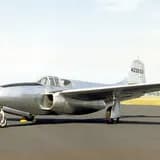
Inducted into the Virginia Aviation Hall of Fame, honoring her pioneering role as the only WASP military test pilot and first woman jet pilot.
In 2000, Ann G. Baumgartner Carl was inducted into the Virginia Aviation Hall of Fame, an honor that formally recognized her as a pioneering figure in both state and national aviation history. The Hall’s biography emphasizes her distinction as the world’s first woman to fly a turbojet‑powered aircraft and her unique wartime role as the only WASP military test pilot.
This induction came more than half a century after her historic 1944 flight in the Bell YP‑59A Airacomet and her service at Wright Field, where she flew a wide variety of fighters and bombers and participated in early in‑flight refueling and advanced systems testing. By the time of the award, Baumgartner had also built a substantial postwar career as a flight instructor and science writer, authoring over 2,000 columns and articles on science and the environment.
The Virginia Aviation Hall of Fame honor is significant because it situates Baumgartner within a broader narrative of regional and national aeronautical achievement, acknowledging that a woman raised and trained in New Jersey and later resident in Virginia helped usher the United States into the jet era. The recognition also reflects the gradual institutional acceptance of women’s contributions to aviation, which had often been overlooked when the WASP program ended without full military status for its members.
For younger aviators and historians, her inclusion in the Hall of Fame provides a tangible, museum‑level testament to the importance of women’s roles in experimental flight testing. It reinforces the idea that jet‑age innovation was not solely the work of male test pilots and engineers, but also of women like Baumgartner who took on demanding and hazardous missions in an era of limited opportunity.