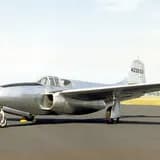
Carries out a formal evaluation flight in the Bell YP‑59A Airacomet at Wright Field as Assistant Operations Officer in the Fighter Section.
On October 14, 1944, in addition to becoming the first woman to fly a jet aircraft, Ann G. Baumgartner conducted the flight as a formal evaluation mission in her capacity as Assistant Operations Officer in the Fighter Section at Wright Field. The Commemorative Air Force account specifies this as an evaluation flight in the Bell YP‑59A Airacomet, underscoring that Baumgartner was performing structured test‑pilot duties rather than a one‑off demonstration.
During this sortie she assessed the jet’s handling, systems, and performance, contributing data and observations to the Fighter Flight Test Branch’s understanding of the new technology. The mission occurred within a larger program of trials that included other advanced aircraft and experimental procedures, such as early in‑flight refueling and pressurized cockpits, in which Baumgartner also participated.
This specific evaluation flight is notable not only for its “first woman jet pilot” distinction but also for what it reveals about women’s active roles in military research and development during World War II. Baumgartner was trusted to conduct a serious engineering evaluation of a classified aircraft, indicating that her superiors regarded her as a professional test pilot whose judgments could influence procurement and tactical decisions.
The detailed documentation of this flight by later organizations, including the Commemorative Air Force and Women in Aviation International, helps historians reconstruct the contributions of WASP test pilots to the jet age. It shows that Baumgartner’s work involved methodical assessment rather than symbolic participation, reinforcing her status as a genuine member of the experimental test community at a time when women were otherwise excluded from regular military pilot ranks.