← All women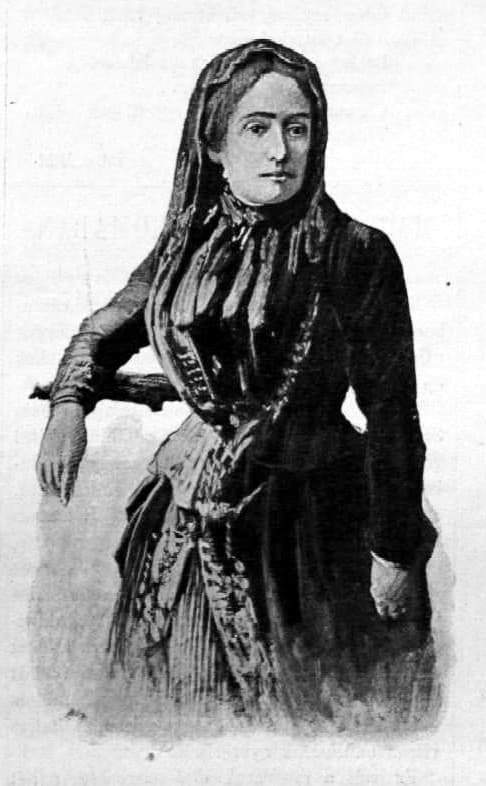
Hungarian · Science
Zsófia Torma
September 26, 1832 – November 14, 1899
Early life and background
Zsófia Torma was born on 26 September 1832 in Csicsókeresztúr (today Cristeștii Ciceului, Romania), into a noble Transylvanian family. She grew up in the Habsburg Empire, in a region that was culturally mixed and politically complex, and later sources note that she was the daughter of a landed noble household. Because the universities and formal scholarly institutions of her time were largely closed to women, Torma did not follow a conventional academic path. Instead, she built her expertise through self-education, reading, collecting, and close observation of the material remains of the past.
Her upbringing placed her within a social class that could provide access to books, correspondence, and leisure for study, but the intellectual opportunities available to women were still sharply limited. Nineteenth-century women were rarely admitted to university study in the disciplines that would later become archaeology, anthropology, or paleontology. In that setting, Torma’s later career was remarkable not simply because she became a researcher, but because she did so without the institutional framework usually required for scientific legitimacy. Her life therefore illustrates both the constraints placed on women in nineteenth-century Central Europe and the ways some women worked around them.
By 1861 she was established in Szászváros (today Orăștie), where she would remain for the rest of her life. This town became the base from which she carried out excavations, correspondence, and publication. From there she built relationships with scholars, curated her finds, and developed an archaeological identity that would make her one of the best-known prehistoric researchers of her region.
Entry into archaeology
Torma’s archaeological work began in earnest in the 1870s, at a time when prehistoric archaeology was emerging as a recognized field in Europe. In 1875 she started excavations at Turdaș–Luncă (Tordos), a site that would become the centerpiece of her scientific reputation. These excavations were the first at the site and opened a new chapter in the study of Transylvanian prehistory. They also made her one of the earliest women in Europe to conduct serious archaeological fieldwork on her own initiative.
Her work at Turdaș–Luncă was especially significant because the site proved to be extraordinarily rich in Neolithic and Copper Age material. Torma collected pottery, figurines, and other artefacts that drew attention for their forms and markings, and she assembled a large body of evidence that later researchers would continue to study. The excavation showed her ability not only to gather objects, but to observe patterns and preserve context at a time when archaeology was still developing its professional methods.
In 1876 she brought nearly one hundred artefacts from Tordos to the 9th International Congress for Ancient Archaeology in Budapest. This public presentation was crucial: it introduced her work to an international audience and demonstrated that a woman researcher from Transylvania could participate directly in the scholarly circulation of evidence. In a discipline still dominated by elite men, the visibility of her presentation mattered as much as the material itself.
The following year, in 1877, she was elected an honorary member of the Szeben Honismertető Egylet (Society for the Knowledge of Sibiu). This honor signaled institutional recognition of her research and placed her among the respected antiquarians and scholars of the region. For a woman working outside the university system, such recognition was an important form of validation.
Publications and scholarly development
Torma’s reputation grew not only through excavation but also through publication. In 1879 she published her first archaeological monograph, Hunyadvármegye Neolith telepei (The Neolithic Settlements of County Hunyad). The work marked her transition from field discoverer to author and interpreter. In nineteenth-century archaeology, publication mattered because it fixed discoveries in print, made arguments testable by peers, and established a researcher’s authority. Torma’s monograph accomplished all three.
She followed this in 1880 with A nándori barlang csoportozat (The Nándor cave-complex group), published in Kolozsvár. This study broadened her interests beyond the Turdaș material and demonstrated her engagement with a wider range of prehistoric evidence. Through these publications she helped define the prehistoric record of Transylvania for later scholars. Her work was careful, comparative, and anchored in material observation, even though she lacked the institutional position that would have been standard for a male scholar of similar reputation.
Torma’s scholarly identity was also shaped by extensive correspondence and exchange with other researchers. Later studies emphasize the network she formed with prominent scholars of the era, which helped circulate her discoveries beyond local circles. This network was especially important in an age when women were often excluded from formal learned institutions and had to rely on personal contacts and the credibility of their evidence to be heard.
Honors and recognition
Torma’s achievements gradually earned formal acknowledgment. Her honorary membership in the Sibiu society in 1877 was an early sign of respect, but the most notable recognition came much later. On 24 May 1899, she received an honorary doctorate from the Faculty of Arts of the Ferencz József University in Kolozsvár, becoming the first woman to receive that honor from the institution. For a woman whose education had been self-directed and whose career developed outside university structures, the award was an especially powerful public confirmation of scholarly authority.
The honorary doctorate is important not only as a personal accolade but also as a marker of changing attitudes. It acknowledged a woman who had produced substantive archaeological knowledge despite barriers that limited women’s access to higher education, official posts, and professional archaeology. The award did not erase those barriers, but it revealed that her contributions had become impossible to ignore.
Personal life
The surviving sources consulted for this profile emphasize Torma’s family background, residence, and scholarly work more than marriage or children. She appears in the historical record primarily as an independent researcher, collector, and correspondent rather than through a conventional domestic biography. That relative scarcity of personal detail is itself instructive: it reflects both the archival limits of women’s history and the way women scholars were often recorded mainly in relation to their intellectual output.
What is clear is that she lived for many years in Szászváros/Orăștie, where she was based from at least 1861 until her death in 1899. From there she managed her excavations and maintained the correspondence that supported her work. She also assembled and preserved a major archaeological collection, which later became central to her reputation and to the development of regional prehistory studies.
Legacy and historical impact
Zsófia Torma is now widely recognized as one of the pioneers of prehistoric archaeology in Transylvania and as one of the earliest professional women archaeologists in Europe. Specialist literature often describes her as the first female archaeologist in Hungary, Austria-Hungary, and present-day Romania, and some writers have gone further, calling her the world’s first female archaeologist. Even where that broader claim is debated, there is little doubt that she was a trailblazer in a field where women had almost no institutional foothold.
Her work at Turdaș–Luncă helped define a major prehistoric site and contributed to broader understanding of the region’s Neolithic and Copper Age cultures. Her artefacts and notes became reference points for subsequent archaeology, and her name remains associated with the Tordos/Turdaș material culture and its place in European prehistory. She also demonstrated that rigorous archaeological work could be produced outside university settings, provided the researcher had persistence, intellectual discipline, and access to evidence.
Her legacy is additionally important for the history of women in science. Torma’s career shows how women in the nineteenth century could establish authority through self-education and fieldwork even when formal credentials were denied to them. Her example has since been used by historians to trace the emergence of women’s participation in archaeology and to challenge older narratives that treated the discipline as exclusively male during its formative period.
Death and posthumous reputation
Torma died on 14 November 1899 in Szászváros (Orăștie). By the time of her death, her collection from Turdaș–Luncă and other sites was already regarded as an important reference in nineteenth-century European prehistoric archaeology. Her passing did not end the influence of her work; instead, it marked the beginning of a long posthumous reassessment by later archaeologists and historians.
In the twentieth and twenty-first centuries, researchers have increasingly highlighted her as a foundational figure in the archaeology of Transylvania and as a woman who overcame the barriers of her era to create a body of work with lasting scholarly value. Her life continues to be studied not only for the artefacts she uncovered, but for what her career reveals about gender, knowledge, and the making of archaeology in Central and Eastern Europe.
Dated achievements
8 indexed.
- Sep261832Science
Birth of Zsófia Torma
Birth of Zsófia Torma in Csicsókeresztúr, Transylvania. She would become a pioneering archaeologist and one of the earliest women to build an archaeological career in Europe.
View details Acta Historica Hungarica Turiciensia (2023) - Oct011875Science
First excavations at Turdaș–Luncă
Torma begins the first excavations at Turdaș–Luncă (Tordos), becoming the first person to excavate this important prehistoric site.