← All women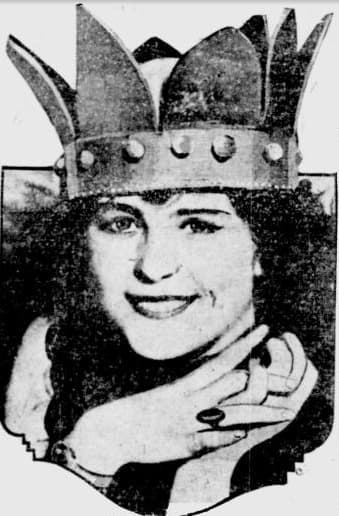
American · Activism · Sports · Exploration · Literature · Medicine
Mary Campbell
January 10, 1818 – June 7, 1990
Mary Ann Campbell
Mary Ann Campbell (born January 10, 1818) was a Black civic leader, philanthropist, and church organizer in Philadelphia whose life illustrates the breadth of nineteenth-century African American women’s public leadership. She is remembered for her charitable work, her participation in church-based institutions, and her role in founding women’s missionary organizations within the African Methodist Episcopal tradition. Campbell’s life also intersects with the histories of Black education, health care, and mutual aid in a city that was one of the most important centers of free Black activism in the United States.
Early life and background
Campbell was born in Philadelphia, a city with a large and politically active free Black population. The city’s Black communities built schools, churches, aid societies, and anti-slavery networks in response to exclusion from public life. Campbell came of age in this environment, where Black women frequently became central to institutions of benevolence and reform. The historical record does not provide extensive details about her childhood or formal education, but her later work indicates familiarity with the religious and civic culture of Black Philadelphia.
Before her marriage to Rev. Jabez P. Campbell, she was married to Joseph Shire, who died in the late 1840s, leaving her a widow. That experience of widowhood is important because it placed her within a common pattern of nineteenth-century women’s lives in which domestic disruption often preceded new forms of social and religious engagement. By the time she entered her second marriage, she was already positioned within a network of urban Black respectability and philanthropy.
Marriage and family life
In 1855, Campbell married Rev. Jabez P. Campbell, joining one of Philadelphia’s leading AME ministerial families. The marriage connected her more firmly to the institutional life of the church and to the broader world of Black self-help. In this period, women often exercised influence through household management, fundraising, hospitality, and organizational labor, and Campbell’s later public profile suggests that she used these avenues effectively.
Her marriage should be understood as part of a larger ecclesiastical and social world rather than as a purely private event. Black church families in nineteenth-century cities often functioned as centers of mutual support and public leadership. Campbell and her husband were widely known for their charity, and their home and church affiliations helped sustain initiatives that served children, the elderly, students, and the poor.
Church leadership, philanthropy, and institutional work
Campbell’s most important documented achievement was her co-founding of the Women’s Parent Mite Missionary Society in Philadelphia in 1874. The organization was part of the expanding landscape of AME women’s missionary and benevolent activity. Such societies allowed women to raise funds, organize prayer and mission work, and contribute materially to church expansion at a time when formal leadership positions remained largely reserved for men.
She also served as president of the Dorcas Society, a missionary society for women of the AME Church. More broadly, she was associated with a range of Philadelphia institutions: the Home for the Aged and Infirm Colored Persons, Wilberforce University, Jabez Campbell College in Jackson, Mississippi, and the Frederick Douglass Hospital in Philadelphia. These commitments show that her philanthropy was not symbolic but structural. She helped maintain institutions that addressed education, care for the elderly, and health services in an era when Black communities were routinely denied equal access to public resources.
Her public engagement also included helping found two schools and a healthcare facility. Such work reflects the practical leadership often exercised by Black women in the nineteenth century. They raised funds, organized volunteers, sustained institutions, and built educational opportunities in communities where racism and sexism limited access to state support. Campbell’s life demonstrates how women’s church work could become a platform for broad civic influence.
Historical context and significance
Mary Ann Campbell belonged to a generation of Black women who translated religious commitment into social infrastructure. In antebellum and Reconstruction-era America, Black Philadelphians faced exclusion from many civic institutions, but they responded by creating their own. Women played a central role in that process. Campbell’s life is significant not because she held elected office or produced a large body of writings, but because she embodied a form of leadership that was essential to the survival and growth of African American communities.
Her work also helps historians understand the relationship between philanthropy and activism. Church societies, schools, hospitals, and homes for the aged were not peripheral charities; they were vital community institutions. By helping build and sustain them, Campbell contributed to Black collective power. Her life illustrates how women’s labor in religious, educational, and charitable settings shaped the public sphere even when it remained underrecorded in conventional political histories.
Later life and legacy
The available sources do not provide a precise death date for Campbell, but her legacy is preserved in historical research on Black mobility and Black women’s civic leadership. She is remembered as a figure whose work connected family life, religious commitment, and institutional development. Her example also helps restore visibility to the many women whose leadership took place through societies and benevolent organizations rather than through formal titles.
Today, Campbell stands as an important representative of nineteenth-century Black women’s activism in Philadelphia. Her life offers a window into the ways Black women created power through mutual aid, church organization, and philanthropy. In that sense, her historical importance extends beyond the specific institutions she helped build: she belongs to the broader story of how African American women transformed community care into a durable public force.
Dated achievements
14 indexed.
- Feb041691Literature
Death of Lady Mary Campbell, Countess of Breadalbane and Holland
Death of Lady Mary Campbell, Countess of Breadalbane and Holland, within Scotland’s aristocratic Campbell family network.
View details Geni: Mary Campbell, Countess of Breadalbane and Holland - May211758Exploration
Abduction of colonial settler Mary Campbell