← All women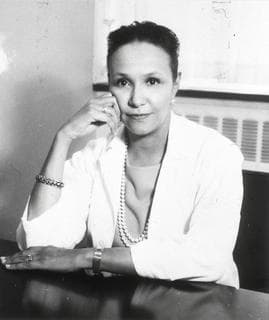
American · Medicine · Science
Jane Cook Wright
November 30, 1919 – February 19, 2013
Early Life and Family Background
Jane Cooke Wright (1919–2013) was born on November 30, 1919, in Manhattan, New York City, into a prominent African American family deeply rooted in medicine and education.[1][2][3][6][7][14] Her father, Dr. Louis Tompkins Wright, was among the first Black graduates of Harvard Medical School and a pioneering surgeon at Harlem Hospital, where he founded the Cancer Research Foundation.[1][6][12][14] Her mother, Corinne (or Corinne) Cooke Wright, was a schoolteacher who emphasized academic excellence.[3][6][14] Growing up in this environment during the era of the Harlem Renaissance, Wright was surrounded by intellectual and cultural vibrancy alongside the realities of racial segregation.[15]
Wright was the elder of two daughters.[3] Though she initially considered a career in art, she was strongly influenced by her father’s example and the family’s ethos of service through medicine, eventually deciding to pursue medical training.[3][6][15] She attended Smith College, graduating with a B.A. in 1942.[7][14] At Smith she reportedly began as an art major before switching to pre‑medical studies, reflecting a shift from creative aspirations to scientific and clinical ambitions.[15]
In 1942, Wright entered New York Medical College, one of the few medical schools that admitted African American students at the time.[1][7][14][15] She received her M.D. with honors in 1945, distinguishing herself academically in a period when Black women physicians were exceedingly rare.[7][14][15] She then completed an internship at Bellevue Hospital in New York, followed by residencies at various institutions, including Harlem Hospital, where she served as chief resident.[6][12][14]
Career Beginnings at Harlem Hospital and the Cancer Research Foundation
After completing her residency, Wright joined her father at Harlem Hospital, working within the Cancer Research Foundation he had established.[3][14] The foundation focused on improving cancer care for Harlem’s largely Black and often economically disadvantaged population, at a time when access to specialized oncology services was limited.[3] Wright’s early clinical and research experiences were thus shaped by both cutting‑edge science and a strong commitment to addressing health inequities.
In 1952, following her father’s death, Wright assumed his role as head of the Cancer Research Foundation at Harlem Hospital.[12][14] This leadership position was a major responsibility for a young African American woman physician in the early 1950s, placing her at the forefront of clinical cancer research and community‑based oncology. She oversaw clinical trials, patient care, and laboratory work, building on her father’s legacy while beginning to chart her own scientific path.
During this period, Wright became increasingly involved in research on anticancer drugs. She was among the first investigators to systematically explore chemotherapy regimens in solid tumors, rather than limiting such agents to hematologic malignancies.[3][4][11] Her work at Harlem Hospital connected laboratory findings to real‑world patient care, contributing to the emerging field of clinical cancer chemotherapy.
Major Scientific Contributions and Development of Chemotherapy
Over a career spanning roughly four decades, Wright made multiple landmark contributions that helped establish chemotherapy as a central modality in cancer treatment. Her research has been described as transforming chemotherapy from an "experimental, last‑resort" option into a more effective and systematic approach for a wide range of malignancies.[3][4][16]
Human Tissue‑Culture Techniques
One of Wright’s most influential scientific achievements was her development and use of human tissue‑culture methods to evaluate potential anticancer drugs.[2][3][4][13] Rather than relying exclusively on laboratory mice, she and her collaborators grew human cancer cells in culture and exposed them to candidate chemotherapeutic agents, analyzing their effects in a system closer to human disease.[2][4]
These techniques, refined in the 1950s and 1960s, laid foundations for what would later be recognized as more "precision" approaches to chemotherapy testing.[3][4][11] They allowed researchers to compare drug responses across different tumor types and to identify agents with particular promise for specific cancers. Histories of oncology credit Wright with playing a key role in shifting drug evaluation toward human‑derived models, an advance that improved the predictive value of preclinical studies.[2][3][4]
Methotrexate and Nitrogen Mustard
Wright’s work with methotrexate, a folate antagonist, is especially noted. In the early 1950s, methotrexate had been studied mainly for leukemia, but Wright’s clinical research demonstrated that it could induce regression of certain solid tumors, including advanced breast and skin cancers.[3][4][11][16] A key 1951 study showed that methotrexate was effective in treating breast cancer, helping to establish the drug as a cornerstone of chemotherapy for solid tumors.[6][11]
She later extended methotrexate use to mycosis fungoides, a type of cutaneous T‑cell lymphoma, broadening its application beyond hematologic cancers.[2][11][13] These findings helped integrate methotrexate into multi‑drug regimens that became standard in oncology.
Wright also contributed to the clinical use of nitrogen mustard, one of the earliest chemotherapeutic agents, developing regimens that improved outcomes while managing toxicity.[4][11] Her work on combination therapies and sequential adjuvant chemotherapy for various cancers is cited in later reviews as foundational to modern practice.[3][4]
Innovations in Drug Delivery
Beyond identifying effective drugs, Wright pioneered methods for delivering chemotherapy more precisely. She devised catheter‑based techniques to infuse drugs directly into organs such as the kidneys and spleen, which had previously been difficult to reach with systemic therapy.[4][11][15] By delivering agents locally, these methods aimed to increase drug concentration at the tumor site while reducing systemic side effects.
These innovations aligned with broader trends in oncology toward targeted and regional therapies. Wright’s contributions in this area are often highlighted as examples of her ability to integrate surgical skill, pharmacologic knowledge, and clinical insight to improve patient care.[4][11]
Academic Career at NYU and New York Medical College
In 1955, Wright joined the faculty of New York University (NYU) Medical Center as an associate professor of surgical research.[12][14] There she continued her experimental work on chemotherapy, conducting clinical trials and collaborating with other researchers on drug evaluation and treatment protocols.[12][14]
Her growing national reputation led to recruitment by New York Medical College (NYMC), where she eventually became professor of surgery, head of the cancer chemotherapy department, and director of a new cancer research laboratory.[1][3][7][14] At NYMC she combined laboratory leadership, clinical research, and teaching, mentoring a generation of physicians in the emerging field of medical oncology.
In 1967, Wright was appointed associate dean of NYMC, becoming the first African American woman associate dean at a nationally recognized medical institution and the highest‑ranking African American woman in any U.S. medical school at that time.[1][7][16] In this role she helped shape curricula, faculty development, and research priorities, further extending her influence beyond her own lab and clinic.
Founding Role in the American Society of Clinical Oncology (ASCO)
On April 9, 1964, Wright joined six other oncologists at Chicago’s Edgewater Beach Hotel to found the American Society of Clinical Oncology (ASCO).[5][13][15] ASCO was created to focus specifically on clinical cancer care and research, complementing existing organizations that leaned more toward basic science.
Wright was the only woman and the only African American among ASCO’s seven founders, a distinction consistently noted in historical accounts.[5][13][16] Her role reflected both her scientific prominence and her ability to navigate professional networks in a field that was largely closed to women and minorities. As ASCO grew into a globally influential society, Wright’s cofounder status came to symbolize the importance of diverse leadership in shaping oncology’s trajectory.
Through ASCO, Wright advocated for improved clinical trial design, better integration of chemotherapy into standard care, and broader dissemination of evidence‑based treatment guidelines. Her contributions helped ensure that patient‑oriented research and education remained central to the society’s mission.[5][13]
National Policy and Advisory Roles
Wright’s expertise in cancer care led to appointments on national advisory bodies. In the 1960s, she was selected to serve on President Lyndon B. Johnson’s Commission on Heart Disease, Cancer, and Stroke, which examined strategies to reduce mortality from these major chronic illnesses.[12][15] Her participation brought a perspective informed by community‑based practice, clinical research, and the experiences of African American patients.
She also held positions in various governmental and professional committees concerned with research funding, medical education, and access to care. These roles extended her influence beyond individual institutions, allowing her to contribute to broader policy discussions during a period of expanding federal involvement in biomedical research.
Collaborations and Publications
Wright was a prolific author, credited with over 100 scientific publications, and often cited in biographical sources as having authored or co‑authored more than 135 papers.[3][4][11] Her work covered topics such as drug combinations, dosage optimization, tissue‑culture methods, and clinical outcomes in various cancers, including breast cancer, skin cancers, and gastrointestinal tumors.
She collaborated with numerous colleagues, including noted biologist Jewel Plummer Cobb, on studies examining the effects of chemotherapy on cancer cells.[1][14] These collaborations brought together expertise in cell biology and clinical oncology, further strengthening the scientific basis for chemotherapy protocols.
Awards, Honors, and Recognition
Wright’s contributions earned her significant professional recognition. In 1971, she became the first woman president of the New York Cancer Society, breaking a gender barrier in the leadership of a major regional oncology organization.[1][3][4][14][16] This role affirmed her standing among peers and highlighted the increasing—though still limited—acceptance of women in high‑level positions within medical societies.
She received awards such as the Albert Einstein College of Medicine’s Spirit of Achievement Award and honors from the American Association for Cancer Research (AACR), acknowledging her pioneering work in chemotherapy.[14][8] The AACR later recognized her as an esteemed member and posthumously as an AACR Academy fellow, underscoring her status as a major figure in cancer research.[8]
Wright has been profiled in numerous historical and educational projects, including the U.S. National Library of Medicine’s "Changing the Face of Medicine" exhibition, which highlights women physicians who have reshaped American medicine.[1] Women’s‑history organizations and science societies frequently cite her as a "trailblazer" and "architect of modern chemotherapy."[3][4][16]
Personal Life
In 1947, Wright married David D. Jones Jr., a lawyer.[12][14] Some sources refer to her professionally at times as Jane Jones, though "Jane Cooke Wright" remained the predominant name in scientific literature.[2][11] The couple had two daughters
Biographical accounts emphasize that she maintained an active home life while pursuing leadership roles in hospitals, universities, and professional societies.[3] Her ability to combine family responsibilities with scientific and administrative achievements is often noted in discussions of women’s experiences in medicine. Wright continued to conduct research, teach, and serve in leadership roles through the 1970s and into the 1980s. She remained at New York Medical College as professor of surgery, director of cancer chemotherapy, and associate dean, mentoring younger physicians and researchers.[1][3][7][14] She retired from active academic and clinical work in 1987, according to encyclopedia sources, after more than four decades in medicine.[14] Even in retirement, her publications and leadership roles continued to influence oncology practice and policy, and she was frequently cited in histories of cancer treatment and women in science. Historians and professional organizations widely regard Jane Cooke Wright as one of the key architects of modern chemotherapy.[3][4][13] Her work helped establish methotrexate and other agents as standard treatments, refined tissue‑culture methods for drug testing, and advanced catheter‑based delivery techniques. These contributions collectively transformed chemotherapy from a marginal, experimental intervention into a core component of multidisciplinary cancer care. Equally important is her legacy as a barrier‑breaking African American woman physician. As the only woman and only African American among ASCO’s founders, the first Black woman associate dean of a U.S. medical school, and the first woman president of the New York Cancer Society, she expanded the possibilities for women and minorities in medical leadership.[1][5][7][16] Her career is frequently invoked in discussions of diversity and inclusion in medicine. Exhibits and articles emphasize how she navigated racism and sexism, advocated for better cancer care for underserved communities, and mentored younger physicians.[1][3][4] She is sometimes referred to as the "godmother" or "mother" of chemotherapy, reflecting both her scientific contributions and her nurturing role in the profession.[13][16] Women’s‑history organizations, cancer advocacy groups, and biomedical institutions continue to highlight Wright’s story as an example of how scientific excellence and social progress can intersect. Her life illustrates the ways in which individual determination, family legacy, and institutional opportunity can combine to change both medical practice and professional norms. Jane Cooke Wright died on February 19, 2013, in Guttenberg, New Jersey, at the age of 93.[2][3][4][7][8][15] Obituaries and memorials in oncology journals and professional society publications celebrated her as a pioneer in clinical cancer chemotherapy and as a leader who helped usher in the modern age of cancer treatment.[4][5][15] ASCO, AACR, the National Library of Medicine, and women’s‑history organizations have all produced tributes or biographical essays about her life and work, ensuring that new generations of physicians, researchers, and students learn of her contributions.[1][3][4][8][15][16] She is featured in educational materials that aim to inspire young people—especially girls and underrepresented minorities—to pursue careers in science and medicine. Posthumously, Wright’s name is frequently associated with key turning points in oncology: the rise of systemic therapy for solid tumors, the professionalization of clinical oncology through ASCO, and the gradual diversification of academic medical leadership. Her enduring legacy lies not only in the thousands of patients whose treatments were shaped by her research, but also in the broader transformation of cancer care and medical institutions that her work helped to catalyze.Later Career and Retirement
Legacy and Historical Impact
Death and Posthumous Recognition
Dated achievements
5 indexed.
- Nov301919Medicine
Birth of Jane Cooke Wright
Jane Cooke Wright is born in Manhattan, New York City, into a pioneering African American medical family, beginning the life of a future architect of modern cancer chemotherapy.
View details Dr. Jane Cooke Wright - Biography (NLM) - Apr091964