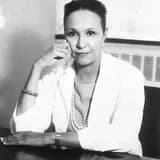
Jane Cooke Wright is born in Manhattan, New York City, into a pioneering African American medical family, beginning the life of a future architect of modern cancer chemotherapy.
On November 30, 1919, Jane Cooke Wright was born in Manhattan, New York City, into a family that already stood at the forefront of African American medical achievement. Her father, Dr. Louis Tompkins Wright, was among the first Black graduates of Harvard Medical School and a pioneering surgeon at Harlem Hospital, while her mother, Corinne Cooke Wright, was a schoolteacher committed to education.[1][6][7][14]
Growing up during the era of the Harlem Renaissance, Wright’s childhood unfolded in a community where Black intellectual, artistic, and professional life was flourishing despite entrenched racism and segregation.[15] In this environment, her family’s medical legacy and emphasis on learning profoundly shaped her aspirations, even though she initially considered a career in art before turning to medicine.[3][6][15]
The significance of Wright’s birth lies in the trajectory it began: she would become one of the most influential figures in modern cancer chemotherapy, transforming an experimental, last‑resort therapy into a central pillar of oncology.[2][3][4] As an African American woman entering medicine in the mid‑20th century, she faced both racial and gender barriers in education, clinical training, and research funding.[3][4][9] Yet the foundation laid on this date—within a family of trailblazers and a vibrant Black cultural milieu—equipped her to challenge exclusionary structures in academic medicine and clinical research.
Her birthdate is now widely cited in biographical and historical accounts, anchoring timelines that trace the development of chemotherapy, the evolution of cancer‑care institutions, and the gradual diversification of the U.S. medical profession.[1][2][3][7][14]