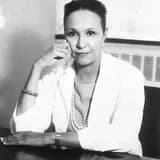
Jane Cooke Wright becomes the first woman elected president of the New York Cancer Society, breaking a major gender barrier in oncology leadership.
In 1971 (year known, exact day not documented), Jane Cooke Wright achieved another historic milestone when she was elected the first woman president of the New York Cancer Society.[1][3][4][14][16] At that time, major oncology organizations were dominated by male leadership, and women physicians—especially Black women—were rarely entrusted with top governance roles.
Wright’s election reflected both her scientific eminence and her longstanding service within professional cancer networks. By the early 1970s she had already helped pioneer human tissue‑culture techniques for evaluating anticancer drugs, advanced the clinical use of methotrexate and nitrogen mustard, and co‑founded the American Society of Clinical Oncology.[2][4][5][13] These contributions made her a respected authority on chemotherapy and multimodal cancer treatment.
As president, Wright had influence over educational programs, policy statements, and collaborations that affected cancer care across New York and beyond.[4] Her leadership symbolized a shift toward greater gender diversity in oncology governance and demonstrated that a Black woman could steer a prominent regional cancer society at a time when structural inequities persisted in hiring, promotion, and research funding.
Biographical sources and institutional tributes consistently emphasize this 1971 milestone as a central component of Wright’s "legacy of firsts," connecting it to broader narratives about women’s leadership in medicine and the slow opening of professional societies to diverse voices.[1][3][14][16] While historians lack a precise calendar date, the documented year anchors this achievement within the larger chronology of women breaking glass ceilings in medical organizations.