← All women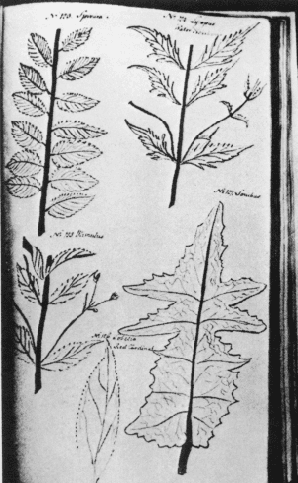
American · Science
Jane Colden
March 27, 1724 – March 10, 1766
Early Life and Family Background
Jane Colden (March 27, 1724 – March 10, 1766) was a colonial American botanist whose manuscript flora of New York and participation in transatlantic scientific networks have led many historians to describe her as one of the first women botanists in what would become the United States.[1][2][14] In 1843, botanist Asa Gray referred to her as the “first botanist of her sex in her country,” a phrase that has shaped her posthumous reputation.[1][11][12]
Colden was born on March 27, 1724, in New York City, into a prominent colonial family.[1][14][15] She was one of nine children of Cadwallader Colden and Alice (Christy) Colden
Soon after Jane’s birth, the family established their country estate, Coldengham (often spelled Coldenham), in Ulster, now Orange County, in the Hudson Valley.[2][14][16] There, Cadwallader Colden developed extensive gardens and maintained a scientific library that became the center of Jane’s education. Unlike most women of her era, Jane received systematic instruction in Latin, natural philosophy, and botany at home. Her father taught her the new Linnaean system of plant classification and encouraged her to make careful observations and records of the local flora.[2][13][14] Growing up on the estate, Jane was surrounded by both indigenous and cultivated plants. Coldengham’s relative isolation in the Hudson Highlands, combined with its owner’s intellectual ambitions, created an environment in which a young woman could pursue scientific work embedded in domestic life. This combination of familial support, access to books, and direct contact with diverse plant life was crucial to her later achievements.[2][16][18] Jane Colden’s introduction to botany came through her father’s own studies and his scientific correspondence. Cadwallader Colden had been collecting and describing plants from the New York region since the 1720s and 1730s, sending specimens and notes to botanists abroad.[14][18] In time, he shared this work with Jane, instructing her in methods of observation and the Linnaean nomenclature that was transforming botanical science in the mid-eighteenth century.[2][14] By the early 1750s, Jane had moved beyond informal assistance to independent, systematic work. According to accounts from the New York Botanical Garden and other scholars, she began compiling her own botanical manuscript around 1753, focused on the flora of the lower Hudson Valley.[2][4][13] Working from Coldengham, she collected specimens, recorded their morphological features, and noted their habitats and uses, including Indigenous knowledge and local vernacular names where available.[2][6][14] Her father recognized the quality of her observations and began to share Jane’s notes and drawings with his correspondents. This brought her work to the attention of leading botanists such as Alexander Garden, a Scottish physician and naturalist based in South Carolina; John Bartram, the Philadelphia Quaker botanist; and Peter Collinson, Bartram’s London correspondent and patron.[14][18][20] Through these channels, Jane’s descriptions and specimens entered the wider Atlantic scientific community, even though she published nothing under her own name. Jane Colden’s principal scientific achievement is the manuscript flora often referred to as Flora Nov-Eboracensis or simply the Botanic Manuscript. Compiled between 1753 and 1758, it documents approximately 340–341 plant species from the New York region, particularly the lower Hudson Valley near Coldengham.[2][4][11][14] The manuscript includes detailed written descriptions, ink drawings, and leaf impressions, organized using the Linnaean system of genera and species.[2][13] Historians describe the Botanic Manuscript as one of the most extensive botanical studies of a single area undertaken in the eighteenth century.[14][16] It has been called the earliest record of New York flora in English, preserving information about plant diversity before the widespread transformation of the region by agriculture and urbanization.[2][18][20] Colden’s work shows careful attention to reproductive structures, leaf arrangement, and other morphological details essential to Linnaean classification, demonstrating her mastery of a system that many contemporaries still found new and challenging.[14] Her manuscript also reflects the practical dimensions of colonial botany. In addition to scientific names, she noted local names and documented uses of plants as medicines, foods, or materials, including practices attributed to Indigenous peoples and European settlers.[2][6][14] This integrative approach positioned her flora at the intersection of natural history, ethnobotany, and emerging scientific taxonomy. Colden’s work was not published in print during her lifetime, but it circulated in manuscript form. Specimens and descriptions from her flora were communicated by her father to correspondents such as Garden and Collinson, who in turn shared them with other botanists.[14][18][20] This indirect circulation meant that her observations could influence taxonomic decisions without her being credited as an author, a common fate for women in early modern science. Among the plants Jane Colden studied, later accounts particularly highlight her association with the first identification of the shrub that would be named Gardenia.[2][5][14] Sources indicate that in 1756 one of the plant identifications she had made was formally described under the genus name Gardenia in scientific literature, although the precise day of publication is not specified.[2][14] The genus honored Alexander Garden, but Colden’s careful observations and descriptions were part of the knowledge base that made the identification possible.[14][5] EBSCO’s biographical summary credits her as the first person to identify the Gardenia and notes that she also identified species such as Hypericum virginicum (marsh St. John’s wort) and Coptis groenlandica (goldthread), among others.[5] Her descriptions of these plants, preserved in the Botanic Manuscript, show the same careful attention to morphology and ecology that characterizes her flora as a whole. More broadly, Colden has been described as “the first lady on either side of the Atlantic” to master Linnaeus’s system of plant nomenclature.[14] While such claims must be interpreted cautiously given the existence of earlier women naturalists in Europe, they reflect her contemporaries’ understanding of her expertise. Her ability to use Linnaean classification fluently placed her among the relatively small number of botanists, male or female, who adopted the system soon after its introduction. Jane Colden did not publish under her own name, but she participated in the scientific community through her father’s correspondence. Cadwallader Colden frequently mentioned Jane’s work, shared her drawings, and forwarded her observations to botanists abroad.[14][18][20] Through these networks, her work became known to figures such as Garden, Bartram, and Collinson. An important document of her contemporary reception is the January 20, 1756Peter Collinson to John Bartram. In this letter, Collinson praised Jane’s botanical work and remarked, “I believe she is the first lady who has attempted anything of this nature.”[3][20] While the statement is not definitive proof that no other women were engaged in similar studies, it shows that male botanists saw her work as noteworthy and unusual, and it has been widely quoted in later scholarship. Later nineteenth-century botanists, including Asa Gray, further reinforced her reputation. Gray’s description of her as “the first botanist of her sex in her country” in 1843 helped secure her place in the historical record.[1][11][12] Throughout the twentieth and twenty-first centuries, historians of science and gender have continued to reassess her contributions, often positioning her alongside European women naturalists such as Maria Sibylla Merian and Catherine Jérémie as part of a broader tradition of women’s scientific work.[12][14] Modern scholarship also notes that while Colden is widely described as America’s “first woman botanist,” this claim is debated. Researchers point to earlier women who studied plants or contributed to natural history, even if less extensively documented.[2][3][20] However, Colden remains one of the best-documented early American women botanists, in large part because her manuscript survived and because her father’s correspondence preserved contemporary commentary on her work. Details of Jane Colden’s personal life are less extensively recorded than her botanical work, but sources agree that she married a physician, Dr. William FarquharJane Colden Farquhar, suggesting that she moved into a new household and likely took on domestic and maternal responsibilities that limited the time she could devote to scientific work.[5] EBSCO’s research summary notes that her career in botany was interrupted by marriage.[5] This pattern fits broader trends in eighteenth-century women’s lives: marriage often shifted women’s labor toward household management and childrearing, reducing opportunities for sustained scientific activity, especially when such work was not financially or institutionally supported. That Colden’s botanical manuscript appears largely complete by 1758 may reflect these changing obligations. Sources indicate that she died in childbirth, implying that she had at least one pregnancy and possibly other children, though specific information about her offspring is not consistently recorded.[2][5][8][10] Her death highlights the physical risks associated with maternity in the eighteenth century and the ways those risks constrained women’s life expectancy and careers, regardless of social status. By the early 1760s, Jane Colden’s botanical work had largely concluded, though her manuscript and earlier correspondence continued to circulate among a small circle of botanists. On March 10, 1766, she died in New York City at the age of forty-one.[1][14][15] Several sources, including the New York Botanical Garden and international Wikipedias, state that she died in childbirth.[2][8][10] Her death brought an abrupt end to a scientific career that, though never publicly published, had already produced a major contribution to regional botany. After her death, her Botanic Manuscript and related papers remained with the family and eventually entered institutional collections. The manuscript’s survival is partly due to Cadwallader Colden’s status and to the interest of later archivists and historians in his correspondence. Without this preservation, much of Jane’s work might have been lost, as happened to the scientific papers of many other women of her era.[14][20] Jane Colden’s legacy has grown over time as historians and institutions have revisited her manuscript and correspondence. The Botanic Manuscript is now recognized as a crucial document in the history of American botany and environmental history. It provides detailed evidence of plant diversity in eighteenth-century New York and of how colonial observers, including women, engaged with that diversity.[2][16][18] Modern scholars emphasize several aspects of her historical impact: In recent decades, institutions such as the New York Botanical Garden, the Linda Hall Library, and the American Philosophical Society have highlighted Colden in exhibitions, essays, and digital projects.[2][15][19][20] Scenic Hudson and other organizations have used her story to connect environmental history with women’s history in the Hudson Valley.[18] These efforts reflect a broader trend in the history of science: recovering the contributions of women whose work was long overshadowed or misattributed. Colden’s legacy is also evident in popular and educational narratives. Biographical sketches, podcasts, and school programs present her as a model of intellectual curiosity and as evidence that women have engaged in scientific inquiry since the earliest days of American colonization.[6][10][20] Her story challenges assumptions that colonial science was exclusively male and encourages a more inclusive view of who produced knowledge in the past. Although Colden is often introduced as “America’s first woman botanist,” modern scholarship treats this label with care. Historians note that other women in the colonies and Europe studied plants, kept gardens, and sometimes contributed to natural history, even if their work was not preserved or recognized to the same extent.[3][12][20] The description of Colden as “first” relies on documented evidence rather than on a claim that no other women engaged in botanical study. French, Russian, Spanish, and Japanese Wikipedias, as well as specialized studies, emphasize that she was one of the earliest women to work systematically in botany in America and to be acknowledged by male contemporaries for doing so.[4][11][12][13] Russian-language accounts, for instance, situate her alongside European women naturalists such as Maria Sibylla Merian and Catherine Jérémie as part of a lineage of women scientists whose work long went underrecognized.[12] The American Philosophical Society and other scholarly bodies have undertaken projects to analyze how Colden’s memory was constructed over time, exploring the interplay between nineteenth-century commemoration, feminist historical recovery, and contemporary environmental scholarship.[3][19] This work underscores that her significance lies not only in being “first” but also in the richness of her surviving manuscript and the insight it offers into women’s participation in Enlightenment science. Jane Colden’s life and work bridge domestic life on an eighteenth-century Hudson Valley estate and the emerging global science of botany. Educated by her father and embedded in his correspondence networks, she compiled a remarkably detailed Linnaean flora of New York, contributed to species identifications including Gardenia, and earned praise from contemporaries such as Peter Collinson and Asa Gray.[1][2][3][14][20] Her manuscript, preserved and rediscovered by later generations, has become a key source for historians of botany, women’s history, and environmental change. While debates continue over the exact scope of her “firsts,” there is broad agreement that she stands among the earliest and best-documented women botanists in America. Her story illuminates how women could engage seriously with science in the colonial period, even without formal institutional roles, and how their contributions could both shape and be shaped by the gendered structures of knowledge production. Today, Colden is remembered as a pioneering figure whose careful attention to the plants of her region continues to inform scientific and historical understanding of eighteenth-century New York.Introduction to Botany and Career Beginnings
Flora Nov-Eboracensis and Major Botanical Work
Gardenia and Other Species Identifications
Correspondence, Recognition, and Contemporary Reception
Personal Life: Marriage and Family
Later Life and Death
Legacy, Memory, and Historical Impact
Debates About “Firsts” and Modern Reassessment
Conclusion
Dated achievements
6 indexed.
- Mar271724Science
Birth of Jane Colden in New York City
Born March 27, 1724, in New York City to Cadwallader and Alice (Christy) Colden, in a household that fostered her early botanical education.
View details Encyclopedia.com – Colden, Jane (1724–1766) - Jan011753Science
Beginning of Flora Nov-Eboracensis botanical manuscript
In 1753, Colden began compiling her Botanic Manuscript, Flora Nov-Eboracensis, documenting over 340 New York plants using Linnaean classification.