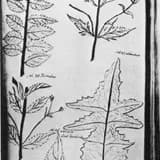
Died March 10, 1766, in New York City, likely in childbirth, leaving behind her unpublished but influential New York Botanic Manuscript.
On March 10, 1766, Jane Colden died in New York City at the age of forty-one.[1][14] Sources indicate that she died in childbirth, a common but often under-recorded cause of death for women in the eighteenth century.[2][8][10] By this time she had married physician Dr. William Farquhar, and some accounts refer to her as Jane Colden Farquhar in later years.[5][14] Her death ended a brief but notably productive scientific life during which she had compiled one of the most detailed floras of colonial New York.
The circumstances of her death underscore the gendered constraints that shaped women’s lives in the colonial period. Despite her recognized expertise in botany and her engagement with prominent male scientists, her adult years were also structured by marriage and maternity, roles that carried significant physical risk. Childbirth mortality affected women across classes, and Colden’s case illustrates how these risks truncated promising intellectual careers.[2][10]
Historically, March 10, 1766 marks not only the loss of an individual botanist but also a turning point in the preservation and memory of her work. With no published flora under her own name, her Botanic Manuscript remained in family and institutional hands, later entering archival collections where it would be rediscovered by nineteenth- and twentieth-century historians.[14][20] The survival of the manuscript and associated correspondence allowed later scholars to reassess her role in early American science, leading to her designation by some as “America’s first woman botanist.”[1][2][16] Her death date thus frames subsequent efforts to recover and interpret women’s contributions to scientific knowledge in an era when their authorship was rarely fully acknowledged.