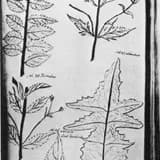
Peter Collinson’s Jan 20, 1756 letter to John Bartram praised Colden’s botanical work, calling her “the first lady who has attempted anything of this nature.”
On January 20, 1756, London Quaker merchant and botanist Peter Collinson wrote to Philadelphia botanist John Bartram praising the work of Jane Colden and highlighting her unusual status in the scientific world.[3][20] In the letter, Collinson remarked that he believed she was “the first lady who has attempted anything of this nature,” referring to her systematic botanical studies and her use of the Linnaean method. The statement is not definitive proof that she was the first woman botanist in America, but it is a rare contemporary acknowledgment of a woman’s scientific expertise.
This letter emerged from transatlantic exchanges in which Colden’s father, Cadwallader Colden, shared Jane’s descriptions and specimens with eminent botanists. Through these channels, her work reached readers in Britain and the colonies, and Collinson’s comment reveals that male peers saw her contributions as noteworthy rather than merely amateur.[14][20] At a time when women were largely excluded from scientific societies, universities, and formal publishing, such recognition was significant.
The historical importance of the January 20 letter lies in its documentation of how Colden’s botanical studies were perceived during her lifetime. Collinson’s phrase has been frequently quoted by later historians to support claims that she was America’s first woman botanist, though modern scholarship carefully contextualizes it.[20] It demonstrates that her work crossed gendered barriers of the era, entering correspondence networks that usually privileged male authors. This recognition helped ensure that her Botanic Manuscript and plant identifications, including her association with the genus Gardenia, were preserved and later rediscovered by historians of science, reinforcing her place in the narrative of early American botany.