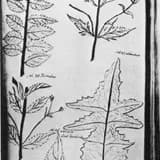
In 1753, Colden began compiling her Botanic Manuscript, Flora Nov-Eboracensis, documenting over 340 New York plants using Linnaean classification.
In 1753, Jane Colden began compiling the botanical manuscript now known as Flora Nov-Eboracensis, or the Botanic Manuscript, on her family’s Coldengham estate in the Hudson Valley.[2][14] Although the exact starting day is undocumented, the year marks the moment she moved from informal observation to a sustained, systematic project. Over the next several years she documented the flora of the lower Hudson Valley, focusing on wild plants rather than ornamental species.
Working largely alone but in correspondence with leading botanists, Colden described, drew, and indexed approximately 340–341 plant species indigenous to New York.[2][14] She adopted Carl Linnaeus’s new binomial system, organizing her manuscript by genera and species, and included leaf impressions, careful morphological notes, and information on habitat and uses. This methodical approach produced what later historians have called one of the earliest extensive botanical studies of a single region in North America, and the earliest such record created by a woman.[2][16]
The beginning of this manuscript project is historically important because it marks Colden’s entry into the international scientific community. Through it, she contributed original observations that were shared with botanists such as Alexander Garden, John Bartram, and Peter Collinson, who recognized the value of her work.[14] In an era when women were rarely credited as scientific authors, the Botanic Manuscript stands as evidence of her technical skill and of the ways colonial women could participate in Enlightenment science from domestic estates, even without formal institutional affiliation or publication under their own names.