← All women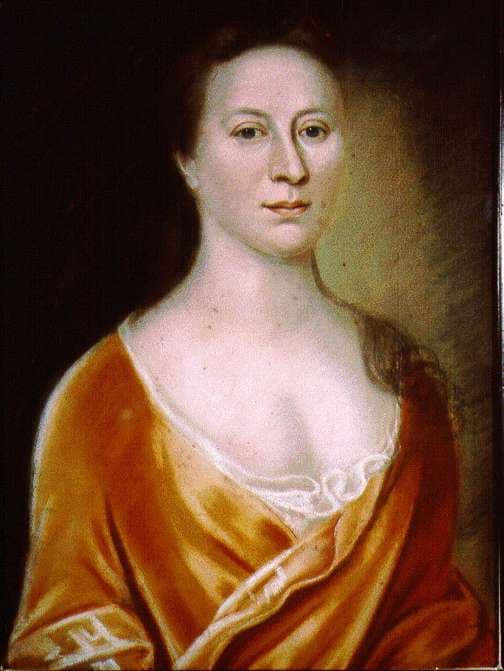
Irish, English, American · Arts
Henrietta Johnston
1674 – March 7, 1729
Early Life and Background
Henrietta Johnston, often styled Henrietta de Beaulieu Dering Johnston, was one of the earliest known professional women artists in what became the United States and the first colonial artist to work primarily in pastel.[3][4][10][11][13][14] Her exact birth details are uncertain, reflecting the fragmentary documentation that often surrounds early modern women. Britannica records her as born before 1670, probably in Ireland, under the surname Deering.[4][5] Other modern syntheses, including the Women & the American Story project and German‑language scholarship, place her birth around 1674 in north‑west France, identifying her as a Huguenot of French origin whose family later moved to Ireland.[3][7][14]
Despite these discrepancies, most scholars agree she had Huguenot connections—French Protestants who faced persecution under Louis XIV. A biographical summary from the New‑York Historical Society notes that her family fled from northern France to London in 1687, when she was a teenager, to escape religious persecution.[3] The Gibbes Museum of Art, which holds the largest public collection of her works, similarly describes her as "a Huguenot by descent" whose family left France for England in the late seventeenth century.[13]
While evidence of formal artistic training has not surfaced, several sources suggest that she practised portraiture in Ireland and possibly London before emigrating to America.[12][13][14] She likely absorbed contemporary European fashions for intimate pastel portraiture through social networks rather than an institutional academy, as women were rarely admitted to formal art schools at the time. Her early work reportedly included portraits of members of the Dering family and their friends, indicating that she had access to genteel circles and was entrusted with capturing their likenesses.[13]
Marriage, Family, and Formative Influences
Johnston’s artistic career cannot be separated from her marital history and the economic pressures that shaped her choices. In England or Ireland she married Robert Dering, a member of the English gentry with appointments and property in Ireland.[13][14] This marriage linked her to a family of status, but by the early 1700s she was widowed. The Gibbes Museum notes that after Dering’s death in 1703, Henrietta remarried, taking as her second husband Gideon Johnston, an Anglican cleric.[13]
Encyclopedia.com records the couple’s marriage precisely: 11 April 1705
These pressures proved decisive for Henrietta’s professional trajectory. In a widely cited letter written from Charleston in 1709, Gideon Johnston acknowledged the centrality of his wife’s portrait work to their survival, stating that "were it not for the assistance my wife gives me by drawing pictures ... I shou'd not have been able to live."[13] This testimony shows that Henrietta was not merely an amateur painter; she was a working artist whose income materially supported a struggling family. Henrietta’s move to the American colonies was tied directly to Gideon’s ecclesiastical appointment. Around 1707–1708, he was sent to South Carolina as the Bishop of London’s commissary and as rector of St Philip’s Church in Charles Towne.[12][13] Biographical summaries agree that Henrietta immigrated to Charleston, South Carolina, in 1708, joining him there.[2][8][13] The South Carolina Heritage blog and the History of American Women project both emphasize that she arrived as part of a broader migration of Huguenot and Anglican families into the bustling port city.[2][8] Historians place the start of her professional activity in the colonies around 1707, when she began taking commissions for pastel portraits of the city’s elite.[2][3] The Women & the American Story resource describes how "the Johnston family continued to have money troubles in their new home, so Henrietta started to work as a professional portraitist for the city’s elite," explicitly identifying her as "the first recorded professional female artist in the colonies" and "the first colonial artist to use pastels."[3] These commissions emerged from social and religious networks. Charleston had a strong Huguenot community, including families such as the Du Boses, and Henrietta’s clientele included several members of this gentry. A doctoral thesis on eighteenth‑century British portrait painters notes that she "established a practice" in Charleston and "accompanied her husband" on his posting, with her portraits providing visual representation for planters and religious leaders alike.[12] Johnston’s most distinctive contribution to early American art was her use of pastel as a primary medium, at a time when most colonial portraitists worked in oil or watercolor. The New‑York Historical Society and StudySC both underscore that she was the first colonial artist to use pastels and the first female professional artist in America
Pastel (often described then as "crayon") allowed her to work on an intimate scale, usually on paper. Museum educators, including in a short video from StudySC, highlight typical features of her portraits: bust‑length or half‑length figures, pale yet delicate color palettes, focus on facial expression and clothing, and relatively plain backgrounds.[9] These choices may have reflected both material constraints in the colonies and stylistic influences from French and Irish portrait practice. Approximately forty pastel portraits are attributed to Johnston, though precise counts vary. Encyclopedia.com credits her with some forty pastel portraits of distinguished citizens of Charleston.[5] The History of American Women blog notes that "about 30" of her works survive.[2] The New‑York Historical Society and StudySC describe "about three dozen" surviving portraits.[3][10] The Gibbes Museum states that "around forty works are attributed to her today" and that it has the largest public collection.[13] Her sitters were primarily members of the colonial elite—planters, clergy, and their families. Many portraits date from roughly 1707 to 1720, the period when she was most active in Charleston.[2] They include likenesses of figures such as Mary Magdalene Prioleau and her husband (mentioned in museum interpretation), among others.[9][13] Later in life, her reputation extended beyond Charleston and led to commissions elsewhere. By the mid‑1720s, Johnston’s fame as a portraitist reached other colonial centers. The Women & the American Story site notes that "her reputation as an artist spread, and in 1725, she traveled to New York to make portraits for that city’s elite."[3] An article in The Magazine Antiques similarly explains that she "traveled to New York" to fulfill commissions and that "by 1726 she was back in Charleston," though the length of her stay is uncertain.[11] While documentary traces of her New York works are limited, this journey shows that she operated within a trans‑colonial network of patrons. Her movement between Charleston and New York suggests that elite families in different colonies were aware of her work and willing to engage a woman artist for formal portraiture. It also underscores the flexibility and mobility required for artistic careers in the early eighteenth century, when painters often traveled to sitters rather than maintaining fixed studios. Henrietta Johnston is widely described in modern reference works as America’s first professional female artist. StudySC calls her "the first female professional artist in America".[10] The New‑York Historical Society declares that she is "the first recorded professional female artist in the colonies".[3] The Gibbes Museum echoes this characterization, referring to her as "the first professional female artist in America and the first pastelist".[13] Her professional status is defined by the fact that she earned a living, at least in part, from commissioned portraits, rather than practicing art as a genteel hobby. Gideon Johnston’s 1709 letter explicitly confirming his dependence on her drawings is rare, direct evidence for a woman artist’s economic contribution in the colonies.[13] This documentation makes her stand out among early eighteenth‑century women, whose artistic work was often unpaid and confined to domestic settings. Beyond local patronage, her work has received sustained recognition in art historical scholarship. Modern authors and museum curators consistently cite her as a pioneering figure, and her portraits are "among the most frequently published and most revered" in discussions of early American pastels.[11][13][14] The Pastellists.com dossier, for example, treats her oeuvre and life at length, confirming her importance in the development of pastel portraiture in the English‑speaking world.[14] Henrietta’s life in Charleston was marked by economic difficulty, widowhood, and family responsibilities. As noted, she entered her marriage to Gideon with prior connections and probable experience as a portraitist; he brought stepchildren into the household, and the couple had to manage on the limited income of a colonial cleric.[5][13] The phrase "if ever art was born of necessity" used by Encyclopedia.com to describe her oeuvre underscores that her artistic production was closely tied to financial need.[5] Her use of pastel may itself reflect practical concerns. Pastel materials were easier to transport and store than oil paints and canvases, advantageous for an itinerant artist who had already migrated across several countries and then across the Atlantic.[2][11][13] Working on paper also allowed her to produce portraits relatively quickly, which was vital when commissions were a primary source of family income. Despite these constraints, she navigated social expectations that often limited women’s public work. Her patrons were drawn from conservative, religious elites—Anglican and Huguenot—yet they accepted her professional role. This suggests that her status as a clergyman’s wife and a refugee from European persecution may have lent moral respectability to her artistic labor, even as it challenged typical gender norms. Johnston appears to have continued working into the 1720s, with her New York journey in 1725 and documented return to Charleston by 1726.[3][11] Thereafter, evidence of new commissions diminishes, though her existing portraits remained valued among patrons and, later, collectors. The circumstances and exact date of her death are somewhat contested. Encyclopedia.com records that she "died in Charleston, South Carolina, on March 7, 1728 (some sources cite 1729)."[5] The New‑York Historical Society entry and several later blogs state that she "died in Charleston on March 9, 1729".[1][3][7][14] By contrast, Britannica provides the most conservative and widely cited datum, specifying that she was "buried March 7, 1729" in Charles Towne.[4] Because burial records tend to be more reliable than retrospective biographical notes, many editors now treat 7 March 1729 as the secure dated event in her final days. She was buried in Charleston, likely alongside her husband Gideon, with whom she had shared both spiritual work and the burdens of colonial survival.[4][15] Henrietta Johnston’s legacy extends across several domains: women’s history, art history, and colonial cultural studies. In women’s history, she stands as a rare early example of a woman documented as a professional artist in the English colonies. Her ability to support her household through portrait commissions, acknowledged in her husband’s own words, challenges assumptions that colonial women were economically passive. She demonstrated that artistic skill could translate into income and social influence at a time when women faced legal and social constraints on property ownership and paid work.[3][5][13] In art history, Johnston is credited as the first professional pastelist in America and the first colonial artist to use pastels.[3][10][11][13] Her portraits show how European materials and techniques migrated into the colonial South, adapting to local demands for likenesses that expressed status and piety. Scholars have used her work to explore the evolution of portrait conventions, the circulation of artistic styles through Huguenot and Anglican networks, and the material culture of early eighteenth‑century elites.[11][12][13][14] Her surviving works—"about three dozen" to "around forty" depending on the source—are now held in institutions such as the Gibbes Museum of Art in Charleston, which preserves the largest public collection.[2][3][11][13] These portraits are exhibited not only for their aesthetic value but also for what they reveal about clothing, personal adornment, and the racial and gender hierarchies encoded in who was represented and how. Finally, her life has become a touchstone in public history initiatives. Educational resources like StudySC’s "Study South in 60 Seconds" video and the Women & the American Story curriculum use her biography to teach about settler colonialism, religious migration, and women’s work in the early South.[3][9][10] Heritage and history blogs, museum newsletters, and art historical essays continue to reassess her oeuvre, sometimes debating details of her origin, name, and date of death, but consistently affirming her pioneering role.[1][2][6][11][17] Through these ongoing conversations, Henrietta Johnston remains a central figure in understanding how a refugee‑connected, twice‑married woman carved out a professional artistic identity in a world that rarely recorded women’s achievements. Her pastel portraits, delicately rendered yet structurally bold in their assertion of a woman’s paid artistic labor, endure as one of the clearest visual records of elite life in early eighteenth‑century Charleston and as a landmark in the history of women artists in America.Migration to Charleston and Career Beginnings in America
Major Works, Medium, and Techniques
New York Sojourn and Continued Commissions
Professional Status, Economic Role, and Recognition
Personal Life and Challenges
Later Life and Death
Legacy and Historical Impact
Dated achievements
4 indexed.
- Apr111705Science
Marriage to Reverend Gideon Johnston
Henrietta Deering married Church of England cleric Gideon Johnston, a union that led to her eventual emigration to colonial Charles Town.
View details Encyclopedia.com: Johnston, Henrietta (c. 1670–1728) - Jan011707