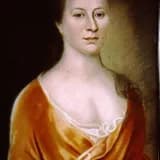
Henrietta Johnston immigrated to Charleston, South Carolina, following her husband's appointment as an Anglican commissary in the colony.
In 1708, Henrietta Johnston immigrated to Charleston (then Charles Town), South Carolina, accompanying her husband Gideon Johnston, who had been appointed commissary of the Church of England for the colony by the Society for the Propagation of the Gospel in Foreign Parts. The couple's crossing of the Atlantic placed them in a struggling, financially unstable colonial outpost, and Gideon's letters from the period describe significant hardship, including delayed salary payments and difficult relations with the local vestry.
It was in this challenging environment that Henrietta turned to portraiture as a means of supplementing the family's precarious income. Her immigration marks the beginning of the period during which she produced the body of pastel work for which she is remembered, and it situates her among the earliest European-trained artists to practice professionally in the Southern colonies.
While the exact date of arrival is not preserved in the historical record, the year 1708 is corroborated across multiple biographical sources. This event is significant not only for Johnston's personal history but for the history of American art more broadly, since her transplantation to Charles Town created the conditions for what would become the earliest known sustained professional art practice by a woman in the American colonies.