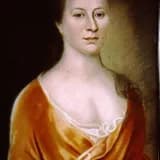
Henrietta Johnston, regarded as the earliest known professional woman artist in America, was buried in Charles Towne, South Carolina on March 7, 1729.
Henrietta Johnston was buried in Charles Towne, South Carolina on March 7, 1729, according to Encyclopædia Britannica's biographical record. Some sources place her death in 1728, but the documented burial date of 1729 provides the most reliable anchor for the end of her life given the inconsistencies in colonial-era record keeping.
By the time of her death, Johnston had produced dozens of surviving pastel portraits depicting the elite families of Charles Town, as well as some subjects in New York, where she and her husband had traveled. Her body of work represents one of the only visual records of colonial Southern society from this early period, executed with a distinctive delicacy of line and color characteristic of pastel media.
Her burial marked the close of a career that historians now recognize as foundational: she is widely cited as America's first professional female artist and the first colonial artist to work primarily in pastels. In an era when women had extremely limited access to professional training or public recognition for artistic work, Johnston's ability to sustain a paid portrait practice across two decades in a frontier colonial setting stands as a remarkable achievement. Her legacy endures through the preservation of her pastels in institutional collections, including the Gibbes Museum of Art in Charleston, which continues to study and exhibit her work as a cornerstone of early American art history.