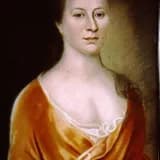
Henrietta Johnston began creating pastel portraits in Charles Town, South Carolina, becoming recognized as the first known professional female artist in America.
Around 1707, Henrietta Johnston began producing pastel portraits of prominent citizens in Charles Town (present-day Charleston), South Carolina. She is widely credited by historians as the first known professional female artist working in the American colonies, and she is also frequently cited as the first colonial artist, of any gender, to work primarily in the medium of pastel.
Working in a raw frontier settlement far removed from the artistic academies of Europe, Johnston nonetheless produced portraits with a refined, delicate technique that reflected training or exposure to European pastel traditions, possibly linked to Huguenot artistic networks. Her sitters included members of Charles Town's colonial elite, and her surviving works today form an invaluable visual record of early South Carolina society.
The exact calendar date on which she began this work is not documented, but the year 1707 is consistently cited across biographical sources. This achievement is historically significant because it predates by decades the emergence of other named professional women artists in America, making Johnston a foundational figure in the history of American art and in the broader history of women's professional labor in the colonies. Her ability to earn income through her art also provided crucial financial support for her family, as her husband's clerical salary was often delayed or insufficient.