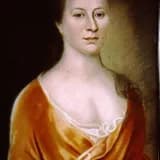
Henrietta Deering married Church of England cleric Gideon Johnston, a union that led to her eventual emigration to colonial Charles Town.
On April 11, 1705, Henrietta Deering, a woman of French Huguenot descent born in Ireland, married Gideon Johnston, a clergyman of the Church of England. Little is known with certainty about her early life prior to this marriage, as biographical records from the period are fragmentary, but the union with Johnston would prove to be the pivotal event that redirected the course of her life.
Gideon Johnston was soon after appointed by the Society for the Propagation of the Gospel in Foreign Parts to serve as commissary in the colony of Carolina, a position that required relocation across the Atlantic. This marriage therefore functioned as the anchor that would bring Henrietta from the British Isles to the American colonies, where she would go on to achieve lasting historical significance as one of the earliest documented professional female artists in North America.
Marriages of clergy wives in this era rarely receive independent documentation, yet Henrietta's later artistic career made this union noteworthy retrospectively. Without it, she would likely never have traveled to Charles Town, where she produced the pastel portraits for which she is remembered today. The marriage exemplifies how women's personal and professional trajectories in the colonial period were often shaped, and sometimes enabled, by their husbands' ecclesiastical or civic appointments.