← All women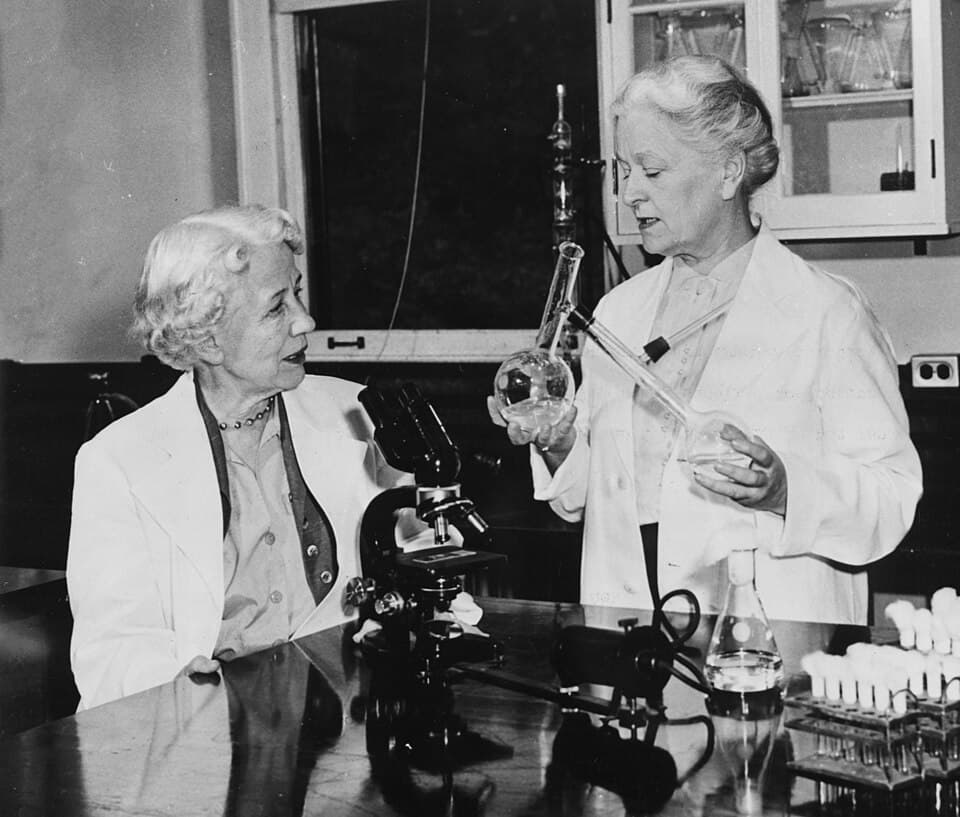
American · Science · Medicine
Elizabeth Lee Hazen
August 24, 1885 – June 24, 1975
Early life and education
Elizabeth Lee Hazen was born on August 24, 1885, in Rich, Mississippi, a rural community in the state’s delta region. Most institutional biographies identify 1885 as her birth year, though some secondary sources list 1883 or 1888; the month and day are consistently given as August 24. Hazen was orphaned as a small child and raised by relatives, an early experience that appears repeatedly in biographical accounts and that framed the determination with which she later pursued education and professional work.
Hazen grew up in an era when scientific careers for women were still exceptional. Her path into laboratory medicine reflected both personal ability and the expanding, but still limited, educational opportunities available to women in the early twentieth century. Biographical sources note that she studied at the Mississippi Industrial Institute and College, later earned graduate training at Columbia University, and completed a doctorate in microbiology there. The Columbia degree was especially important because advanced scientific credentials were still difficult for women to obtain, and a woman’s presence in microbiology remained unusual in the years when Hazen was building her career.
Her early education and training were not merely preparatory steps; they positioned her for a career in public health research at a moment when bacteriology and microbiology were becoming increasingly central to medicine. Hazen’s later work shows how a woman with rural Southern origins and strong academic preparation could enter a highly technical field despite the era’s gender barriers.
Early career
Hazen’s early professional life included work outside academia as well as in laboratories. Biographical summaries describe service as a schoolteacher and later as a technician in Army diagnostic work during World War I. She also held positions in clinical and bacteriological laboratories, including work at Cook Hospital in West Virginia and as a resident bacteriologist at Presbyterian Hospital. These roles gave her broad experience in the diagnosis and study of infectious disease and prepared her for the research work that later defined her career.
In the late 1920s and early 1930s, Hazen entered the New York scientific and public-health world that would become central to her legacy. She taught on the faculty of Columbia’s College of Physicians and Surgeons and, in 1931, took charge of the bacterial diagnosis laboratory at the New York State Department of Health, Division of Laboratories and Research. That position placed her in an important public health institution at a time when state laboratories played a major role in identifying pathogens and guiding treatment strategies.
Hazen’s laboratory leadership mattered in part because women in senior scientific roles remained relatively rare. Her appointment showed that she had established a reputation for competence and technical judgment. It also gave her access to the institutional setting in which she would make her most famous discovery.
Collaboration with Rachel Fuller Brown
In 1948, Hazen began collaborating with chemist Rachel Fuller Brown in a search for antifungal agents. Their partnership was unusual and historically memorable because the two women worked in different cities within the New York State Department of Health system—Hazen in New York City and Brown in Albany. They exchanged cultures, test results, and observations by mail, turning geographic separation into a productive scientific method.
Their collaboration was inspired by the success of antibacterial antibiotics such as penicillin and by the growing recognition that fungal diseases also demanded effective treatment. At the time, medical mycology was still developing as a field, and safe antifungal medicines were urgently needed. Hazen’s laboratory experience and Brown’s chemical expertise complemented one another, enabling a systematic search for active compounds in soil organisms.
This partnership is now widely cited as one of the most successful examples of women’s collaborative science in twentieth-century America. It combined careful screening, patience, and institutional support with a willingness to pursue an area that had not yet yielded many therapeutic breakthroughs. Their work helped establish new expectations for what antifungal research could achieve.
Discovery of nystatin
In 1950, Hazen and Brown discovered nystatin, the first useful antifungal antibiotic. The drug’s name honored the New York State Department of Health, reflecting the state laboratory system that made the research possible. The discovery was a landmark because it produced the first broadly effective medication for fungal infections in humans, filling a therapeutic gap that had persisted even after antibacterial antibiotics had revolutionized medicine.
Nystatin’s importance was both medical and historical. It offered a practical treatment for fungal disease at a time when such infections were often difficult to manage safely. The drug became especially associated with skin and mucosal fungal infections and later found wider uses in medicine and beyond. Biographical accounts frequently describe it as one of the great biomedical breakthroughs of the twentieth century, and some sources note its value in nonmedical applications such as preserving art and protecting plants.
For Hazen, the discovery represented the culmination of years of laboratory work and the successful translation of microbiological screening into therapeutic benefit. It also demonstrated the power of collaboration across institutional and disciplinary lines. Working as women scientists in mid-century public health, Hazen and Brown helped define antifungal research as a major field of medical progress.
Patents, royalties, and public benefit
In 1951, Hazen and Brown sought patent protection for nystatin and assigned the rights and royalties to support scientific research. The financial arrangement later helped create the Brown-Hazen Fund, which directed resources toward the advancement of scientific inquiry. This decision is an important part of Hazen’s legacy because it shows that the women thought carefully about the social and institutional consequences of their discovery.
The patent and royalty arrangement also illustrates the evolving relationship between public research institutions and pharmaceutical development in the postwar period. Nystatin emerged from a state laboratory rather than a private company, yet it had commercial and clinical significance. By channeling financial returns into research support, Hazen and Brown turned a successful drug discovery into a mechanism for sustaining future science.
Their approach stands out in the history of women in science because it combined technical achievement with public-minded stewardship. Rather than simply being credited for a discovery, they helped shape how the discovery would be used and remembered.
Later discoveries and professional recognition
Hazen and Brown continued to collaborate after nystatin. Biographical sources credit them with the discovery of phalamycin in 1953 and capacidin in 1959. While these compounds did not achieve the same fame as nystatin, they reinforce the seriousness and durability of the pair’s research program. Their work remained focused on useful antimicrobial compounds and on the broader biomedical promise of soil-derived agents.
Hazen’s achievements were recognized during her lifetime and after it. She and Brown received the Squibb Award in Chemotherapy in 1955, a notable honor for work that had changed clinical practice. Later, in 1972, Hazen received the Rhoda Benham Award of the Medical Mycology Society of the Americas, and in 1975 she received the Chemical Pioneer Award. These honors reflected growing professional recognition of antifungal research and of Hazen’s role in shaping the field.
After her death, Hazen’s reputation continued to grow. She was inducted posthumously into the National Inventors Hall of Fame in 1994. Museums, historical organizations, and educational institutions have since highlighted her life as an example of women’s contributions to science, especially in microbiology and medicine.
Personal life
Available biographical references indicate that Hazen never married and had no children. Although she is most often remembered for her laboratory work, her life also reflects the choices and constraints faced by professional women of her generation. She built a career in an era when marriage and scientific work were often seen as incompatible for women, and her decision to remain unmarried is often presented in biographies as part of her singular commitment to research.
Her family background appears in sources mainly through the early loss of her parents and her upbringing by relatives. That experience likely contributed to the independence and resilience noted by later biographers. Beyond this, the surviving record focuses overwhelmingly on her scientific life, which itself became her public identity.
Legacy
Elizabeth Lee Hazen is remembered as a pioneer of medical mycology and as a co-discoverer of the first useful antifungal antibiotic. Her work with Rachel Fuller Brown changed the treatment of fungal disease and helped establish antifungal chemotherapy as a practical medical field. In the broader history of science, Hazen’s career is also important as an example of women conducting high-impact research within state public-health laboratories, outside the most celebrated university or corporate settings.
Her legacy extends beyond nystatin itself. The story of Hazen and Brown has become a model of collaborative scientific work, particularly collaboration that bridges distance, discipline, and institutional boundaries. Their use of patent royalties for the support of research added a philanthropic dimension that made their contribution unusually durable. Later generations have also used Hazen’s biography in educational materials about women in science, Mississippi history, and the evolution of antibiotics.
For women’s history, Hazen’s life shows how expertise, persistence, and institutional opportunity could combine to produce a discovery of lasting medical importance. For medical history, it marks the moment when fungal infections became treatable with a dependable drug. And for the history of science, it remains a reminder that transformative discoveries may emerge from collaborative public laboratories as well as from the better-known centers of biomedical prestige.
Death
Hazen died on June 24, 1975, in Seattle, Washington. By then, nystatin had already secured its place in medical practice, and her name had become associated with one of the defining breakthroughs in antifungal therapy. Although the historical record often underrepresents women scientists of her generation, Hazen’s career has since been recovered and celebrated in museum exhibits, biographies, and honors that recognize the significance of her work.
Dated achievements
4 indexed.
- Aug241885Medicine
Birth of Elizabeth Lee Hazen
Birth of Elizabeth Lee Hazen in Rich, Mississippi; the future microbiologist would help develop nystatin, the first useful antifungal antibiotic.
View details Inventors Hall of Fame biography of Elizabeth Lee Hazen - Jan011950Medicine
Discovery of nystatin
Hazen and Rachel Fuller Brown discovered nystatin, the first useful antifungal antibiotic and a breakthrough in fungal-disease treatment.