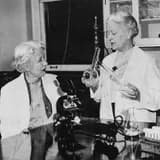
Hazen and Rachel Fuller Brown discovered nystatin, the first useful antifungal antibiotic and a breakthrough in fungal-disease treatment.
In 1950, Elizabeth Lee Hazen and Rachel Fuller Brown discovered nystatin, the first useful antifungal antibiotic. The exact day is not verifiable in the sources supplied, so this record uses the first day of the year as a date placeholder while preserving the confirmed year. Their work emerged from a long-distance collaboration between laboratories in New York City and Albany, with Hazen performing organism tests and Brown helping identify promising samples for study.
The discovery was historically important because fungal infections had long been difficult to treat safely and effectively. Penicillin had transformed antibacterial medicine, but comparable therapies for fungi were lacking. Nystatin filled that gap and became a milestone in the treatment of human fungal disease. It was especially significant in an era when many infections were still treated with toxic or unreliable compounds, and when the search for safe antimicrobial agents was a major biomedical frontier.
Hazen and Brown’s collaboration also mattered as a model of women’s scientific partnership in mid-century public health research. Working within a state health department rather than a famous private laboratory, they showed that major discoveries could emerge from patient, practical screening and shared expertise. Their achievement helped establish modern antifungal therapy and remains one of the defining successes in medical mycology.