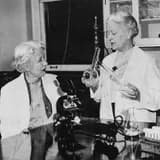
Death of Elizabeth Lee Hazen in Seattle, Washington, after a career that transformed antifungal medicine.
Elizabeth Lee Hazen died on June 24, 1975, in Seattle, Washington. Her death closed the career of a scientist whose most famous achievement, the discovery of nystatin, had already transformed the treatment of fungal disease and established her place in the history of medicine. Sources agree on the date and location, though some biographical references differ on her birth year.
By the time of her death, Hazen had been recognized for a lifetime of laboratory work in microbiology, bacteriology, and medical mycology. Her accomplishments were especially significant because they came from a woman scientist working in a period when women’s research contributions were often marginalized or omitted from the mainstream historical record. Her collaboration with Rachel Fuller Brown became a landmark example of women’s scientific partnership and long-distance research productivity.
Hazen’s legacy outlived her by decades. Nystatin remained a foundational antifungal medicine, and her work continued to be cited in histories of antibiotic discovery and public health. Her death marked not an end to her influence, but the completion of a career whose impact endured in medicine, in the history of women in science, and in the institutions that later honored her as an inventor and pioneer.